From Page to Screen: The Sense of an Ending

About the Book: The Sense of an Ending by Julian Barnes

The book is both a reminiscence on adolescent friendships, early romantic relationships and their aftermath and an exploration of the unintended consequences that can flow from actions. In this case, it is the events set in train by the main character’s reaction to a romantic disappointment. The reader becomes aware early on that the narrator, Tony, is being selective in the events he recounts, either consciously or subconsciously. At one point, he admits, ‘I told her the story of my life. The version I tell myself, the account that stands up.’ So key themes explored in the book are truth, memory and storytelling.

Read my review of the book here.

About the Film: The Sense of an Ending (2017)

The Sense of an Ending is directed by Ritesh Batra from a screenplay by Nick Payne based on Julian Barnes’ novel. The film stars Jim Broadbent as Tony, Charlotte Rampling as Veronica, Harriet Walter as Margaret and Emily Mortimer as Sarah Ford.

More information about the film can be found here.

Book v Film

The film largely follows the plot of the book but chooses to put more focus on some characters, for instance, Tony’s daughter, who does not appear in person in the book at all. In the film, Susie (played by Michelle Dockery) gets quite a bit of screen time and we see Tony supporting her in the latter stages of her pregnancy. I can only assume this was done to give his character more humanity but to my mind the whole point is that Tony finds it difficult to read and respond to other people. Young Tony’s visit to his girlfriend Veronica’s parents is close to the book and I liked the way the director emphasised the allure Veronica’s mother, Sarah, might hold for a young man, as this helps to make sense of later events.

Presented with an actress of the stature of Charlotte Rampling, it’s not surprising that the film expands the meetings between Tony and Veronica in later life. I felt the characterisation of Veronica downplayed the anger she displays in the book.  I thought Harriet Walter’s performance really captured the essence of Tony’s ex-wife, Margaret, as portrayed in the book and she communicated Margaret’s affectionate exasperation with Tony perfectly.

I enjoyed the flashback scenes to Tony’s schooldays and adolescence and I thought they had a really credible period feel. The director uses an imaginative technique at several points that allows us to see Tony reassessing events in his past and seeing them from a new perspective.

The Verdict

In the book, Tony muses: ‘How often do we tell our own life story? How often do we adjust, embellish, make sly cuts?’ Adjusting, embellishing and making cuts are clearly all part of adapting a book into a film. Some of the changes I could understand, others less so.  The film is well-crafted with good performances but I don’t believe it is completely successful in communicating the essence of the book.

What do you think? Have you read the book or seen the film?

Book Review: Broken Branches by M. Jonathan Lee

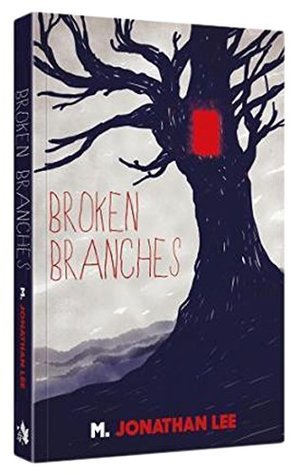
BrokenBranchesAbout the Book

Publisher’s description: ‘Family curses don’t exist. Sure, some families seem to suffer more pain than others, but a curse? An actual curse? I don’t think so.’

A family tragedy was the catalyst for Ian Perkins to return to the isolated cottage with his wife and young son. But now they are back, it seems yet more grief might befall the family.

There is still time to act, but that means Ian must face the uncomfortable truth about his past. And in doing so, he must uncover the truth behind the supposed family curse.

Format: Paperback Publisher: Hideaway Fall Pages: 294
Publication: 27th July 2017 Genre: Mystery    

Purchase Links*
Amazon.co.uk ǀ
*links provided for convenience, not as part of any affiliate programme

Find Broken Branches on Goodreads


My Review

This is the first title from newly established publishers, Hideaway Fall, and I must say they have come up with a cracker.

Following his marriage to Rachel and the birth of his son, Harry, Ian Perkins has unexpectedly returned to the isolated cottage where he spent his childhood. Despite the idyllic sounding location, the giant sycamore in the garden exercises a brooding presence over the cottage. Could this be the source of the curse that has been the cause of such tragedy for the Perkins’ family over the years?

Early in the book, we find out the circumstances surrounding Ian’s return to the cottage but this is not the only “incident” that appears to be occupying his mind and causing difficulties in his marriage. For Ian, his son, Harry, is the only bright presence in a house seemingly overwhelmed by depression and inertia. The author brilliantly depicts Ian’s obsessive search to prove that the curse exists and so provide a reason for the tragedies the family has experienced. After all, if there is indeed a curse, then no-one else can be to blame, can they?

Alternating between the present day as Ian searches for answers, and scenes from Ian’s troubled childhood, the author creates an unsettling atmosphere with a distinctly gothic feel. I’m not going to say much more for fear of spoilers but I suggest Broken Branches is best read in the daytime with other people in the house (who are meant to be there).

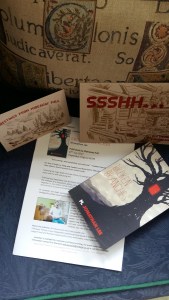
I received an advance reader copy courtesy of publishers, Hideaway Fall, in return for an honest review.

Follow my blog with Bloglovin

In three words: Creepy, unsettling, intense

Try something similar…The Woman in Black by Susan Hill (contemporary option) or Casting the Runes by M. R. James (classic option)


MJonathanLeeAbout the Author

M. Jonathan Lee was born in Yorkshire, England where he still lives to this day. When not writing, you’ll find him at the back door thinking.  His first novel, The Radio, was nationally shortlisted in the Novel Prize 2012. Broken Branches is his fourth novel.

Connect with Jonathan

Website ǀ Facebook ǀ Twitter ǀ Goodreads

Connect with Hideaway Fall

Website ǀ Facebook ǀ Twitter 

BrokenBranches3