Book Review: The Indigo Girl by Natasha Boyd

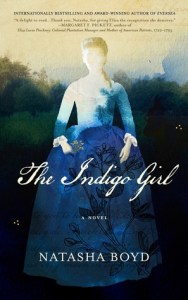
TheIndigoGirlAbout the Book

The year is 1739. Eliza Lucas is sixteen years old when her father leaves her in charge of their family’s three plantations in rural South Carolina and then proceeds to bleed the estates dry in pursuit of his military ambitions. Tensions with the British, and with the Spanish in Florida, just a short way down the coast, are rising, and slaves are starting to become restless. Her mother wants nothing more than for their South Carolina endeavour to fail so they can go back to England. Soon her family is in danger of losing everything. Upon hearing how much the French pay for indigo dye, Eliza believes it’s the key to their salvation. But everyone tells her it’s impossible, and no one will share the secret to making it. Thwarted at nearly every turn, even by her own family, Eliza finds that her only allies are an aging horticulturalist, an older and married gentleman lawyer, and a slave with whom she strikes a dangerous deal: teach her the intricate thousand-year-old secret process of making indigo dye and in return — against the laws of the day – she will teach the slaves to read. So begins an incredible story of love, dangerous and hidden friendships, ambition, betrayal, and sacrifice.

Format: Hardcover (346 pp.), ebook (pp.) Publisher: Blackstone Publishing
Published: 3rd October 2017                        Genre: Historical Fiction

Purchase Links*
Amazon.co.uk ǀ Amazon.com ǀ Barnes & Noble
*links provided for convenience, not as part of any affiliate programme

Find The Indigo Girl on Goodreads


My Review

In her afterword, the author explains how a snippet of conversation overheard whilst visiting an exhibition about indigo became the inspiration for The Indigo Girl.   I was reminded of a quote I read recently by Bernie McGill, author of The Watch House: ‘As a fiction writer, I am always looking for the gaps between recorded events, the spaces in between’. In this case, the author has taken the true story of Eliza Lucas and using historical documents, including Eliza’s own letters, filled the spaces in between to produce a fascinating book about life in 18th century America. The book includes excerpts from Eliza’s letters at relevant points in the narrative.

In case this is making it sound like The Indigo Girl is a dry treatise on the process of producing indigo dye, I can reassure potential readers that it’s much more than this. It’s also an enthralling story full of action, intrigue – even a hint of romance – with an engaging central character. In The Indigo Girl, Eliza emerges as a much more lively individual than the rather formal style of her actual letters would suggest. However, the letters give a hint of the determination and independence of spirit exhibited by the Eliza of the novel.

Given charge of running the family estate in South Carolina when her father is forced to return to their holdings in Antigua, Eliza sets out to transform the family’s fortunes by growing indigo, fuelled by her interest in botany. The only trouble is the cultivation of indigo and its transformation into high quality dye seems akin to a mystical process, the knowledge of which is held only by some of the slaves on the plantation: ‘The secret has been passed down through generations, perhaps even from ancient times.’

Gaining access to this knowledge brings Eliza into conflict with one of her father’s overseers because of his cruel treatment of the estate’s slaves. And her involvement in running the estate is looked at askance by Eliza’s mother, who is worried that it will ruin Eliza’s marriage prospects by going against the norms of polite society.   Much to her mother’s horror, Eliza is more interested in the accounts and researching cultivation techniques than in tea drinking and embroidery.

In her heart, Eliza knows that she has only been placed in charge because both her brothers are at school in England. Her appointment is one of necessity not a sign of female emancipation. However, she clings to the vain hope that if she can make a success of it she can escape the inevitability of marriage.

‘Three crop seasons to get it right. If I didn’t succeed by then, marriage was my only option. A marriage not to save the family or our land – a wealthy man could buy himself a more biddable wife than I – but marriage so my family would not have to support me any longer.’

After several unsuccessful attempts to grow indigo, Eliza eventually persuades her father to hire a consultant. However, this sets off a chain of events that will ultimately end in tragedy for some, their just desserts for others and happiness for the people who matter.

I knew nothing about the growing of indigo or the production of indigo dye and its economic and political importance before reading this book so I found this aspect of the book particularly fascinating. As a keen gardener, I could also appreciate the challenges of experimenting with different sowing times, growing conditions and aftercare in an effort to achieve success.

I now know that the export of indigo dye from South Carolina laid the foundation for the wealth of many Southern families meaning Eliza’s accomplishments influenced the course of US history.  Indeed, the author notes that, when Eliza died in 1793, President George Washington served as a pallbearer at her funeral. I’m so glad the author was able to celebrate the achievements of this remarkable woman and, at the same time, craft such an enjoyable novel. If it were needed, this reminds me why I enjoy reading historical fiction so much: entertainment and education in one lovely package.

I received an advance reader copy courtesy of NetGalley and publishers, Blackstone, in return for an honest review.

Follow my blog with Bloglovin

In three words: Engaging, fascinating, well-crafted


Natasha BoydAbout the Author

Natasha Boyd is an internationally bestselling and award-winning fiction author. Eversea, her debut novel, was a finalist for Contemporary Romance in the 2013 Winter Rose Contest, won the 2014 Digital Book Award for Adult Fiction and is a LIBRARY JOURNAL self-e selection 2015. She was born in Denmark, grew up in South Africa, Belgium and England and now lives and writes full-time in the USA. She lives with her husband, two sons and the cast of characters in her head. Her work is, so far, available in English, Italian, Turkish, German, and Indonesian

Connect with Natasha

Website ǀ Facebook ǀ Twitter ǀ Pinterest ǀ Instagram ǀ Goodreads

WWW Wednesday – 20 September

WWWWednesdays

Hosted by Taking on a World of Words, this meme is all about the three Ws:

  • What are you currently reading?
  • What did you recently finish reading?
  • What do you think you’ll read next?

Why not join in too? Leave a comment with your link at Taking on a World of Words and then go blog hopping!

As I was away last week, there’s a double helping of recently finished books this week and I now have a ton of reviews to write…


Currently reading

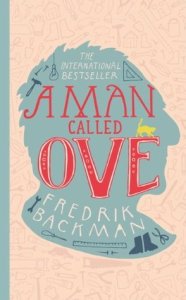
AManCalledOveA Man Called Ove by Fredrik Backman (ebook)
Meet Ove. He’s a curmudgeon, the kind of man who points at people he dislikes as if they were burglars caught outside his bedroom window. He has staunch principles, strict routines, and a short fuse. People call him the bitter neighbour from hell, but must Ove be bitter just because he doesn’t walk around with a smile plastered to his face all the time? Behind the cranky exterior there is a story and a sadness. So when one November morning a chatty young couple with two chatty young daughters move in next door and accidentally flatten Ove’s mailbox, it is the lead-in to a comical and heartwarming tale of unkempt cats, unexpected friendship, and the ancient art of backing up a U-Haul. All of which will change one cranky old man and a local residents’ association to their very foundations.

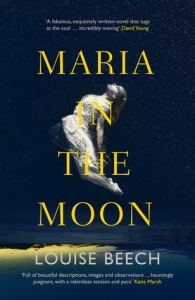
MariaintheMoonMaria in the Moon by Louise Beech (review copy courtesy of Orenda Books)

‘Long ago my beloved Nanny Eve chose my name. Then one day she stopped calling me it. I try now to remember why, but I just can’t.’ Thirty-one-year-old Catherine Hope has a great memory. But she can’t remember everything. She can’t remember her ninth year. She can’t remember when her insomnia started. And she can’t remember why everyone stopped calling her Catherine-Maria. With a promiscuous past, and licking her wounds after a painful breakup, Catherine wonders why she resists anything approaching real love. But when she loses her home to the deluge of 2007 and volunteers at Flood Crisis, a devastating memory emerges … and changes everything. Dark, poignant and deeply moving, Maria in the Moon is an examination of the nature of memory and truth, and the defences we build to protect ourselves, when we can no longer hide…

TwilightEmpressTwilight Empress by Faith L Justice (review copy courtesy of HF Virtual Book Tours)

Twilight Empress tells the little-known story of a remarkable woman: Placidia, sister to one of the last Roman Emperors. Roman Empress and Gothic Queen, Placidia does the unthinkable: she rules the failing Western Roman Empire. A life of ambition, power, and intrigue she doesn’t seek, but can’t refuse, her actions shape the face of Western Europe for centuries. A woman as well as an empress, Placidia suffers love, loss, and betrayal. Can her intelligence, tenacity, and ambition help her survive and triumph over scheming generals, rebellious children, and Attila the Hun?


Recently finished

TheIndigoGirlThe Indigo Girl by Natasha Boyd (eARC, NetGalley)

1739 – Eliza Lucas is sixteen years old when her father leaves her in charge of their family’s three plantations in rural South Carolina and then proceeds to bleed the estates dry in pursuit of his military ambitions. Tensions with the British, and with the Spanish in Florida, just a short way down the coast, are rising, and slaves are starting to become restless. Her mother wants nothing more than for their South Carolina endeavor to fail so they can go back to England. Soon her family is in danger of losing everything. Upon hearing how much the French pay for indigo dye, Eliza believes it’s the key to their salvation. But everyone tells her it’s impossible, and no one will share the secret to making it. Thwarted at nearly every turn, even by her own family, Eliza finds that her only allies are an aging horticulturalist, an older and married gentleman lawyer, and a slave with whom she strikes a dangerous deal: teach her the intricate thousand-year-old secret process of making indigo dye and in return—against the laws of the day—she will teach the slaves to read. So begins an incredible story of love, dangerous and hidden friendships, ambition, betrayal, and sacrifice.

FlightBeforeDawnFlight Before Dawn by Megan Easley-Walsh (review copy courtesy of the author)

For over two years, she’s watched him. Now he’s on her doorstep. This is life in the Resistance.

In Normandy in 1943, Victoire leads a band of the Resistance. When Leal, the man she’s had watched for over two years, arrives at her doorstep, she’ll have to face new challenges in war and in love. Robberies, a kidnapping and clandestine night adventures were not at all what Victoire planned for her life. And she most certainly never planned to be betrayed. But war – and love – are unpredictable. Joined by her friend Rainier who is mistrusted by Leal, the mysterious Voleta, and Father Pierre, Victoire and Leal must struggle for survival. When Leal unearths a twenty-five-year-old secret, with Victoire at the center, her whole life is shaken. As the Allies approach, the past, present and future hang in the balance. Can anyone be trusted when the world spins upside down?

StrangerStranger by David Bergen (paperback, review copy courtesy of Duckworth)

Íso Perdido, a young Guatemalan woman, works at a fertility clinic at Ixchel, named for the Mayan goddess of creation and destruction. Íso tends to the rich women who visit the clinic for the supposed conception-enhancing properties of the local lake. She is also the lover of Dr. Mann, the American doctor in residence. When an accident forces the doctor to leave Guatemala abruptly, Íso is abandoned, pregnant. After the birth, tended to by the manager of the clinic, the baby disappears. Determined to reclaim her daughter, Íso follows a trail north, eventually crossing illegally into a United States where the rich live in safe zones, walled away from the indigent masses. Traveling without documentation, and with little money, Íso must penetrate this world, and in this place of menace and shifting boundaries, she must determine who she can trust and how much, aware that she might lose her daughter forever.

DanKnewDan Knew by F J Curlew (review copy courtesy of the author)

A Ukrainian street dog is rescued from certain death by an expat family. As he travels to new countries with them, a darkness grows and he finds himself narrating more than just his story, more than a dog story. Ultimately it’s a story of escape and survival but maybe not his. The world seen through wee Dan’s eyes is a voice that will stay with you long after you turn that last page.

TheWinnerThe Winner by Erin Bomboy (review copy courtesy of iRead Book Tours)

The most prestigious ballroom dance competition in the United States. Two dancers need to win. Only one can. Nina Fortunova wasn’t supposed to end up almost thirty, divorced, with her dreams of winning shattered. She teams up with Jorge Gonzalez, a Latin dancer, to reinvent the flashy Smooth style. When the Chairman of the Judges offers to throw the competition in their favor, Nina must decide how far she will go to win, even if it means losing Jorge. Carly Martindale is doing everything she’s been taught not to do—placing her happiness first by dancing with Trey Devereux, the former three-time champion who’s returned to competition for mysterious reasons. Carly becomes obsessed with Trey and allows him to control her every move at great risk to her physical and emotional health. How far will she sacrifice herself, so Trey and she can win? Co-workers, then friends, and now arch competitors, Nina and Carly face off to determine who will be the winner.

WhenIt'sOverWhen It’s Over by Barbara Ridley (eARC, NetGalley)

Coming of age in Prague in the 1930s, Lena Kulkova is inspired by the left-wing activists who resist the rise of fascism. She meets Otto, a refugee from Hitler’s Germany, and follows him to Paris to work for the Republican side in the Spanish Civil War. As the war in Spain ends and a far greater war engulfs the continent, Lena gets stuck in Paris with no news from her Jewish family, including her beloved baby sister, left behind in Nazi-occupied Czechoslovakia. When Lena and Otto are finally reunited, the safe haven Lena has hoped for doesn’t last long. Based on a true story, When It’s Over is a moving, resonant, and timely read about the lives of war refugees, dramatic political changes, and the importance of family, love, and hope.

BluebirdBluebirdBluebird, Bluebird by Attica Locke (eARC, NetGalley)
When it comes to law and order, East Texas plays by its own rules – a fact that Darren Mathews, a black Texas Ranger, knows all too well. Deeply ambivalent about growing up black in the lone star state, he was the first in his family to get as far away from Texas as he could. Until duty called him home. When his allegiance to his roots puts his job in jeopardy, he travels up Highway 59 to the small town of Lark, where two murders–a black lawyer from Chicago and a local white woman–have stirred up a hornet’s nest of resentment. Darren must solve the crimes–and save himself in the process–before Lark’s long-simmering racial fault lines erupt. A rural noir suffused with the unique music, color, and nuance of East Texas, Bluebird, Bluebird is an exhilarating, timely novel about the collision of race and justice in America.


What Cathy (will) Read Next

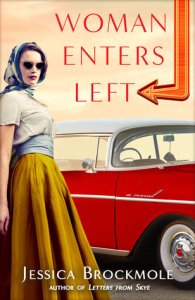
WomanEntersLeftWoman Enters Left by Jessica Brockmole (review copy courtesy of HF Virtual Book Tours)

In the 1950s, movie star Louise Wilde is caught between an unfulfilling acting career and a shaky marriage when she receives an out-of-the-blue phone call: she has inherited the estate of Florence “Florrie” Daniels, a Hollywood screenwriter she barely recalls meeting. Among Florrie’s possessions are several unproduced screenplays, personal journals, and—inexplicably—old photographs of Louise’s mother, Ethel. On an impulse, Louise leaves a film shoot in Las Vegas and sets off for her father’s house on the East Coast, hoping for answers about the curious inheritance and, perhaps, about her own troubled marriage.

Nearly thirty years earlier, Florrie takes off on an adventure of her own, driving her Model T westward from New Jersey in pursuit of broader horizons. She has the promise of a Hollywood job and, in the passenger seat, Ethel, her best friend since childhood. Florrie will do anything for Ethel, who is desperate to reach Nevada in time to reconcile with her husband and reunite with her daughter. Ethel fears the loss of her marriage; Florrie, with long-held secrets confided only in her journal, fears its survival. In parallel tales, the three women—Louise, Florrie, Ethel—discover that not all journeys follow a map. As they rediscover their carefree selves on the road, they learn that sometimes the paths we follow are shaped more by our travelling companions than by our destinations.

TremarnockSummerTremarnock Summer by Emma Burstall (review copy courtesy of Head of Zeus)

Bramble Challoner has had a very normal upbringing. She lives in a semi in the suburbs of London with her parents and works at the call centre down the road. She still goes out with the boy she met at school. At weekends they stay in and watch films on the telly and sometimes hold hands. Bramble is dying for an adventure. So when her very grand grandfather, Lord Penrose, dies, leaving his huge, rambling house in Cornwall to her, Bramble packs her bags immediately, dragging along her best friend Katie. The sleepy village of Tremarnock had better be ready for its newest residents…