
Throwback Thursday: Memento Mori by Muriel Spark

ThrowbackThursday

Throwback Thursday is a weekly meme hosted by Renee at It’s Book Talk.  It’s designed as an opportunity to share old favourites as well as books that we’ve finally got around to reading that were published over a year ago.  If you decide to take part, please link back to It’s Book Talk.

Today I’m reviewing Memento Mori by Muriel Spark, a book from my Classics Club list, first published in 1959. The lovely Ali at Heavenali is running a year long reading event to mark the centenary of Muriel Spark’s birth.  You can find out more information here.


Memento MoriAbout the Book

“Remember you must die,” said the voice on the telephone.

Dame Lettie Colson is the first of her circle to receive these anonymous calls, and she does not wish to be reminded.  Nor do her friends and family – though they are constantly looking out for signs of decline in others, and change their wills on a weekly basis.

As the caller’s activities become more widespread, soon a witch-hunt is in full cry, exposing past and present duplicities, self-deception and blackmail.  Nobody is above suspicion.  Only a few, blessed with a sense of humour and the gift of faith, can guess at the caller’s identity.

Format: Paperback (226 pp.)                         Publisher: Virago
Published: 4th February 2010 [1959]           Genre: Literary Fiction

Purchase Links*
Amazon.co.uk  ǀ  Amazon.com  ǀ Hive.co.uk (supporting local bookshops)
*links provided for convenience, not as part of any affiliate programme

Find Memento Mori on Goodreads


My Review

My only previous experience of Muriel Spark’s writing is The Prime of Miss Jean Brodie.  So I was expecting elegant writing, wit and acute observation but what I wasn’t expecting was the dark satire of Memento Mori and its unflinching portrait of old age, petty foibles and self-deception.  And the author isn’t afraid to deliver some quite breathtakingly sudden reverses for some of the characters. As I was reading the book, I wasn’t sure I liked it that much but, having now finished and reflected on it, I feel rather differently and have come to admire it.

Spark is good at identifying the way in which the elderly are regarded and the indignities that often come with old age.  There is a lot of truth in the depiction of the ‘Grannies’ and their loss of identity.  They are not in fact all grandmothers but referred to in that way by the nurses who care for them.  She’s equally good at pointing out traits which we’ve probably noticed in older relatives ourselves.  For example, frequently telling each other (and possibly reminding themselves) of their age and dwelling on their infirmities.  I’m not sure however that people spend quite as much time changing their wills as they do in Memento Mori.

While I didn’t find the humour in the book to be of the laugh out loud variety, I enjoyed some of the acerbic comments on domestic life.  ‘There was altogether too much candour in married life; it was an indelicate modern idea, and frequently led to upsets in a household, if not divorce…’. 

My favourite character was Charmian, a successful novelist in the past, whose books are now being rediscovered by a new generation (and who does that remind you of?).  At the beginning of the book, she appears increasingly absent-minded, if not in the early stages of dementia, but she turns out to be much sharper than people give her credit for. Some of the other characters are downright unlikeable, such as the dreadful and manipulative Mrs Pettigrew, adept at finding out secrets and using that knowledge to her advantage.  However, likeable or not, all the characters come alive on the page.  There’s Alec Warner with his compulsion for collecting facts about ageing and comparing the infirmities he observes in others with his own situation.  Or Charmian’s husband, Godfrey, with his odd peccadilloes and obsession with people’s loss (or otherwise) of their faculties.

Each of the characters who receive the cryptic message from the anonymous caller reacts differently – with outrage, with determination to find out the caller’s identity, with fear, with an academic interest about their own reaction to it, and in some cases, with acceptance.  The latter is the case with retired Chief Inspector Henry Mortimer, who made me think of the Inspector in J.B. Priestley’s play An Inspector Calls, as he tries to encourage the other recipients of the message to engage with its meaning, its inevitable truth, rather than focus on a search for the identity of the caller.   He greets the message with equanimity himself: “Death, when it approaches, ought not to take one by surprise.  It should be part of the full expectancy of life.  Without an ever-present sense of death, life is insipid.”  I guess that is the real message of the book.

Follow my blog with Bloglovin

In three words: Dark, macabre, satirical
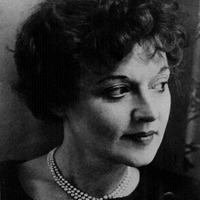

Muriel SparkAbout the Author

Dame Muriel Spark, DBE was a prolific Scottish novelist, short story writer, and poet whose darkly comedic voice made her one of the most distinctive writers of the twentieth century. In 2008 The Times newspaper named Spark in its list of “the 50 greatest British writers since 1945”.  Spark grew up in Edinburgh and worked as a department store secretary, writer for trade magazines, and literary editor before publishing her first novel, The Comforters, in 1957. The Prime of Miss Jean Brodie, published in 1961, and considered her masterpiece, was made into a stage play, a TV series, and a film.

Spark received the James Tait Black Memorial Prize in 1965 for The Mandelbaum Gate, the Ingersoll Foundation TS Eliot Award in 1992 and the David Cohen Prize in 1997. She became Dame Commander of the Order of the British Empire in 1993, in recognition of her services to literature. She has been twice shortlisted for the Booker Prize, in 1969 for The Public Image and in 1981 for Loitering with Intent. In 1998, she was awarded the Golden PEN Award by English PEN for “a Lifetime’s Distinguished Service to Literature”. In 2010, Spark was shortlisted for the Lost Man Booker Prize of 1970 for The Driver’s Seat.

Muriel Spark died in 2006.


Blog Tour/Review: Waking Isabella by Melissa Muldoon

Those yearning for some Tuscan sunshine (or if you’re in the UK, any sunshine) – pay attention!  Because I’m thrilled to be hosting today’s stop on the blog tour for Waking Isabella by Melissa Muldoon, and to talk about this engaging novel set in Italy.

You can watch the book trailer here.

WinVisit the tour page to see all the other great bloggers on the tour and for links to their reviews of Waking Isabella and interviews with Melissa.  You can also enter the giveaway (scroll right down to the bottom of the page) for a chance to win a copy of Waking Isabella or an Amazon giftcard.


Waking IsabellaAbout the Book

While filming a documentary about Isabella de’ Medici – the Renaissance princess who was murdered by her husband – Nora begins to connect with the lives of two remarkable women from the past. Unravelling the stories of Isabella, the daughter of a fifteenth-century Tuscan duke, and Margherita, a young girl trying to survive the war in Nazi-occupied Italy, Nora begins to question the choices that have shaped her own life up to this point. As she does, hidden beauty is awakened deep inside of her, and she discovers the keys to her creativity and happiness. It is a story of love and deceit, forgeries and masterpieces – all held together by the allure and intrigue of a beautiful Tuscan ghost.

Format: ebook, paperback, hardcover (250 pp.) Publisher: Matta Press
Published: 11th December 2017                              Genre: Adult Fiction

Purchase Links*
Amazon.co.uk  ǀ  Amazon.com  ǀ Barnes and Noble ǀ Kobo
*links provided for convenience, not as part of any affiliate programme

Find Waking Isabella on Goodreads


My Review

‘When Isabella woke that morning with intentions of washing her long dark hair, she hadn’t imagined she would be dead before it was dry.’

This arresting opening sentence is the starting point of a journey that will take the reader from 16th century Florence to the Tuscan town of Arezzo in the Second World War and in the present day.   There are sections told from the point of view of Isabella (briefly), Margherita (in wartime Arezzo) but largely from Nora in the present day.  I found these different viewpoints worked better than the occasions where Nora ‘imagines’ or ‘visualizes’ scenes from the past, complete with dialogue.

Following her marriage break-up and other disappointments, Nora is disillusioned, unfulfilled and wondering about how things might have been had her life followed a different course – the road not taken, if you like.  Fate intervenes when old friend, Juliette, contacts her.  The opportunity to travel to Italy to make a documentary about the 16th century Medici princess, Isabella, offers Nora the chance to revisit pleasant memories, renew friendships and recapture the adventurous spirit of her youth. ‘Just seeing Juliette’s name reminded her of a time when she had used another language and had been unafraid to make a choice, travel the world, and take chances.’   

Once arrived in Italy, as Nora visits the locations connected with Isabella, she begins to feel ‘as though she had tapped into Isabella’s persona’. Nora channels the independence of spirit and determination she associates with the Medici princess to reassess her own life and aspirations up to that point.  In due course, Nora’s stay in Arezzo awakes all sorts of other emotions as well and it’s fair to say it isn’t only the charming town that begins to tug at her heart strings.

The author’s passion for Italy and the Italian language is clearly evident in the novel.  I liked the way that the writing style was subtly different for each of the three timelines.  A minor quibble was that, although the reader understands Nora and those she meets are speaking Italian, frequently the dialogue contains a phrase in Italian, followed by the same phrase translated into English and then continues in English.  This device gives the dialogue a lively flavour and a taste of Italian idioms but I found it repetitive after a while.

Aside from the few minor quibbles mentioned above, I really enjoyed Waking Isabella. I liked the idea it explored that events in the past have echoes in the modern day.  As Nora muses, ‘People’s lives, energy, and actions had resounding effects flowing down through the years, touching, inspiring and sparking change.’ Waking Isabella is an engaging story of secrets, passion, loss, courage, betrayal and finding beauty in everything around you whether that’s art, friendship, food, wine, architecture, culture…or handsome jousters.  It will appeal to those with an interest in Italy, art and who like the idea of awakening a little romance in their own lives.

I received a review copy courtesy of the author and Italy Book Tours in return for an honest and unbiased review.

Follow my blog with Bloglovin

In three words: Engaging, romantic, uplifting

Try something similar…The Renaissance Club by Rachel Dacus (click here for my review)


Melissa MuldoonAbout the Author

Melissa Muldoon is the Studentessa Matta—the crazy linguist! In Italian, “matta” means “crazy” or “impassioned.” Melissa has a B.A. in fine arts, art history and European history from Knox College, a liberal arts college in Galesburg, Illinois, as well as a master’s degree in art history from the University of Illinois at Champaign-Urbana. She has also studied painting and art history in Florence.

Melissa promotes the study of Italian language and culture through her dual-language blog, Studentessa Matta (studentessamatta.com). Melissa began the Matta blog to improve her command of the language and to connect with other language learners. It has since grown to include a podcast, “Tutti Matti per l’Italiano,” and the Studentessa Matta YouTube channel. Melissa also created Matta Italian Language Immersion Tours, which she co-leads with Italian partners in Italy.

Waking Isabella is Melissa’s second novel and follows Dreaming Sophia, published in 2016. In this new novel about Italy, the reader is taken on another art history adventure, inspired by Melissa’s experiences living and travelling in Italy, specifically Arezzo, as well as her familiarity with the language and art.

As a student, Melissa lived in Florence with an Italian family. She studied art history and painting and took beginner Italian classes. When she returned home, she threw away her Italian dictionary, assuming she’d never need it again, but after launching a successful design career and starting a family, she realized something was missing in her life. That “thing” was the connection she had made with Italy and the friends who live there. Living in Florence was indeed a life-changing event. Wanting to reconnect with Italy, she decided to start learning the language again from scratch. As if indeed possessed by an Italian muse, she bought a new Italian dictionary and began her journey to fluency—a path that has led her back to Italy many times and enriched her life in countless ways. Now, many dictionaries and grammar books later, she dedicates her time to promoting Italian language studies, further travels in Italy, and sharing her stories and insights about Italy with others. When Melissa is not travelling in Italy, she lives in the San Francisco Bay Area.

Melissa designed and illustrated the cover art for Waking Isabella and Dreaming Sophia. She also curates the Dreaming Sophia blog and Pinterest site: The Art of Loving Italy.

Connect with Melissa

Website ǀ  Facebook  ǀ  Twitter  ǀ  Pinterest ǀ  Instagram ǀ YouTube ǀ Goodreads

ItalyBookToursLogo