Fact in Fiction: 5 Things I Learned From My Reading Last Week

Fact in Fiction

Reading is entertainment but it can also be education.  I thought I’d share just a few of the things I learned from the books I read last week.  Some of the facts I knew about vaguely but other information was completely new to me.  Click on the title of the book to read my review.

What did you learn from your reading last week?


In one of the scenes in The Crowded Street by Winifred Holtby, Muriel Hammond witnesses the shelling of Scarborough during the First World War.

Scarborough lighthouseScarborough was bombarded by German warships on 6th December 1914, part of an attack by the Imperial German Navy on the coastal ports of Hartlepool, West Hartlepool and Whitby in Yorkshire. In total the attack resulted in 592 casualties, many of them civilians, of whom 137 died. In Scarborough, nineteen people were killed.  Buildings damaged included the Lighthouse (which later had to be destroyed), the Royal Hotel, the Grand Hotel and the Town Hall. The furthest bomb damage was three miles inland on a farm.

Source: Wikipedia


In Fault Lines by Doug Johnstone the lead character is named Surtsey by her volcanologist mother.
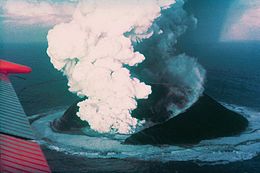
Surtsey IslandSurtsey is a volcanic island located off the southern coast of Iceland.  It was formed in an eruption which reached the surface on 14 November 1963 and lasted until 5 June 1967.  Its name derives from Surtr, a fire giant from Norse mythology.

Source: Wikipedia


The Illumination of Ursula FlightIn The Illumination of Ursula Flight by Anna-Marie Crowhurst, the reader is transported to the theatres of Restoration London, populated by actors and, for the first time, actresses as well as the so-called ‘Orange Girls’.

An ‘Orange Girl’ or ‘Orange Wench’ stood in the pit of the theatre with their backs to the stage and sold oranges in between acts. ‘Orange Girls’ also acted as liaisons between audience members and actresses, running back stage to deliver messages for later rendezvous.

Source: Restoration Theater Blog

WaltScott_Prussian BlueIn Prussian Blue by Phillip Kerr – the twelfth outing for his fictional detective, Bernie Gunther – Bernie is ordered by Erich Mielke, deputy head of the East German Stasi, to murder Bernie’s former lover by thallium poisoning.  His refusal means he’s soon on the run.

The Prussian blue of the title is a dark blue pigment, also known in painting as Paris Blue.  Prussian blue was the first modern synthetic pigment and is more long-lasting than earlier blue pigments derived from natural sources.  It was first synthesised by the paint maker, Diesbach, in Berlin around 1706. More significantly, orally administered, Prussian blue is an antidote for certain kinds of heavy metal poisoning, including by thallium.

Source: Wikipedia


In Grace After Henry, the eponymous couple’s favourite book is Charles Dickens’ A Christmas Carol.

A Christmas CarolA Christmas Carol or, to give it its full title A Christmas Carol in Prose, Being a Ghost-Story of Christmas, was first published in London by Chapman & Hall on 19th December1843.  The first edition sold out by Christmas Eve and, by the end of 1844, thirteen editions had been released.  In 1849 Dickens began public readings of the story which proved so successful that he undertook 127 further performances until 1870, the year of his death.  A Christmas Carol has never been out of print.

Source: Wikipedia


Blog Tour/Review: Ecstasy by Mary Sharratt

Ecstasy Blog Tour Banner FINAL

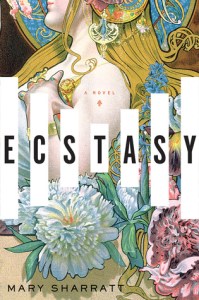
I’m delighted to be hosting today’s stop on the blog tour for Ecstasy by Mary Sharratt which tells the fascinating story of the life and loves of Alma Mahler, wife of the famous composer, Gustav Mahler.  You can read my review below.

WinFor US residents only, there’s a chance to win a paperback copy of Ecstasy.
To enter, visit the tour page here (scroll right down to the bottom for entry form).


EcstasyAbout the Book

In the glittering hotbed of turn-of-the-twentieth century Vienna, one woman’s life would define and defy an era.

Gustav Klimt gave Alma her first kiss. Gustav Mahler fell in love with her at first sight and proposed only a few weeks later. Bauhaus founder Walter Gropius abandoned all reason to pursue her. Poet and novelist Franz Werfel described her as “one of the very few magical women that exist.” But who was this woman who brought these most eminent of men to their knees? In Ecstasy, Mary Sharratt finally gives one of the most controversial and complex women of her time centre stage.

Coming of age in the midst of a creative and cultural whirlwind, young, beautiful Alma Schindler yearns to make her mark as a composer. A brand new era of possibility for women is dawning and she is determined to make the most of it. But Alma loses her heart to the great composer Gustav Mahler, nearly twenty years her senior. He demands that she give up her music as a condition for their marriage. Torn by her love and in awe of his genius, how will she remain true to herself and her artistic passion?

Part cautionary tale, part triumph of the feminist spirit, Ecstasy reveals the true Alma Mahler: composer, daughter, sister, mother, wife, lover, and muse.

Format: Hardcover, eBook (400 pp.)    Publisher: Houghton Mifflin Harcourt
Published: 10th April 2018                      Genre: Historical Fiction

Purchase Links*
Amazon.co.uk  ǀ  Amazon.com ǀ Hive.co.uk (supporting UK bookshops)
*links provided for convenience, not as part of any affiliate programme

Find Ecstasy on Goodreads


My Review

Alma is beautiful, passionate and independent-minded.  She is fond of poetry, drama and literature, and a talented pianist.  She also shows a talent for composition and harbours an ambition to be recognised as a composer of her own music.  However, she is prevented from following her dreams by the constraints of society and the expectations placed on her of marriage and motherhood.  It’s a time when women’s talents and achievements are downplayed or, worse, characterised as ‘unfeminine’.

Alma’s admiration for composers and artists of the day is reciprocated by, amongst others, Klimt and Zemlinsky.  They are attracted by her beauty and her lively conversation.   Neither of these are suitable marriage prospects, however, and by the time she is twenty-one, Alma feels in ‘stasis’, unfulfilled and overwhelmed by an awakening sexuality that she is unable to express.   Her only solace is in music.

Enter Gustav Mahler, the renowned conductor and composer who is as entranced by Alma as she is with his musical talent.  However, when his offer of marriage comes it is accompanied by a condition that will mean Alma sacrificing her own ambitions for her husband’s work and career.  Despite the age difference, warnings from those close to her and her own misgivings about the bargain she is making, Alma accepts his offer of marriage.   Heartbreaking tragedy, illness and separation from friends and family will make Alma’s and Gustav’s marriage at times a tempestuous affair.  As Alma’s mother notes: “Love and marriage.  It’s so much more complicated than people realize.”

I really enjoyed Ecstasy, not least because, in one of those moments of serendipity, I attended a concert of Mahler’s Second Symphony a few nights before starting the book.  Described in the programme as ‘monumental’, it’s certainly epic.  With the biggest orchestra I’ve ever seen (including some offstage), a symphony chorus and two soloists, the composer throws in pretty much everything but the kitchen sink.  However, we didn’t have the five minute pause between the first and second movements that Mahler insisted on for its first performance and which Alma witnesses in the book.

There’s something I find fascinating about reading  – albeit fictionalised accounts – of the lives of women who married famous men because, in almost all cases, it strikes me they were often just as accomplished, if not more, than the men they married.  Yet, like, Alma, they were expected to channel their talents into supporting their husbands, being the perfect hostess and doting mother.   Reading Ecstasy made we wonder if great talent, like that of Gustav Mahler, can ever excuse selfishness and the often casual disregard for those around them.

This is a book rich in historical detail and I loved the way the author evoked the sights and atmosphere of turn of the century Vienna (a city I have visited and really loved) and its musicians, artists and poets.   I also found engaging Alma’s wonder at the sophistication of New York when she and Gustav travel there to pursue his career.   As the author notes in her afterword, Alma led a full life even after the events covered in the novel.  I can only agree with Mary Sharratt when she writes: ‘The deeper I delved into Alma’s story, the more complex and compelling her character revealed itself to be.’ 

I received a review copy courtesy of publishers, Houghton Mifflin Harcourt, and Historical Fiction Virtual Book Tours in return for an honest and unbiased review.

Follow my blog with Bloglovin

In three words: Fascinating, detailed, emotional

Try something similar…The Illumination of Ursula Flight by Anna-Marie Crowhurst (click here for my review)


Mary SharrattAbout the Author

MARY SHARRATT is an American writer who has lived in the Pendle region of Lancashire, England, for the past seven years. The author of the critically acclaimed novels Summit Avenue, The Real Minerva, and The Vanishing Point, Sharratt is also the co-editor of the subversive fiction anthology Bitch Lit, a celebration of female antiheroes, strong women who break all the rules.

Her novels include Summit Avenue, The Real Minera, The Vanishing Point, The Daughters of Witching Hill, Illuminations, and The Dark Lady’s Mask.

Connect with Mary

Website ǀ  Twitter ǀ  Goodreads

Ecstasy Release Promo