Blog Tour/Book Review: Hetty’s Secret War by Rosie Clarke

Blog Tour Poster (1)

I’m delighted to be hosting today’s stop on the blog tour for Hetty’s Secret War by Rosie Clarke which was published by Aria on 19th March 2019.  Thanks to Vicky at Aria for inviting me to take part in the tour and for my review copy.

If you’ve missed previous stops on the tour, you can catch up here:

A look at locations in the book courtesy of The Book Trail 
Review by Amanda at Ginger Book Geek
Review by Julie at Bookish Jottings
Review and extract at The Avid Reader
Extract hosted by Nicola at Short Book & Scribes


hetty's secret warAbout the Book

In 1939, with the world on the brink of war, one women faces a future more uncertain than she had ever imagined…

Georgie – when the man she has always loved is sent to France on a secret war office mission every knock of the door fills her with dread of it being the feared telegram boy…

Beth – orphaned as a child, Beth is coming of age and determined to do her bit for the war effort. Caught up in a whirlwind romance, she marries only to become a war widow… and one expecting a baby who will never know his brave father. Can she find happiness again?

Hetty – desperately trying to make her way back from Paris to her beloved family in England, a fateful and tragic encounter brings Hetty to Chateau de Faubourg where she joins the resistance and risks both her heart and her life fighting for charismatic resistance leader Stefan Lefarge…

However dark the times, courage, determination and the power of friendship can overcome the hardships of war.

Format: Paperback, ebook (336 pp.)    Publisher: Aria Fiction
Published: 19th March 2019          Genre: Historical Fiction, Romance

Purchase Links*
Amazon.co.uk  ǀ  Amazon.com
*links provided for convenience, not as part of any affiliate programme

Find Hetty’s Secret War on Goodreads


My Review

Hetty’s Secret War is the third book in Rosie Clarke’s ‘Women at War’ series.   I haven’t read either of the previous books in the series – Jessie’s Promise and The Runaway Wife – but I’m pleased to say Hetty’s Secret War works perfectly well as a standalone.  However, it does contain references to significant events in the two previous books so it wouldn’t be the place to start for readers planning to read the whole series.

The title and the book description give the impression that Hetty’s story is the main focus of the book but, although hers is certainly the most dramatic, the experiences of the book’s other female characters – Beth and Georgie – also play a major part.  And we shouldn’t forget Hetty’s brother, Ben, who also has a pivotal role in the lives of at least two of the women and whose wartime experiences contribute to a very dramatic and compelling element of the book.

The outbreak of war sees all three women forced to confront changes in their personal lives and the end of the war will see them confronting others.  The book takes readers on an emotional journey revealing the trauma and loss that war can bring as well as the terrible uncertainty about the fate of husbands, lovers, brothers, sons.   It also demonstrates the important contribution of women in wartime, some in roles which involved just as much risk as those on active service.  It also has a chance meeting to rival Casablanca’s ‘Of all the gin joints, in all the towns, in all the world, she walks into mine’, albeit with a bit of role reversal.

Talking of films, as someone who loves films set in World War 2, I particularly enjoyed Beth’s meeting with a handsome stranger on a train that could be straight out of the 1942 film In Which We Serve (directed by Noel Coward) in which ‘Shorty’ Blake (played by John Mills) first meets Freda Lewis (played by Kay Walsh) on a crowded train.

I know Hetty’s Secret War will delight fans of the series and also readers who like a strong element of romance in their historical fiction – and who aren’t adverse to a bit of bedroom action along the way with descriptions that at times leave little to the imagination.  Reading the book, I was most struck by its message of the possibility of second chances and that companionship, affection and trust play just as important a part in the success of a relationship as those ‘weak at the knees’ moments at the beginning of one.  Of course, the perfect solution is to combine both.  You’ll have to read the book to see if Hetty, Beth or Georgie end up in this happy situation.

I received a review copy courtesy of publishers, Aria, and NetGalley.

Follow my blog with Bloglovin

In three words: Dramatic, romantic, passionate

Try something similar… Flight Before Dawn by Megan Easley-Walsh (read my review here)


Rosie ClarkeAbout the Author

Rosie is happily married and lives in a quiet village in East Anglia. Writing books is a passion for Rosie.  She also likes to read, watch good films and enjoys holidays in the sunshine. She loves shoes and adores animals, especially squirrels and dogs.

Connect with Rosie

Website  ǀ  Facebook  ǀ  Twitter  ǀ  Goodreads

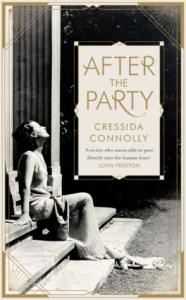
Reading The Walter Scott Prize 2019 Longlist: After the Party by Cressida Connolly

After the PartyAbout the Book

‘Had it not been for my weakness, someone who is now dead could still be alive. That is what I believed and consequently lived with every day in prison.’

It is the summer of 1938 and Phyllis Forrester has returned to England after years abroad. Moving into her sister’s grand country house, she soon finds herself entangled in a new world of idealistic beliefs and seemingly innocent friendships. Fevered talk of another war infiltrates their small, privileged circle, giving way to a thrilling solution: a great and charismatic leader, who will restore England to its former glory.

At a party hosted by her new friends, Phyllis lets down her guard for a single moment, with devastating consequences. Years later, Phyllis, alone and embittered, recounts the dramatic events which led to her imprisonment and changed the course of her life forever.

Format: Hardcover, ebook (272 pp.)    Publisher: Viking
Published: 7th June 2018                         Genre: Historical Fiction

Purchase Links*
Amazon.co.uk  ǀ  Amazon.com ǀ Hive.co.uk (supporting UK bookshops)
*links provided for convenience, not as part of any affiliate programme

Find After the Party on Goodreads


My Review

It’s 1938 and returning to England from abroad, Phyllis gets involved with helping her sister, Nina, organise the summer camp Nina runs as part of her ‘peace work’ for a political movement. For quite a while the identity of the charismatic individual who heads the movement, referred to only as ‘the Leader’, is not revealed, although readers will probably have their suspicions given some of the unpalatable views espoused and the period in which the events take place.  What the book does well is reflect the range of views that prevailed at the time.  How many people were fearful of the prospect of war not so much because they were advocates of appeasement or supporters of the Nazi regime but because they feared the upheaval of war, remembering only too well the carnage wrought by the First World War.

I really enjoyed the way the book explores the changing dynamics of the relationship between the sisters – Phyllis, Nina and Patricia – and their different characters.  Phyllis is the peacemaker of the trio, trying to accommodate other’s wishes.  ‘I always wanted to be friends with both my sisters.  Perhaps that was the source, really, of all the troubles of my life.’

It has to be said that the social circle the sisters move in, particularly Patricia, is not populated by the nicest of people.  It is made up of individuals who don’t really seem to like each other that much but preserve the social niceties whilst attending dinner parties and the like.  Gossipy anecdotes, cruel little asides, mockery and petty snobbery seem to be the order of the day.   It’s a picture of a section of society, with their cooks, parlour maids and drivers, which despite all the airs and graces seem removed from the everyday lives and experiences of most people.    The sort of people who live in houses with a ‘morning room’, such as the house Phyllis’s husband, Hugh, plans to build.  ‘In the mornings Phyllis would be able to take her coffee and write her letters there; perhaps they might install a nice little sofa too, where she might like to sew or read.’

The book opens in 1979 as Phyllis recounts her memories of the period just before the Second World War and during the War itself to an unnamed and unidentified individual researching the history of that time.  What follow are extensive flashbacks as Phyllis recalls events, both public and private.  Some of what she recalls, especially the circumstances of her imprisonment, was certainly new to me and rather an eye-opener.  These sections of the book have a real feeling of authenticity, albeit the events described are slightly bizarre at times.

The author is a skilful writer; I especially liked the imaginative descriptions and quirky similes.  A few of my favourites:
‘Nina’s house stood a little way along from the garage, set back from the road politely, like someone waiting to be introduced.’
‘The tide was out and little boats lolled on their sides in their sandy mud, like the tongues of overheated dogs.’
‘There were blackberries plumping in the hedgerows now and buddleia, giving off a faint scent like pencil sharpenings.’

Although there were elements of After the Party I very much enjoyed, overall I was left with a slight sense of disappointment; the feeling that the book was less than the sum of its parts.  For example, the ‘moment of weakness’ referred to in the blurb seems a minor misdemeanour on Phyllis’s part and one in which she is not really the most guilty party or responsible for what follows.  Yet it seems to weigh on her conscience for the rest of her life so much so that she treats her draconian imprisonment as justified punishment.  Later Phyllis experiences what she views as a ‘betrayal’ but which did not really to amount to anything like that, it seemed to me.

I learned a lot from reading After the Party and appreciated the skilful writing but wanted to feel more enthusiastic about the story than I did. In this respect I seem to be out of step with other readers given the book’s inclusion on the longlist for The Walter Scott Prize for Historical Fiction 2019.

I received a review copy courtesy of publishers, Penguin Books UK/Viking, and NetGalley.

Follow my blog with Bloglovin

In three words: Fascinating, well-researched, intimate


About the Author

Cressida Connolly is a reviewer and journalist, who has written for Vogue, The Telegraph, the Spectator, The Guardian and numerous other publications.

Cressida is the author of three books: The Happiest Days, which won the MacMillan/PEN Award, The Rare and the Beautiful and My Former Heart. Cressida is the daughter of writer Cyril Connolly. In 1985 she married Worcestershire farmer Charles Hudson. They have three children.

Connect with Cressida

Website  ǀ  Goodreads