
WWW Wednesdays – 3rd July ‘19

WWWWednesdays

Hosted by Taking on a World of Words, this meme is all about the three Ws:

  • What are you currently reading?
  • What did you recently finish reading?
  • What do you think you’ll read next?

Why not join in too?  Leave a comment with your link at Taking on a World of Words and then go blog hopping!


Currently reading

hudson's killHudson’s Kill (Justice Flanagan #2) by Paddy Hirsch (hardcover, advance review copy courtesy of Corvus and Readers First)

New York in 1803 is rife with tension as the city expands, and whoever knows where the city will build can control it. And violence builds as a mysterious provocateur pits the city’s black and Irish gangs against each other.

When a young black girl is found stabbed to death, both Justy Flanagan, now a City Marshal, and Kerry O’Toole, now a school teacher, decide separately to go after the killer. They each find their way to a shadowy community on the fringes of the growing city, where they uncover a craven political conspiracy bound up with a criminal enterprise that is stunning in its depravity.

Justy and Kerry have to fight to save themselves and the city, and only then can they bring the girl’s killer to justice.

The Dinner ListThe Dinner List by Rebecca Serle (paperback, courtesy of Readers First)

“We’ve been waiting for an hour.” That’s what Audrey says. She states it with a little bit of an edge, her words just bordering on cursive. That’s the thing I think first. Not: Audrey Hepburn is at my birthday dinner, but Audrey Hepburn is annoyed.”

At one point or another, we’ve all been asked to name five people, living or dead, with whom we’d like to have dinner. Why do we choose the people we do? And what if that dinner was to actually happen? These are the questions Rebecca Serle contends with in her utterly captivating novel, The Dinner List, a story imbued with the same delightful magical realism as One Day, and the life-changing romance of Me Before You.

When Sabrina arrives at her thirtieth birthday dinner she finds at the table not just her best friend, but also three significant people from her past, and well, Audrey Hepburn. As the appetizers are served, wine poured, and dinner table conversation begins, it becomes clear that there’s a reason these six people have been gathered together.

In My Life SignedIn My Life: A Music Memoir by Alan Johnson (hardcover)

From being transported by the sound of ‘True Love’ by Bing Crosby and Grace Kelly on the radio, as a small child living in condemned housing in ungentrified West London in the late 1950s, to going out to work as a postman humming ‘Watching the Detectives’ by Elvis Costello in 1977, Alan Johnson’s life has always had a musical soundtrack. In fact music hasn’t just accompanied his life, it’s been an integral part of it.

In the bestselling and award-winning tradition of This Boy, In My Life vividly transports us to a world that is no longer with us – a world of Dansettes and jukeboxes, of heartfelt love songs and heart-broken ballads, of smoky coffee shops and dingy dance halls. From Bob Dylan to David Bowie, from Lonnie Donnegan to Bruce Springsteen, all of Alan’s favourites are here. As are, of course, his beloved Beatles, whom he has worshipped with undying admiration since 1963.

But this isn’t just a book about music. In My Life adds a fourth dimension to the story of Alan Johnson the man.


Recently finished

20190607_101841The Dancing Floor by John Buchan (paperback)

Vernon Milburne, orphaned since childhood and haunted by a recurring dream, is friends with the protective lawyer and MP, Sir Edward Leithen.

An Aegean cruise takes them to the mysterious island of Plakos, where Vernon is fascinated by the island’s myths.

Local superstitions turn to menace as Vernon’s encounter with a beautiful woman results in obsession and adventure.


What Cathy (will) Read Next

Train ManTrain Man by Andrew Mulligan (ebook, courtesy of Vintage, NetGalley and Random Things Tours)

It’s never too late to get back on track.

Michael is a broken man. He’s waiting for the 9.46 to Gloucester, so as to reach Crewe for 11.22: the platforms are long at Crewe, and he can walk easily into the path of a high-speed train to London. He’s planned it all: a net of tangerines (for when the refreshments trolley is cancelled), and a juice carton filled with neat whisky (for Dutch courage). He has his last credit card taped to the inside of his shoe – and that should make identification swift and easy.

What Michael hasn’t factored in is the twelve minute delay, which risks him missing his connection, and making new ones. He longs to silence the voices in his own head: ex-girlfriends, work colleagues, and the memories from his schooldays, decades old. They all torment him. What he really needs is someone to listen, and help him make sense of his grief.

Journeys intersect. People find people when and where they least expect it. A missed connection needn’t be a disaster: it can save your life.
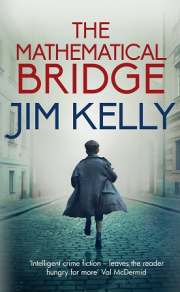
the mathematical bridgeThe Mathematical Bridge by Jim Kelly (hardcover, review copy courtesy of Allison & Busby)

Cambridge, 1940. It is the first winter of the war, and snow is falling. When an evacuee drowns in the river, his body swept away, Detective Inspector Eden Brooke sets out to investigate what seems to be a deliberate attack. The following night, a local electronics factory is attacked, and an Irish republican slogan is left at the scene. The IRA are campaigning to win freedom for Ulster, but why has Cambridge been chosen as a target? And when Brooke learns that the drowned boy was part of the close-knit local Irish Catholic community, he begins to question whether there may be a connection between the boy’s death and the attack at the factory. As more riddles come to light, can Brooke solve the mystery before a second attack claims a famous victim?

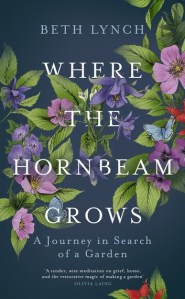
Book Review: Where The Hornbeam Grows by Beth Lynch

where-the-hornbeam-growsAbout the Book

What do you do when you find yourself living as a stranger? When Beth Lynch moved to Switzerland, she quickly realised that the sheer will to connect with people would not guarantee a happy relocation.

Out of place and lonely, Beth knows that she needs to get her hands dirty if she is to put down roots. And so she sets about making herself at home in the way she knows best – by tending a garden, growing things. The search for a garden takes her across the country, through meadows and on mountain paths where familiar garden plants run wild, to the rugged hills of the Swiss Jura.

In this remote and unfamiliar place of glow worms and dormice and singing toads she learns to garden in a new way, taking her cue from the natural world. As she plants her paradise with hellebores and aquilegias, cornflowers and Japanese anemones, these cherished species forge green and deepening connections: to her new soil, to her old life in England, and to her deceased parents, whose Sussex garden continues to flourish in her heart.

Where The Hornbeam Grows is a memoir about carrying a garden inwardly through loss, dislocation and relocation, about finding a sense of wellbeing in a green place of your own, and about the limits of paradise in a peopled world. It is a powerful exploration by a dazzling new literary voice of how, in nurturing a corner of the natural world, we ourselves are nurtured.

Format: Hardcover, ebook (288 pp.)    Publisher: W&N
Published: 18th April 2019 Genre: Nonfiction, Memoir

Purchase Links*
Amazon.co.uk  ǀ  Hive.co.uk (supporting UK bookshops)
*links provided for convenience, not as part of any affiliate programme

Find Where The Hornbeam Grows on Goodreads


My Review

Fellow gardeners will be familiar with the saying ‘Right plant, right place’. What we learn (usually through bitter experience) is that, however hard you try, if you put a plant in a place with the wrong amount of light, moisture or soil acidity it will never thrive. In Where The Hornbeam Grows, the author explores this notion through her own personal experience of being uprooted from her accustomed habitat and transplanted to somewhere new and entirely alien – in this case, Switzerland.

In the first part of the book, following the death of her parents, the author bids a nostalgic farewell to the garden where she grew up and makes the move to Zurich in Switzerland with her partner, Shaun. In a section entitled ‘Uprooted’, she describes the difficulty of adjusting to life in Zurich – the grayness and lack of green space – and to being without a garden, just a window box. The reader gets a very real sense of how important gardening and being in touch with nature has been to the author’s well-being. It’s in her DNA, as it were.

It becomes apparent that it’s not only the absence of a garden that contributes to the feeling of displacement. The author writes with insight (and some humour) about the difficulties she and Shaun face in integrating into Swiss society, whether that’s struggling to pick up linguistic nuances or navigating the intricacies of social customs and manners. I have to say it presents a picture of Switzerland as insular and rather unwilling to openly embrace people of other nations that I found quite surprising.

A trip to the Jura sees the couple finally light upon a place where they feel they can live and, importantly, build a home and a garden. It’s a place to which the author feels an immediate emotional connection. Beth Lynch describes how, over the next few years, she starts to create a garden. She writes evocatively about the plants, local wildlife and surrounding landscape.

There are many references to Milton’s Paradise Lost throughout the book, a work which the author has studied extensively. (The detailed references at the back of the book are testament to this academic rigour.) Talking about the garden in the Jura, she notes, ‘I think the garden led me back into Paradise Lost… because it is the poem of a gardener. One who gardens, who has an affinity for gardens, who thrives on small negotiations with the natural world. Organising, tending, eliciting, pruning: a garden, a poem.’

Although the author and her partner have found a home and a garden in an area they love, they still find themselves, despite their best efforts, set apart from the local community, what the author describes as ‘a cultural disconnect’. In the section entitled ‘The Limits of Paradise’ the author reflects on her realisation that she is lonely. ‘Not just alone… Lonely: lacking ‘conversation’, a being amongst people.’ She admits ‘in time you must acknowledge that you have failed to integrate, for this society is at odds with who you are… It’s a pity, and it is nobody’s fault.’ The couple reluctantly conclude they must leave Switzerland. ‘This is why, even with one another for society, paradise is not enough for Adam and Eve. Paradise is not enough for anyone.’

I loved Where The Hornbeam Grows not just because, as a gardener myself, I can’t imagine not being able to tend and nurture plants, but also because it provides a fascinating insight into the challenges people can face when moving to a new country. It’s also beautifully written with lovely descriptions of plants and the natural world.

I received a review copy courtesy of publishers, Weidenfield and Nicholson, and NetGalley.

Follow my blog with Bloglovin

In three words: Insightful, moving, reflective

Try something similar…The Wild Remedy by Emma Mitchell


Beth LynchAbout the Author

Beth Lynch grew up in rural East Sussex. She read English at Cambridge and went on to complete a doctorate in seventeenth-century literature. For the next decade she worked as a lecturer, creating gardens in her spare time and ultimately training as a garden designer. She then moved unexpectedly to Switzerland, where she lived and gardened for seven years. She has recently returned to the UK. (Bio and photo credit: Orion Books author page)

Connect with Beth

Website  ǀ  Twitter  ǀ  Goodreads