Blog Tour: Surviving the Fatherland by Annette Oppenlander

SurvivingtheFatherlandTour

I’m delighted to host today’s stop on the blog tour for Surviving the Fatherland by Annette Oppenlander and to bring you a fascinating interview with the author about the inspiration for the book.

WinAlso, there’s a fantastic giveaway with a chance to win one of two signed copies of Surviving the Fatherland

To enter, click here


Follow my blog with Bloglovin


SurvivingtheFatherlandAbout the Book

Spanning thirteen years from 1940 to 1953 and set against the epic panorama of WWII, Surviving the Fatherland is a sweeping saga of family, love, and betrayal that illuminates an intimate part of history seldom seen: the children’s war. Surviving the Fatherland tells the true and heart-wrenching stories of Lilly and Günter struggling with the terror-filled reality of life in the Third Reich, each embarking on their own dangerous path toward survival, freedom, and ultimately each other. Based on the author’s own family and anchored in historical facts, this story celebrates the resilience of the human spirit and the strength of war children.

Format: ebook Publisher:   Pages: 355
Publication: 15th March 2017 Genre: Historical Fiction    

Purchase Links*
Amazon.co.uk ǀ Amazon.com ǀ Barnes & Noble ǀ Kobo
*links provided for convenience, not as part of any affiliate programme

Find Surviving the Fatherland on Goodreads


Interview with Annette Oppenlander, author of Surviving the Fatherland

Surviving the Fatherland is based on the experiences of your own family. When did you first learn of their story?

Growing up I always felt there were a lot of stories hidden in my family. I’d hear bits and pieces, quick references or watch my parents nod at each other in silent understanding. As my interest in history grew, my curiosity grew with it. So in 2002 I asked my parents to share their stories. I spent several weeks visiting them in Germany and recording their memories. I remember one afternoon we were in the basement while my mother ironed. I’d ask questions and she’d tell me about the way her mother treated her. I still have those tapes though it’s hard for me to hear my mother’s voice. She passed away in 2004. My mother always insisted that my father was the better storyteller. And while I agree that his activities were quite adventurous, my mother’s quieter side offered a lot of depth. And so I think the two characters balance each other out nicely.

Initially, I had planned to write short stories so my children could remember their grandparents. But then I realized there were few if any stories about Germany’s war children and the civilian side of WWII. Of course, we have excellent and moving stories about the Holocaust and the soldier’s war. There is no shortage of battle scenes. Yet, many battles were fought at home. They weren’t drawing as much attention, but they were just as heroic. I wanted to add complexity to the stereotypical portrayal of Germany in the Third Reich.

What made you decide to tell the story in the form of historical fiction?

It’s difficult to create a biography when you weren’t there to record actual conversations. My parents were young when the war started and much of what they experienced is shown through their eyes. I also wanted some freedom to create characters the reader could identify with and I wanted to tell a story with a message. So, while almost everything in the book is true, I added some characters and plot points that I felt enhanced the story.

The story is told from the point of view of two children, Lilly and Günter. What made you decide on this approach?

This novel went through dozens of revisions and rewrites. In earlier drafts I also had some chapters depicting Wilhelm, Lilly’s father in Russian gulags, her mother meeting the Baroness the first time and Günter’s father in Norway trading with Enar, the Norwegian shopkeeper. In the end I condensed to the two main characters with slightly more emphasis on Lilly. While she had the less adventurous part, she endured a lot of cruelty.

How did you go about your research for the book?

I recorded hours of interviews with my parents in 2002. After that I studied WWII and post-war Germany in detail, particularly as it pertained to Solingen. I visited the city archives several times, even found a newspaper reference to my grandfather, Wilhelm – Lilly’s father – returning home in September 1953. I read a number of books about WWII and about Russian gulags. None of the Russian experience made it into the novel, but I’m currently working on a new story about Wilhelm. I also found a lot of personal photos in my father’s cupboards.

What was the most surprising fact you came across during your research?

I had a pretty good handle on wartime Germany, but I found out some interesting information about the post-war era. For instance, between 1945 and 1948 Germany’s currency, the Reichsmark, went into free fall with runaway inflation. At the same time, people still starved which caused the need for black markets and cross-country hamster/bartering trips. Stores remained empty until June of 1948 when the Deutsche Mark (DM) was introduced. But even the night before, stores still showed signs like “out of stock, sold out or closed for remodeling.” The next morning, all stores were filled with goods of all imaginable kind: flour, butter, sugar, chocolate, camera equipment, undergarments and household goods. You name it—it was there. The introduction of the DM ended the ration system in Germany and it also ended starvation.

What was the biggest challenge you encountered when writing the book?

I think one reason why it took me 15 years to finish the novel was that I was too close to the story and quite emotionally involved. It took time to step back, hone my craft, and arrive at Lilly’s and Günter’s voices. I also struggled with the structure, i.e. whether to go chronologically or back and forth. I tried all sorts of arrangements, but ended up going with the chronological order.

When you look back on what your own family experienced during WW2, what is your overriding feeling?

I’m amazed they made it through and didn’t go crazy in the process. Especially my mother had such a horrific time. She should’ve been a basket case, but she was a very caring mother. The other feeling I experience now is gladness that I was able to get their stories told. So many readers comment how they never realized the plight of the German war children and that they learned a lot.

What is your favourite and least favourite part of the writing process?

One of the challenges is to know when to start writing. As a historical novelist one has to have a good grasp of the era, the world the story takes place in. I find myself wanting to write before I’ve done all the necessary research. It is a fine line to walk.

Which other writers do you admire and why?

I admire many authors for various reasons. Some are/were quite prolific, others have written profound stories, even classics. Reading these stories has somehow informed my life and my writing. Many have touched me emotionally. Here are a few in no particular order: Stephen King, Ken Follett, Harper Lee, James Alexander Thom, Mark Twain, Jane Austen, Charles Dickens.

What are you working on next?

As I mentioned I’m currently researching WWII from the German soldiers’ perspective. I’m getting in touch with the German military government to see if any records exist of my grandfather. This way I could place him exactly in the right unit. If I find what I’m looking for, I’ll write a novel about Wilhelm in the war and his nine years as a POW in Russia. I recently finished Broken Journey, a story set during the American Civil War. It is about a boy’s choice to protect his best friend, a slave, from a brutal attack which forces both on separate journeys: one escapes into war, the other is sold into slavery. Told from alternating viewpoints, one black and one white, the story examines the power of hope and friendship, and the endurance of the human spirit to find a way home. I’m hoping to get Broken Journey published later this year.

Thank you, Annette, for sharing those fascinating insights into your very personal connection with this book.
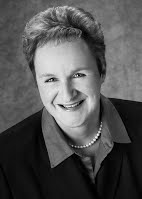

AnnetteOppenlanderAbout the Author

Annette Oppenlander is an award-winning writer, literary coach and educator. As a bestselling historical novelist, Oppenlander is known for her authentic characters and stories based on true events, coming alive in well-researched settings. Having lived in Germany the first half of her life and the second half in various parts in the U.S., Oppenlander inspires readers by illuminating story questions as relevant today as they were in the past. Oppenlander’s bestselling true WWII story, Surviving the Fatherland, was elected to IWIC’s Hall of Fame and won the 2017 National Indie Excellence Award. Her historical time-travel trilogy, Escape from the Past, takes readers to the German Middle Ages and the Wild West. Uniquely, Oppenlander weaves actual historical figures and events into her plots, giving readers a flavor of true history while enjoying a good story. Oppenlander shares her knowledge through writing workshops at colleges, libraries and schools. She also offers vivid presentations and author visits. The mother of fraternal twins and a son, she lives with her husband and old mutt, Mocha, in Bloomington, Ind.

Connect with Annette

Website ǀ Facebook ǀ Twitter ǀ Pinterest ǀ Blog  ǀ Goodreads

RABT Book Tours


Interview: Ed Duncan, author of Pigeon-Blood Red

Today’s guest on What Cathy Read Next is Ed Duncan, author of the action-packed thriller, Pigeon-Blood Red. I’m delighted that Ed has agreed to answer some questions about the book and his approach to writing.

Follow my blog with Bloglovin


About the Book

Publisher’s description: For underworld enforcer Richard “Rico” Sanders, it seemed like an ordinary job. Retrieve his gangster boss’s priceless pigeon-blood red ruby necklace and teach the double-dealing cheat who stole it a lesson. A job like a hundred before it. But the chase quickly goes sideways and takes Rico from the mean streets of Chicago to sunny Honolulu, where the hardened hit man finds himself in uncharted territory when a couple of innocent bystanders are accidentally embroiled in the crime. As Rico pursues his new targets, the hunter and his prey develop an unlikely respect for one another and Rico is faced with a momentous decision: follow his orders to kill the couple whose courage and character have won his admiration, or refuse and endanger the life of the woman he loves?

Praise for Pigeon-Blood Red:

“In a novel with as much action as love, it is sure to be a story that will fulfil the desires of readers of all ages, genders, and areas of interest.” (4 Stars, Red City Review)

Pigeon-Blood Red, at 238 pages, is not particularly long as books go but Duncan packs a lot of story into those pages. Readers in search of a tight, well written, good guy versus bad guy, crime/action/adventure will find Pigeon-Blood Red by Ed E. Duncan, an engrossing story that will keep them involved to the end. And like me, they will find themselves eagerly awaiting the next instalment.” (Mike Siedschlag)

“This charming, classically-told crime thriller is a must for noir fans…refreshingly old-school pulp, inhabited by a familiar cast of gamblers, con men and hustlers found in Dennis Lehane and Elmore Leonard novels” (5 Stars, Best Thrillers)

Format: ebook Publisher:   Pages: 202
Publication: 23rd Aug 2016 Genre: Thriller    

Purchase Links*
Amazon.co.uk ǀ Amazon.com ǀ Barnes & Noble *links provided for convenience, not as part of any affiliate programme

Find Pigeon-Blood Red on Goodreads


Q&A with Ed Duncan, author of Pigeon-Blood Red

Without giving too much away, can you tell me a bit about Pigeon-Blood Red?

Pigeon-Blood Red is an interracial crime novel that tells the story of a complex underworld enforcer – a killer with a conscience – who is in pursuit of a small-time businessman who opportunistically stole a “pigeon-blood red” ruby necklace worth millions. He trails the thief from Chicago to Honolulu, but the chase goes sideways after the hardened hit man develops a grudging respect for one of two innocent bystanders who become embroiled in the crime: an African American lawyer who is an old flame of the thief’s unsuspecting wife and comes to her rescue as the enforcer closes in. The hit man ultimately faces a difficult decision: follow orders and kill the unlucky bystanders or spare them and endanger the life of the woman he loves.

The book has an arresting title — how did you come up with it?

“Pigeon-blood red” is a term coined by Indian gem dealers centuries ago and describes the colour of the first few drops of blood that trickle from the nostrils of a freshly-killed pigeon. It is the most desirable colour a ruby can have and hence such rubies are the most valuable. The phrase has two attributes that recommend it. It describes a distinctive characteristic of the “McGuffin” in the novel, i.e., the thing that both jump-starts the action and propels it forward. But for its theft and the hunt to retrieve it, there would be no novel. Second, the phrase is extremely evocative, suggesting mystery and intrigue. It replaced my original, more pedestrian title, which was Murder in Paradise.

Your protagonist, Richard “Rico” Sanders, is an underworld enforcer. What are the challenges of having a main character who could be considered an “anti-hero?”

I needed to make Rico acceptable to readers. I think readers will identify with an “anti-hero” so long as he possesses enough positive traits that they at least partially offset his negative ones. This means he can never do anything that is so repulsive or vile that his positive traits become so overwhelmed by the negative ones that he becomes irredeemable. This is true of the Vito and Michael Corleone characters in the Godfather novel and in parts one and two of the movie. (I didn’t care for part three and leave it out of this analogy.) By the end of part two of the movie, Michael’s character has in fact become irredeemable, but by then the audience has followed, and become absorbed in, his journey to that point. In my novel Rico is a killer with a conscience. He doesn’t kill children and kills women only reluctantly when they give him a sufficient reason. Indeed, he thinks (but sometimes doubts) that everyone he’s killed “had it coming.”

In a book as action-packed as Pigeon-Blood Red, how do you create the right balance between action and character development?

I must admit that it was pure instinct. My goal was to write a fast-paced, enjoyable novel. In the process I tried not to sacrifice character development on the altar of action. I tried to do that by providing enough back-story about the main characters to allow the reader to empathize with them and to make their actions and reactions believable. I can only hope I struck the right balance.

Pigeon-Blood Red is the first in a planned trilogy. Do you have the structure of the remaining two books already worked out?

I’m just finishing the second in the trilogy. The title is The Last Straw and I hope it will be published this summer or fall. The third began life as a screenplay so I have to adapt it to novel form. It’s tentatively entitled Rico Stays. I hope to publish it a year after publication of The Last Straw.

Pigeon-Blood Red is your first novel. Can you tell us a bit about your writing journey?

I was inspired to write Pigeon-Blood Red while at a legal seminar in Honolulu years ago. The idea just came to me out of the blue. Of course it was not fully formed. I only knew I wanted to have a beautiful woman in jeopardy and a lawyer who comes to her rescue after matching wits with a cunning foe. Over the ensuing months and years, the plot of Pigeon-Blood Red came together in its current form. I submitted queries to multiple agents with no success.

In the meantime I went to writers seminars and finished the first draft of The Last Straw, which was originally called Red Autumn. Eventually I became disillusioned and decided to try writing screenplays. I purchased a few “how to” books and converted my novels to scripts which I entered in multiple screenplay contests. Red Autumn actually fared better than Pigeon-Blood Red and was a finalist in one contest while Pigeon-Blood Red made the quarter finals in various contests. Rather than writing a third novel in the trilogy, I wrote a third screenplay, Rico Stays, which also made the quarter finals of a few contests.

Finally, through the efforts of a company that has been trying to interest producers in my scripts, I made contact with a small independent publisher that liked Pigeon-Blood Red and agreed to publish it. Unfortunately, that publisher ceased operations six months after the novel was published and I self-published it thereafter. With the assistance of a good publicist, I’ve managed to garner close to 40 reviews on Amazon and Goodreads.

What has been your favourite part of the writing process so far? And your least favourite?

My favourite part has been writing and crafting evocative phrases, sentences, paragraphs, and pages. I find that deeply satisfying and the possibility that readers will share my enthusiasm is a bonus. My least favourite part has been having to market my book. I’m most comfortable behind a desk writing. Marketing is the antithesis of that. Fortunately, having a good publicist helps but even then there is no guarantee of breaking through in a very crowded field of excellent writers.

Which other writers do you admire and why?

Some of my favourite writers are Dashiell Hammett, Ernest Hemingway, James Jones, Somerset Maugham, Richard Wright, Ken Follett, Theodore Dreiser, Scott Turow, Dennis Lehane, Walter Mosley, Frederick Forsythe and Lee Child. Since I write crime fiction, the authors I most admire in that genre are Dashiell Hammett and Lee Child. Hammett’s The Maltese Falcon first got me hooked on crime fiction. His dialogue is riveting and pitch perfect. Lee Child’s novels are gripping and “unputdownable,” and Rico, the anti-hero in my novels, owes much to Jack Reacher, as they share a number of character traits. They are both loners who have a sardonic wit, who have their own sense of right and wrong, and who do not suffer fools gladly.

If Pigeon-Blood Red was made into a film, who would be your choice of lead actors and director?

I see Jon Hamm as Rico, Idris Elba or Chiwetel Ejiofor as Paul, Paula Patton, Gabrielle Union, Zoe Saldana or Gugu Mbatha-Raw as Evelyn, Terence Howard as Robert, Meagan Good or Regina Hall as Rachel, and Paul Giamatti or Christopher Walken as Litvak. Directors whose names come to mind include Ric Roman Waugh (Felon, Snitch) and George Tillman, Jr. (Men of Honor, Faster, Notorious, The Immutable Defeat of Mister and Pete).

[Gosh, Ed, you have nearly the full cast worked out!]

Do you see yourself sticking to the crime/thriller genre or exploring other genres in the future?

I do see myself sticking to the crime genre. At some point, however, I’d like to try my hand at a literary novel in the vein of An American Tragedy or Of Human Bondage.

Thanks for such fascinating answers, Ed.  I’m sure readers of Pigeon-Blood Red will be thrilled to know Rico’s adventures will continue.  


EDDUNCANAbout the Author

Ed Duncan is a graduate of Oberlin College and Northwestern University Law School. He was a partner at a national law firm in Cleveland, Ohio for many years. He currently lives outside of Cleveland, OH and is at work on the second instalment in the Pigeon-Blood Red trilogy.


Connect with Ed

Website ǀ Facebook ǀ Twitter ǀ Goodreads