Interview: Untangling the Black Web by T. F. Jacobs

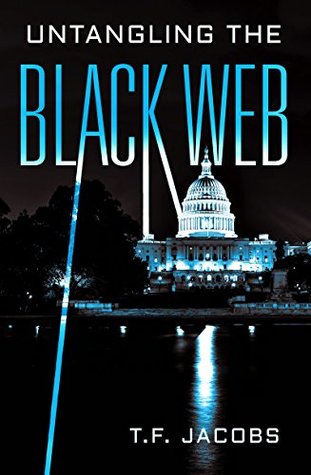
My guest today on what Cathy Read Next is T. F. Jacobs, author of Untangling the Black Web, an exciting political thriller involving corruption in the US medical system. I’m thrilled to bring you an interview with the author in which he talks about the inspiration behind the book and his approach to writing.

WinAnd T. F. Jacobs is offering one lucky reader the opportunity to win their own copy of Untangling the Black Web – paperback (US) or ebook (INTL).

To enter the giveaway click here.

The giveaway closes 12.00am GMT on 19th November 2017
Follow my blog with Bloglovin


Untangling the Black WebAbout the Book

When David’s wife dies at the hands of a corrupt medical system, David is out for justice. With his skills as a lawyer and his position inside the biggest health insurance company in America – American True Care – he plans to bring down the system, from the inside.

David begins to work his way up the company while recruiting a clandestine team to build a covert case against American True Care. But this is a dangerous game and the players have ties to the highest levels of government. Propped up by lobbyists, senators, congressmen, and even the White House, American True Care will do whatever it takes to keep hold of its power.

As the web of deception and danger tightens around David and his team, they begin to realize that to win they have to risk it all – even their lives.

Format: eBook, paperback (252 pp.)   Publisher:
Published: 10th October 2017               Genre: Thriller

Purchase Links*
Amazon.co.uk ǀ Amazon.com
*links provided for convenience, not as part of any affiliate programme

Find Untangling the Black Web on Goodreads


Interview with T. F. Jacobs, author of Untangling the Black Web

Without giving too much away, can you tell me a bit about Untangling the Black Web?

I’d love to. Untangling the Black Web is about a man, David Higgins, who works for the largest health insurance company in the US. When his wife dies due to questionable medical practices that aren’t covered under his insurance plan, David decides to take on the system from the inside. He puts together a team of insiders and begins to work his way up the insurance company to a lobbyist position, where he works with senators and congressmen. But these are powerful people with dangerous ties. It becomes a race to build an incriminating case he can take to court before he and his team are found out.

What was the inspiration for the book?

There are some big issues in healthcare across the world and specifically in the US, and a lot of the issues stem from areas most people don’t focus on. I wanted to raise awareness about some of the things happening behind the scenes in regards to lobbying, contract loopholes, unregulated costs, lack of transparency, etc. I also wanted to make sure I presented these issues in a fun and exciting manner that made people interested in reading it.

The US health care system has been in the news a lot recently. Was it difficult tackling an issue that is the focus of such political debate?      

Yes! A big yes to this question. Everyone has their opinion on the matter one way or another. I was very careful to take a middle approach that didn’t take a political side one way or another. We can still raise awareness to the issues without taking sides, and I hope I did that in an entertaining way.

You’ve chosen an arresting title for the book. How did you come up with it?

Thank you, the title was one of the first things that came to me. The American Healthcare system is so complex with so many interconnected pieces, that to me, it seems like one big, dark spider’s web.

What was the biggest challenge you encountered when writing the book?

The research was a challenge for me. I like to write fast and exciting stories, and often the research slows me down. There was a lot to get right when it comes to healthcare, doctors, insurance, and lobbying.

Untangling the Black Web is your first published novel. Can you tell us about your writing journey?

Untangling the Black Web is actually my second book. My first is in a much different genre, and the two reader bases don’t mix. But as far as the process goes, I wrote the book in a little less than a month. For some reason everything was flowing. I went through two editors, and then started looking at how to get it out. I reached out to a few agents and actually had several requests to read the manuscript, but something I kept hearing was that Amazon publishing and self publishing dominate the market for political thrillers and other thrillers of the likes. So I found out about Kindle Scout, which is a competition if you will, where writers can submit their books, and after a 30 day campaign, Amazon will give you a definitive yes or no. Somewhere between 1-3% of books end up being selected for a publishing contract through the Amazon Imprint, Kindle Press. I was hopeful, but not optimistic given the odds, but a couple days after the campaign I was ecstatic to learn they’d selected Untangling the Black Web for publication.

To what extent has your background in marketing and advertising been helpful when promoting your book?

Marketing is everything when it comes to a book’s success. There are all sorts of avenues to pursue, like social media, search engine ads, blogs, and grassroots getting the word out. The book has done well so far, but my goal is to gather as many readers as possible, so there is still a ways to go.

Do you have a special place to write or any writing rituals?

I try to write in the first hours of the day before the day fully begins. Writing at home can be difficult because of how easy it is to get distracted, so I prefer to get out to a park or coffee shop.

Which other writers do you admire?

Blake Crouch is great when it comes to keeping you turning the pages. The late Stieg Larsson of the Girl with the Dragon Tattoo series is one of my all time favourites. I also enjoy psychological thrillers like Gone Girl by Gillian Flynn. Such rich characters.

What are you working on next?

I’m actually working on a psychological thriller that I’ve just finished and am starting the editing process on. I’m super excited about it, so we’ll see what happens.

Thanks for those fascinating answers to my questions.  I’m sure the lucky winner of the giveaway will be thrilled to read Untangling the Black Web


T F JacobsAbout the Author

T.F. Jacobs writes stories, that as a reader, he’d want to pick up and never put down. Fast-paced stories tackling hot-button issues with twists and turns to keep you guessing till the end. Before focusing his career on writing, he worked in marketing and advertising. When Jacobs isn’t working on a book, you’ll find him at one of Southern California’s many beautiful beaches.

Connect with T. F. Jacobs

Website ǀ Facebook ǀ Goodreads


Blog Tour: The Secret Life of Alfred Nightingale by Rebecca Stonehill

Today’s guest on What Cathy Read Next is Rebecca Stonehill, author of The Secret Life of Alfred Nightingale. The Secret Life of Alfred Nightingale is Rebecca’s third novel and I’m delighted to bring you my interview with Rebecca as part of the blog tour for the book. In it Rebecca talks about secrets, bringing to life the 1960s and her passion for history.

Follow my blog with Bloglovin


The Secret Life of Alfred NightingaleAbout the Book

1967: Handsome but troubled, Jim is almost 18 and he lives and breathes girls, trad jazz, Eel Pie Island and his best friend, Charles. One night, he hears rumours of a community of young people living in caves in Matala, Crete. Determined to escape his odious, bully of a father and repressed mother, Jim hitchhikes through Europe down to Matala. At first, it’s the paradise he dreamt it would be. But as things start to go wrong and his very notion of self unravels, the last thing Jim expects is for this journey of hundreds of miles to set in motion a passage of healing which will lead him back to the person he hates most in the world: his father. Taking in the counter-culture of the 1960’s, the clash of relationships between the WW2 generation and their children, the baby boomers, this is a novel about secrets from the past finally surfacing, the healing of trauma and the power of forgiveness.

Format: eBook (299 pp.)                          Publisher: Sunbird Press
Published: 11th November 2017                 Genre: Historical Fiction

Purchase Links*
Amazon.co.uk ǀ Amazon.com
*links provided for convenience, not as part of any affiliate programme

Find The Secret Life of Alfred Nightingale on Goodreads


Interview: Rebecca Stonehill, author of The Secret Life of Alfred Nightingale

Without giving too much away, can you tell us a bit about The Secret Life of Alfred Nightingale?

This story begins in 1967 with arrogant eighteen-year old Jim, following his painful transition into manhood, with glimpses into his insecurities and what might lie behind them. One night, he hears rumours of a group of young people living in some caves in southern Crete. Determined to see the place for himself, and against the wishes of his oppressive, out of touch father, he enlists the support of his best friend and hitchhikes down to Matala in Crete. Initially, Jim is spellbound by the place and the community of young travellers living there. But as the days go by, his insecurities come to the fore and the very last thing he expects happens: this journey of hundreds of miles sets in motion a passage of healing which will lead him back to the person he most hates in the world: his father.

What was the inspiration for the book?

The setting came first. My mother Elizabeth (to whom I have dedicated the book) spent some time in Matala in her early twenties. I was always intrigued by the stories she told me and the photographs I looked at of these young people standing outside the Neolithic caves, almost looking like cavemen and women! My own travels at around the same age as my mother and Jim had a huge impact on me and I wanted to explore that period we all go through, when we are trying to assert our independence in the world and carve our unique paths, but are often painfully self-conscious and unsure of ourselves. At the same time, I did not want my book to simply be a coming of age story, hence the second half that is set in Crete during the Second World War.

The Secret Life of Alfred Nightingale is set partly in the 1960s. How did you go about creating an authentic picture of life in that period?

I read a number of novels set in the 1960s, trawled the internet for information and mined the memories of a large number of people from my parents’ generation who were young people during that time. A couple of people shared their diary entries with me; this was fascinating and helped to bring certain details to life, such as expressions of the time in common usage. I also love music and the novel is peppered with references to songs and musicians. I had a lot of fun reaching out to members of a book group on Facebook I am a member of and asking them to share with me (if they were around then!) their favourite songs of 1967. Music is so evocative and although I was born a decade later, simply by listening to music of this period, I was able to wind back the clock.

In the book, secrets from the past are uncovered. Why do you think secrets are so enticing to us as readers?

I think it’s so interesting what we share with one another and what we decide to keep to ourselves. I am fascinated by words left unspoken and this, essentially, is what secrets are. As readers, we need a force of some kind to propel us through a story: something to find out and mysteries to be revealed. In Jim’s case, he is not even aware that secrets exist. All he is able to sense is that something is wrong, but it is not until he travels to Crete and back again to England to the fate that awaits him that he can start to understand where his discomfort stems from.

One of the settings for the book is Eel Pie Island on the River Thames near London, famous as a location for live music in the 1960s. If you’d been around then, which group or solo artist would you have loved to see perform live?

Funnily enough, I have a playlist on Spotify that kept me company during the writing of the early Eel Pie Island scenes in the book. They are all artists who performed back then on the island, crowds of young people going wild over them. Eel Pie Island is famous for playing host to bands such as The Rolling Stones and Pink Floyd (before they were huge names) but if I’d had the opportunity to go to a live concert on the island in the sixties, I would love to have heard some of those less well known bands.  Jim and his friends dance to The Yardbirds in my book – I’d love to have joined them. They have such a distinctively Sixties sound and look and their music is very danceable!

Your previous books, The Poet’s Wife and The Girl and the Sunbird, were set in 1920s Spain and turn of the century East Africa. What is it you enjoy about writing historical fiction?

When I write (though not necessarily when I read), I like to inhabit a world that is completely different from the one I live in. Of course, this doesn’t limit me to writing historical fiction, but I am drawn to the questions that historical settings offer: How did people live in this era? What did they wear and what did they eat? How did social norms differ, particularly for women?

As a child, I loved visiting old, historical houses and gardens. I felt as though I had jumped into the pages of The Secret Garden or Miss Havisham’s crumbling mansion. Strangely, I didn’t enjoy history much at school, as it was all about reading text-books and felt rather wooden and dry. For me, history means visiting those places, delving into museums and archives, asking questions and watching films and reading books set in the period. It’s like solving a huge mystery. Even when I went to University, I chose Durham for the (rather shallow!) reason that I would be surrounded by beautiful old buildings. I’ve never grown out of that sense of wonder at the past, one reason why it is such a treat to live in a historical old house in Nairobi.

And what attracts you to a particular historical period?

It helps if I have lived somewhere to pique my interest in its past (i.e. Granada, Nairobi & Twickenham) but it doesn’t just have to be this. A few years ago, I walked past an old meat market building in East London and read a small plaque. It said that in the 18th Century, women were sold on this site by their husbands. This is horrifying! But also fascinating, and I have stored this away for use as a possible future book.

[We’ll watch out to see if that turns up in one of your books!]

Do you have a special place to write or any writing rituals?

I live in an old timber cottage in a suburb of Nairobi and I sit every morning on the wooden verandah to write. People are often surprised to hear that Nairobi can get quite chilly, as the city sits at an altitude of 2000 metres above sea level. Because of this, I normally start the day wrapped in blankets and even a hat and as the day warms up, the layers are removed! I am surrounded by tropical birds and old trees and also, a sense of history as this cottage is one of the oldest houses in the area. I find that mornings are my best time to write. In many ways, this is strange as I am not a morning person at all and find I am far more awake in the evenings. But this dreamy morning state I find myself in must be conducive to writing!

Which other writers do you admire?

There are so many I could mention here! But to name a few: Susan Fletcher, Maya Angelou, Niall Williams, Jo Baker, Jill Dawson, Kazuo Ishiguro and Maggie O’Farrell. I love a combination of beautifully crafted prose and a cracking good story.

What are you working on next?

We have seen so much on the news over the past years of the refugee crisis. These people become facts and figures and we become desensitized to the plight of refugees seeking better lives. I hope to be able to humanize and personalize a story of one family of refugees fleeing war-torn Syria, including a historical element that rewinds the clock to the days when this country was considered the jewel of the Middle East. Watch this space!

Can’t wait, Rebecca. Thank you for those absolutely fascinating answers. It’s certainly made me eager for The Secret Life of Alfred Nightingale to reach the top of my review pile.


Rebecca StonehillAbout the Author

Rebecca Stonehill is from London but currently lives in Nairobi with her husband and three young children where she set up Magic Pencil, an initiative to give children greater access to creative writing and poetry. She has had numerous short stories published over the years, for example in Vintage Script, What the Dickens magazine, Ariadne’s Thread and Prole Books but The Poet’s Wife (Bookouture) was her first full-length novel, set in Granada during the Spanish Civil war and Franco’s dictatorship. Her second novel, The Girl and the Sunbird, was published by Bookouture in June 2016. Her third novel, set in Crete in WW2 and the 1960’s will be published on 11th November 2017.

Connect with Rebecca

Website ǀ Facebook ǀ Twitter ǀ Pinterest ǀ Goodreads