#BookReview Saving The World – Women: The Twenty-First Century’s Factor for Change by Paola Diana

Saving the WorldAbout the Book

Part manifesto for change, part historical and sociological essay, Saving The World charts women’s condition through the centuries, analysing their treatment within political, religious, economic and societal contexts to form a bigger picture of their place in the world; because to understand the present, and make a meaningful difference, we must get to grips with the past. This is a journey that concludes with a clear vision for a better society in which all women are set free from fear, violence and oppression. Paola Diana impresses on us that this world we inhabit, dominated by men and often seemingly immutable, is far from the only one possible.

Already a bestseller in Italy, this translation has been extensively revised by the author to incorporate recent events that impinge on women’s rights and the struggle to achieve equality. A vivid call for change, Paola Diana’s polemic should be read by all in powerful positions in government, industry and cultural institutions.

Format: Paperback (161 pages)   Publisher: Quartet
Publication date: 2nd May 2018 Genre: Nonfiction

Find Saving The World – Women: The Twenty-First Century’s Factor for Change on Goodreads

Purchase links
Bookshop.org
Disclosure: If you buy a book via the above link, I may earn a commission from Bookshop.org, whose fees support independent bookshops

Hive | Amazon UK
Links provided for convenience only, not as part of an affiliate programme


My Review

I found this book thought-provoking in the sense that it made me think but that parts of it provoked me.

Whilst I admired the author’s passionate advocacy for the importance of education for girls and women, there were numerous statements I found contradictory. For example, the author is dismayed at the tendency for women to be judged on their appearance and feel pressurised into resorting to cosmetic surgery to disguise the signs of ageing, yet elsewhere she urges the need for ‘icons of beauty’.

I also found myself taking issue with the author’s suggestion that some characteristics are innately feminine, such as sensitivity and an inclination to take care of others. Echoing the book’s title, she states women are saving the world ‘because they have an attitude of love…an empathetic and multi-faceted perspective’. She contrasts this with ‘brute strength’ which, she seems to suggest, is an innately male characteristic. However, later she argues that mothers have a responsibility to raise ‘mindful and respectful’ sons, suggesting that failing to do so means they must accept some of the blame for perpetuating inequality.

I felt the author had a tendency to present statements of belief as statements of fact. For example, stating, ‘When a woman has a job, she gains more dignity in the eyes of her partner, she feels independent, has high self-esteem and does not tolerate either physical or psychological violence’.  Is she really saying that women who don’t work, perhaps because they have caring responsibilities, shouldn’t expect those benefits or that no women who works has ever experienced domestic violence?  The author also goes on to suggest, without any supporting evidence I could see, a causative link between work, the stress caused by not being able to have children and a resultant decrease in fertility. 

I don’t think many would argue with the author’s selection of Malala Yousafzai as a role model for women because of her campaign for the education of girls but some of the author’s other choices seemed distinctly bizarre. For example, Coco Chanel who, although undoubtedly a pioneer in women’s fashion, was accused of collaboration with the Nazis during World War 2 and held some very unsavoury anti-Semitic views. Similarly, although unarguably a publishing phenomenon, J K Rowling’s views on transgender issues have been controversial. In fact, Saving the World is largely silent when it comes to transgender people. And as a male role model Edward VIII seems an odd choice. Yes, he sacrificed his position because of his love for a woman but he was a serial adulterer and made a controversial visit to Germany in 1937 during which he had a meeting with Adolf Hitler. 

Where I thought the book was strongest was in shining a light on the oppression that some women face, and setting out practical steps that governments could take to advance the position of women. For example, supporting feminist movements in countries where women face discrimination or making equal rights a condition of membership of economic or political institutions, such as the European Union.  However, I found the author’s assertion that ‘A good mother is a working mother who sets an example to her children of sacrifice and duty’ overly simplistic. 

I received a review copy courtesy of Quartet Books and Midas PR.

In three words: Thought-provoking, passionate, idealistic

Follow this blog via Bloglovin


About the Author

Paola Diana is an entrepreneur, author and activist, and a regular contributor on TV and radio, both in the UK and Italy. After leading a think tank in support of former European and Italian President Romano Prodi’s political campaign, she went on to found and chair the Diana Group, a market leader in recruitment and lifestyle services for high-net-worth individuals, families and corporations around the world. Diana’s work in this field led to her inclusion in the 2017 edition of Spear’s 500.

Connect with Paola
Website | Twitter | Instagram

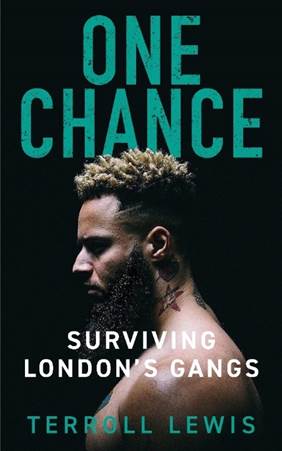
#Extract One Chance: Surviving London’s Gangs by Terroll Lewis @midaspr

I’m delighted to be joining the launch celebrations for One Chance: Surviving London’s Gangs by Terroll Lewis Published by Ad Lib in hardcover and as an ebook on 21st January 2021, it’s been described as “2021s most inspirational true story”. In advance of publication, I’m able to bring you an extract from the book.  Please be aware it does contain some swear words.


One ChanceAbout the Book

“It’d be easy for me to go back to my old life, but I know where that old life leads you. You’re either behind prison bars or six feet underground.”

Born and raised on Brixton’s notorious Myatt’s Field and Angell Town estates, Terroll Lewis has lived a crazy life. Surrounded by gang culture from an early age, like so many other young inner-city people, he found it hard to resist the lifestyle. By the time he was 15, he had already joined a gang, been stabbed, shot at, and was selling drugs. A chance to play professional football at Stevenage offered him a way out, but the short-term allure of a glamorous street life – the promise of girls, money, and cars – compared to the £50 a week he was being paid to play football, led Terroll back to South London and the notorious OC, or Organised Crime, gang. Violence and drug dealing were the norm in OC, and in 2009, aged 20, Terroll was accused of being involved in an extremely serious crime. After spending 11 months inside Thamesmead’s Belmarsh prison, he was acquitted of all charges and released back into mainstream society, which signalled the start of a new life.

Having used fitness, and calisthenic exercises in particular, as a coping mechanism while in prison, Terroll soon realised there were other people like him who couldn’t pay for a gym membership but still wanted to keep fit. Determined to spread the word further, he created a YouTube video demonstrating his workout regime. The views and messages quickly began rolling in, which encouraged Terroll to start conducting classes in local parks. As his client base grew, so did his ambition and self-belief. Leveraging his rapidly growing social media fame to reinforce his case, Terroll was granted a spot – a converted depot on Somerleyton Road in Brixton – to turn the newly titled Block Workout into a fully-fledged street gym.

Through Block Workout and Brixton Street Gym, Terroll is now able to give something back to the community he was raised in, offering young people an opportunity to follow a different road to the one he took during his adolescence – helping them to develop their minds as well as their bodies – and the chance to live a better life.

Not only is One Chance a truly authentic guide for the urban youth, steering them through the world we live in today – from education and relationships, to jail, social media and mental health issues – it also has the power to educate wider society on the experiences that this frequently demonised demographic face. Whichever form it takes, the aim of the book is to increase understanding on both sides, leading to a more harmonious, progressive, and positive society.

Find One Chance: Surviving London’s Gangs on Goodreads

Pre-order/Purchase links
Bookshop.org
Disclosure: If you buy a book via the above link, I may earn a commission from Bookshop.org, whose fees support independent bookshop

Hive | Amazon UK
Links provided for convenience only, not as part of an affiliate programme

Follow this blog via Bloglovin


Extract from One Chance: Surviving London’s Gangs

Chapter 1: Warming Up

I still laugh when Mum tells me about the moment I was born. I shot into this world at 3.20 p.m. on 14 December 1989 – a Thursday. It rained all day, but the vibe was chilled and festive on the maternity ward, with tinsel everywhere and Christmas music playing. Staff wore reindeer antlers and Santa hats and all that crazy stuff. My dad wasn’t there and Mum’s friend Joy went along instead. This Joy woman had dreads down to her waist, loved her weed and always kept two forks in the back pockets of her jeans. ‘Called ’em her weapons,’ Mum says, ‘and she wouldn’t hesitate to use them, either.’

Respect to Joy: seems she got into the spirit of things, sticking by Mum’s side throughout her thirty-six-hour labour, holding her hand in the delivery room and chatting away as the contractions hit. Though when the gas and air got wheeled in, Joy abused her position of birthing partner. ‘She kept nicking me mask,’ Mum explained, ‘She had more of the stuff than me. She was gasping it down.’ Joy watched the entire delivery through heavy eyelids, swaying as she peered between Mum’s legs. As the midwife cut the umbilical cord and I let out my first piercing cries, Joy staggered backwards, hit the wall, and slowly slumped to the floor, saying, ‘Wow, that was one the most beautiful things I’ve ever experienced, man’.

That evening, brimming with emotion, Mum called my dad’s mum’s house. There had been bad vibes between her and Terence, but he she had just delivered their child, her first-born. He had a son now and Mum wanted to be the one to tell him so. She shambled out of the ward to the nearest payphone. A woman answered, but Mum didn’t recognise the voice. It definitely wasn’t the Jamaican accent of Terence’s mother,  Big Mama June. Nah,this girl sounded young and cockney. Rude ’n’ all.

‘Who are you? What d’ya want Terence for?’ she snapped. Mum went, ‘I’m Jakki and I’ve just given birth to Terence’s first child. It’s a boy. I just wanted to let him know, in case he wants to see his son … or something?’ The line fell silent for a few seconds, then the girl exhaled loudly.

‘What d’ya mean? What baby? I’m Alison and I’ve got Terence’s baby: I had our girl Sasha in October. Is this a wind-up or what?’

Mum almost dropped the receiver. She was gutted. She suspected my dad had been cheating on her with Sharon, but she hadn’t imagined he’d have another girl on the go at the same time, let alone have a kid with her.

‘Just tell Terence I’ve had the baby,’ she said and hung up.

I was sound asleep in one of those plastic cot things when my dad arrived at the hospital. Mum had drifted off but was woken by the sound of shouting and swearing on the ward. A bloke was going off, audibly pissed, his voice instantly recognisable to Mum. A nurse hurried over.

‘Ms Doherty, I’m sorry but there’s a black man in reception who says he’s the father of your …’

‘I wanna see my fucking son. I’m the father, I’m his fucking father.’

Boom, there he was, staggering towards us, beating his fist into his palm. Eyes blazing, rain-soaked locks bouncing about his head, reeking of booze: my dad. He was there less than a minute before security guards told him to leave. Mum says he was so drunk she couldn’t even have a simple conversation with him, let alone confront him over Alison and the ‘other baby’ drama.

‘He stormed out of there, hollering, “I’m gonna wet the baby’s head,”’ Mum says.


Terroll LewisAbout the Author

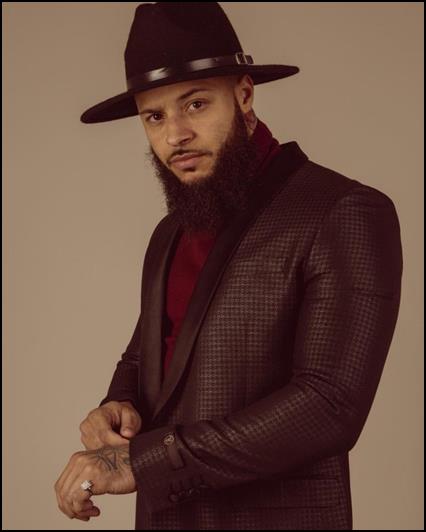
Terroll Lewis is the founder of the Brixton Street Gym, a charity-based community gym that has gained a huge cult following in the short time that it has been around. He also founded the BlockWorkOut Foundation – the charitable base that supports this amazing gym, making it accessible to everyone regardless of income – and The ManTalk, an online platform that promotes male positivity.

Terroll had been embroiled in some of the most serious street gang warfare even seen in London, leading a band of armed and dangerous young men through the streets of the city, a wild time that ended in him being accused of murder. He was eventually acquitted of the crime and proven innocent, but is thankful for his time in prison, as it enabled him to re-evaluate his life and come out a better man, the man he is today. Terroll Lewis was named an Evening Standard Next Generation Trailblazer and included in Men’s Health Inspirational Black Men of 2020.