
 About the Book
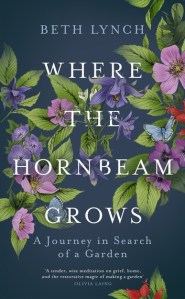
What do you do when you find yourself living as a stranger? When Beth Lynch moved to Switzerland, she quickly realised that the sheer will to connect with people would not guarantee a happy relocation.
Out of place and lonely, Beth knows that she needs to get her hands dirty if she is to put down roots. And so she sets about making herself at home in the way she knows best – by tending a garden, growing things. The search for a garden takes her across the country, through meadows and on mountain paths where familiar garden plants run wild, to the rugged hills of the Swiss Jura.
In this remote and unfamiliar place of glow worms and dormice and singing toads she learns to garden in a new way, taking her cue from the natural world. As she plants her paradise with hellebores and aquilegias, cornflowers and Japanese anemones, these cherished species forge green and deepening connections: to her new soil, to her old life in England, and to her deceased parents, whose Sussex garden continues to flourish in her heart.
Where The Hornbeam Grows is a memoir about carrying a garden inwardly through loss, dislocation and relocation, about finding a sense of wellbeing in a green place of your own, and about the limits of paradise in a peopled world. It is a powerful exploration by a dazzling new literary voice of how, in nurturing a corner of the natural world, we ourselves are nurtured.
Format: Hardcover, ebook (288 pp.) Publisher: W&N
Published: 18th April 2019 Genre: Nonfiction, Memoir
Purchase Links*
Amazon.co.uk ǀ Hive.co.uk (supporting UK bookshops)
*links provided for convenience, not as part of any affiliate programme
Find Where The Hornbeam Grows on Goodreads
My Review
Fellow gardeners will be familiar with the saying ‘Right plant, right place’. What we learn (usually through bitter experience) is that, however hard you try, if you put a plant in a place with the wrong amount of light, moisture or soil acidity it will never thrive. In Where The Hornbeam Grows, the author explores this notion through her own personal experience of being uprooted from her accustomed habitat and transplanted to somewhere new and entirely alien – in this case, Switzerland.
In the first part of the book, following the death of her parents, the author bids a nostalgic farewell to the garden where she grew up and makes the move to Zurich in Switzerland with her partner, Shaun. In a section entitled ‘Uprooted’, she describes the difficulty of adjusting to life in Zurich – the grayness and lack of green space – and to being without a garden, just a window box. The reader gets a very real sense of how important gardening and being in touch with nature has been to the author’s well-being. It’s in her DNA, as it were.
It becomes apparent that it’s not only the absence of a garden that contributes to the feeling of displacement. The author writes with insight (and some humour) about the difficulties she and Shaun face in integrating into Swiss society, whether that’s struggling to pick up linguistic nuances or navigating the intricacies of social customs and manners. I have to say it presents a picture of Switzerland as insular and rather unwilling to openly embrace people of other nations that I found quite surprising.
A trip to the Jura sees the couple finally light upon a place where they feel they can live and, importantly, build a home and a garden. It’s a place to which the author feels an immediate emotional connection. Beth Lynch describes how, over the next few years, she starts to create a garden. She writes evocatively about the plants, local wildlife and surrounding landscape.
There are many references to Milton’s Paradise Lost throughout the book, a work which the author has studied extensively. (The detailed references at the back of the book are testament to this academic rigour.) Talking about the garden in the Jura, she notes, ‘I think the garden led me back into Paradise Lost… because it is the poem of a gardener. One who gardens, who has an affinity for gardens, who thrives on small negotiations with the natural world. Organising, tending, eliciting, pruning: a garden, a poem.’
Although the author and her partner have found a home and a garden in an area they love, they still find themselves, despite their best efforts, set apart from the local community, what the author describes as ‘a cultural disconnect’. In the section entitled ‘The Limits of Paradise’ the author reflects on her realisation that she is lonely. ‘Not just alone… Lonely: lacking ‘conversation’, a being amongst people.’ She admits ‘in time you must acknowledge that you have failed to integrate, for this society is at odds with who you are… It’s a pity, and it is nobody’s fault.’ The couple reluctantly conclude they must leave Switzerland. ‘This is why, even with one another for society, paradise is not enough for Adam and Eve. Paradise is not enough for anyone.’
I loved Where The Hornbeam Grows not just because, as a gardener myself, I can’t imagine not being able to tend and nurture plants, but also because it provides a fascinating insight into the challenges people can face when moving to a new country. It’s also beautifully written with lovely descriptions of plants and the natural world.
I received a review copy courtesy of publishers, Weidenfield and Nicholson, and NetGalley.
In three words: Insightful, moving, reflective
Try something similar…The Wild Remedy by Emma Mitchell
 About the Author
Beth Lynch grew up in rural East Sussex. She read English at Cambridge and went on to complete a doctorate in seventeenth-century literature. For the next decade she worked as a lecturer, creating gardens in her spare time and ultimately training as a garden designer. She then moved unexpectedly to Switzerland, where she lived and gardened for seven years. She has recently returned to the UK. (Bio and photo credit: Orion Books author page)
Connect with Beth


 About the Book
 About the Authors
 What Cathy Read Next...