Buchan of the Month: Introducing A Book of Escapes and Hurried Journeys by John Buchan #ReadJB2020

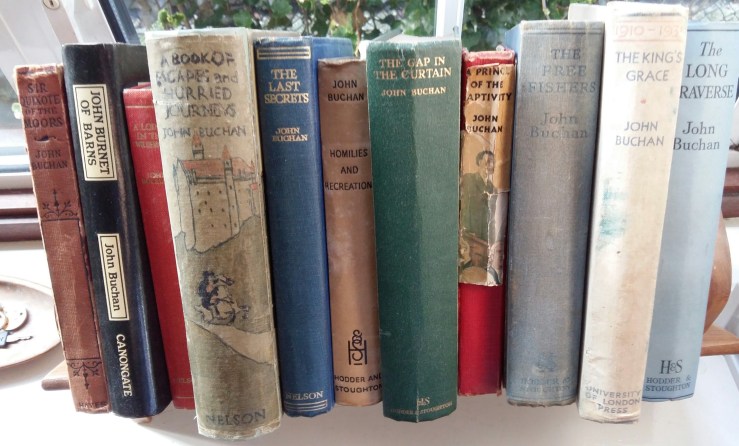
20200408_133244_kindlephoto-201916321My Buchan of the Month for April is A Book of Escapes and Hurried Journeys. It was published in the UK by Thomas Nelson & Sons in September 1922 and in the US by Houghton Mifflin the following year. My copy (pictured) is a second impression dated December 1922.

John Buchan had initially joined Nelson as chief literary adviser on the invitation of his old friend from Oxford University, Tommy Nelson (sadly later killed in the First World War). Buchan was subsequently appointed a director when Nelson became a limited company in 1915. Although Buchan’s principal UK publisher from 1916 onwards was Hodder & Stoughton, he allowed Nelson to publish cheap editions of his novels. Up until 1929, when he resigned from the board on the grounds of ill health, he also wrote or contributed to thirteen books for Nelson. These included several books aimed at young boys and usually published for the Christmas market. A Book of Escapes and Hurried Journeys is one of two collections of adventures he wrote for Nelson. (The other is The Last Secrets, next month’s Buchan of the Month.)

A Book of Escapes and Hurried Journeys is, as the title suggests, a collection of twelve famous escapes or hurried journeys from history including Charles II’s escape after the Battle of Worcester, Marie Antoinette’s flight to Varennes and Winston Churchill’s adventures during the Boer War (memorably dramatized in the film Young Winston). Four years after its publication, A Book of Escapes and Hurried Journeys became a school set book.

The preface to the book is interesting in that it contains Buchan’s thoughts on the term ‘Romance’. He writes, “I take it that it means in the widest sense that which affects the mind with a sense of wonder – the surprises of life, fights against odds, weak things confounding strong, beauty and courage flowering in unlikely places.”

Look out for my review of the book later this month.

Sources:

Janet Adam Smith, John Buchan: A Biography (OUP, 1985 [1965])
Kenneth Hillier and Michael Ross, The First Editions of John Buchan: A Collector’s Illustrated Biography (Avonworld, 2008)
Andrew Lownie, John Buchan: The Presbyterian Cavalier (Constable, 1995)
20200205_130743-1

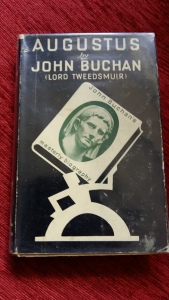
#BookReview Augustus by John Buchan #nonfic

AugustusBuchanAbout the Book

In 27 BC, out of the carnage of two civil wars, one man emerged to rule absolutely the Roman world. This man was Octavian, the adopted son of Julius Caesar, and he was perhaps the least likely candidate to return stability to the Republic. But by AD 14 Octavian had established peace over an empire that stretched from the shores of Britain to Anatolia. Power, prosperity and propaganda had seen him renamed as Augustus, ‘The Divinely Favoured One.’ He had become a God, and had changed the face of the Republic forever.

Format: Hardcover (349 pages)            Publisher: Hodder & Stoughton
Publication date: August 1941 [1937] Genre: Biography, History

Find Augustus on Goodreads


My Review

In Augustus, John Buchan combines his flair for storytelling and skill at crafting clear, precise prose with his love of history and knowledge of the Greek and Roman Classics, which he studied at Oxford University. Whilst Augustus may not have the pace of The Thirty-Nine Steps it is very readable and the book is clearly the product of extensive research, witnessed by the extensive footnotes and references to a range of sources. On publication it was greeted with approval by many eminent historians.

Buchan admires Augustus for his pragmatism, administrative skills and diplomacy whilst acknowledging that at times he could be ruthless in dealing with enemies and perceived threats. As someone who suffered poor health for much of his adult life, I wonder too if Buchan empathised with Augustus who also endured bouts of ill health as a young man.

Conversely, Buchan makes clear his disapproval of Mark Antony, writing that ‘each of his virtues – and they were many – was nullified by some rampant vice’ and summing him up as ‘the classic instance of the second-rate man who is offered a first-rate destiny, and who, in stumbling after it, loses his way in the world’.

I particularly enjoyed the sections where Buchan takes the reader inside the Imperial household, acknowledging the influential role played by Augustus’ wife, Livia. (When I think of Livia it always conjures up a picture of the actress, Sian Phillips, who played her in the TV series I Claudius, opposite Brian Blessed as Augustus.)

Buchan points out interesting parallels between the challenges faced by Augustus and contemporary events (he was working on the book at the same time as Europe was witnessing the rise of Mussolini and Hitler). In the preface to the book he writes ‘The convulsions of our time may give an insight into the problems of the early Roman empire which was perhaps unattainable by scholars who lived in easier days’.

And, at the end of the book, Buchan points out similarities between the two ages: ‘Once again the crust of civilization has grown thin, and beneath can be heard the muttering of primeval fires. Once again many accepted principles of government have been overthrown, and the world has become a laboratory where immature and feverish minds experiment with unknown forces.’ The concept of the thin crust of civilization was one Buchan frequently explored in his adventure novels, notably The Power House.

In three words: Lucid, detailed, well-researched

Try something similar: Julius Caesar by John Buchan

Follow my blog via Bloglovin


John BuchanAbout the Author

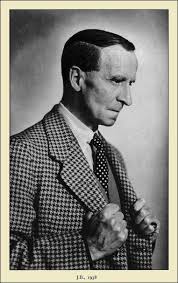
John Buchan (1875 – 1940) was an author, poet, lawyer, publisher, journalist, war correspondent, Member of Parliament, University Chancellor, keen angler and family man.  He was ennobled and, as Lord Tweedsmuir, became Governor-General of Canada.  In this role, he signed Canada’s entry into the Second World War.   Nowadays he is probably best known – maybe only known – as the author of The Thirty-Nine Steps.  However, in his lifetime he published over 100 books: fiction, poetry, short stories, biographies, memoirs and history.

You can find out more about John Buchan, his life and literary output by visiting The John Buchan Society website.