
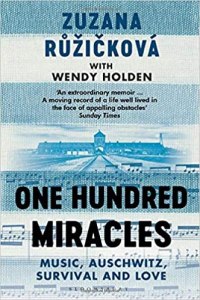
 About the Book
Zuzana Ruzicková grew up in 1930s Czechoslovakia dreaming of two things: Johann Sebastian Bach and the piano. But her melodic childhood was torn apart when, in 1939, the Nazis invaded. Uprooted from her home and transported from Auschwitz to Hamburg to Bergen-Belsen, Zuzana endured the unimaginable. Through it all, a slip of paper printed with her favourite piece of Bach’s music became her talisman.
Reborn through the unwavering power of music, Zuzana would go on to become one of the twentieth century’s most renowned musicians and the only harpsichordist to record the entirety of Bach’s keyboard works. Her story, told here in her own words before her death in 2017, stands as a remarkable testimony of Holocaust survival, as well as a joyful celebration of art and resistance.
Format: Paperback (368 pages) Publisher: Bloomsbury
Publication date: 14th May 2020 Genre: Memoir, History
Purchase links*
Amazon UK | Hive (supporting UK bookshops)
*links provided for convenience not as part of an affiliate programme
My Review
Subtitled Music, Auschwitz, Survival and Love, One Hundred Miracles is a collaboration between Zuzana Ruzicková and author and journalist, Wendy Holden. Sadly, Zuzana died only two weeks after the interviews on which the book is based had been completed. In her Author’s Note, Wendy describes Zuzana as “a life-enhancing spirit” and how she was determined to bear witness to history. Wendy says she will forever feel “humbled by her courage and resilience in the face of so much suffering, prejudice and adversity.”
I’ve read a few Holocaust memoirs (such as my Try Something Similar recommendation below) and a number of historical novels which have the persecution of Jewish people by the Nazis during World War 2 as their basis. For example The Good Doctor of Warsaw by Elisabeth Gifford, A Quiet Genocideby Glenn Bryant and The Hidden Village by Imogen Matthews. An unique element of One Hundred Miracles is its equal emphasis on Zuzana’s passion for music and her experiences both during and after the war.
Initially, I wasn’t sure about the structure of the book which moves frequently back and forth in time rather than progressing chronologically. For instance, the first chapter is set in 1960, the next is set in 1927 depicting Zuzana’s idyllic childhood, and the third moves forward to 1949, after the period she spent in the camps.
However, as I progressed through the book I came to see the wisdom of the non-sequential structure. For one thing, it means the most harrowing parts of Zuzana’s story (including her time in the Auschwitz and Bergen-Belsen concentration camps, and in a work camp in Hamburg) are recounted in instalments; reading them sequentially might have felt overwhelming. Also, structuring the narrative in this way reflects the fact that Zuzana’s life was not just about her time in the concentration camps. She had a life before and afterwards. In fact, her life after the war was a demonstration of the Nazis’ ultimate failure to obliterate Zuzana and people like her from the face of the earth.
It’s clear Zuzana’s relationship with music was a central part of her life. Reflecting on what it takes to be a musician, she writes, “It is not enough to be gifted, or diligent. You have to be a little bit crazy. You have to have the feeling that you cannot live without music.” Given its importance to her, it was particularly moving to read how the physical and psychological effects of her experiences nearly robbed her of the joy of music and the ability to perform. She writes, “For me music was a feeling – a feeling I almost lost – and I had to work very hard to get it back. Music was my defiance.”
There is a particularly moving scene during her time in the work camp in Hamburg in which she hears Chopin being played on the radio and finds it almost unbearable that, as she puts it, “somebody was playing Chopin out there in the world, and that I was absolutely cut off from it“. Another chilling moment is when Zuzana hears the sound of a well-known march by a Czech composer being played in the SS officers’ quarters one evening while they abuse young girls chosen from amongst the camp inmates. Ever afterwards, hearing that piece of music haunts her.
Thanks to the efforts of a young man called Fredy Hirsch, a hero in every sense of the word, who persuades the camp commander to allow him to set up a separate block for the children, Zuzana is assigned to help teach the children. Sometimes the camp guards come to listen to the children sing or perform. Most chillingly, none other than Dr. Mengele becomes a daily visitor, “smiling as he chatted to the children, sat them on his knee, and encouraged them to call him ‘Uncle’“.
Sadly, Zuzana’s struggles to pursue her musical career didn’t end with the War as she continued to face restrictions on travel abroad because of the Soviet Union’s influence over Czechoslovakia. However, she showed the same level of defiance in overcoming these obstacles as she had throughout the rest of her life.
Apart from Johann Sebastian Bach, who had “stolen her heart” when she was nine years old and to whom the book is dedicated, the love of Zuzana’s life was Viktor Kalabis, her husband, himself a talented composer. Typically, she recalls, “I fell in love with his music long before I fell in love with him.” The couple never had children but Zuzana always regarded the young musicians she taught and the children they in turn sent to her for lessons as a surrogate family. “It has been a kind of motherhood“, she reflects.
Like many other survivors of Nazi atrocities, Zuzana felt an acute, but wholly unjustified in my view, sense of guilt that she survived when so many others were less fortunate. She writes, “I have spent my life trying to pay my debts to those who didn’t come back by working hard and trying to make myself worthy of being alive“.
There are many other inspiring quotations by Zuzana I could have included, in addition to those already mentioned. There was one, however, with which I had to take issue. Near the end of the book, Zuzana writes, “I am not a person of extraordinary strength. I survived all the camps and the terrible experiences, not because of myself, it had nothing to do with me. It was one hundred miracles.” Sorry, Zuzana, I disagree. True, there were moments of good fortune but it was the incredible resilience, fortitude and courage of Zuzana (and her mother) that enabled them to take advantage of that good fortune and survive. Perhaps, we make our own miracles…
Listen to Wendy’s podcast in which she talks about the book. My thanks to Ella at Bloomsbury for my review copy.
In three words: Inspiring, emotional, moving
Try something similar: Living Among The Dead: My Grandmother’s Holocaust Survival Story of Love and Strength by Adena Bernstein Astrowsky
Follow this blog via Bloglovin
About the Authors
Zuzana Ruzicková was a celebrated Czech harpsichordist and a survivor of three Nazi concentration and slave labour camps. She recorded over one hundred albums, performed across the world to great acclaim, and became an influential teacher at the Prague Academy. Zuzana died in Prague in 2017 aged ninety.
Wendy Holden is the author of more than thirty published titles, many of them about the lives of remarkable women. A journalist and former war correspondent, she wrote the bestselling book Born Survivors, about three mothers and their babies who survived the Holocaust.
Connect with Wendy
Website | Twitter | Facebook

 As I was reading the book, I found myself making connections between some of the stories and later novels by John Buchan. For example, the chapter detailing the first attempts to reach the North Pole brought to mind an early part of A Prince of the Captivity in which its hero sets out on a rescue mission to Iceland during a freezing winter. Incidentally, the chapter on the North Pole also refers to the efforts to discover the fate of the explorer Sir John Franklin who disappeared along with his two ships and their crew while on his last expedition to the Arctic in 1845. This forms part of the storyline of a book I recently read,
 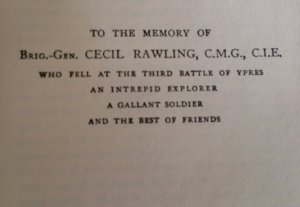 As I noted in
 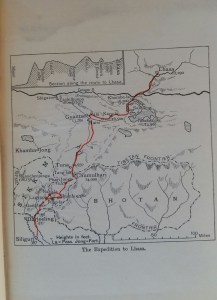 Despite the amount of detail, the book is immensely readable thanks to Buchan’s clear prose and obvious enthusiasm for his subject. There are wonderful and extremely helpful maps accompanying each chapter.
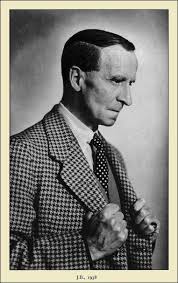 About the Author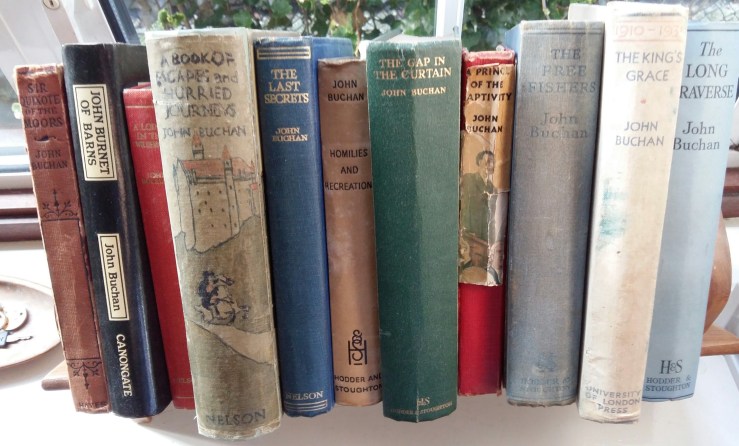

 What Cathy Read Next...