#BookReview The Wild Silence by Raynor Winn @MichaelJBooks

About the Book

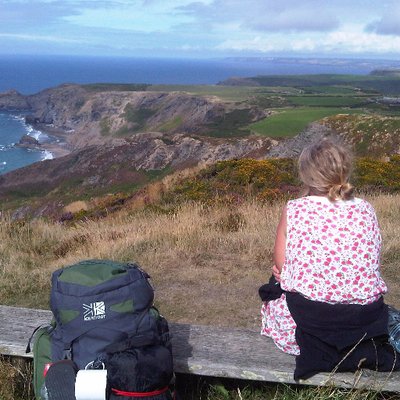
Nature holds the answers for Raynor and her husband Moth. After walking 630 homeless miles along The Salt Path, living on the windswept and wild English coastline; the cliffs, the sky and the chalky earth now feel like their home.

Moth has a terminal diagnosis, but against all medical odds, he seems revitalized in nature. Together on the wild coastal path, with their feet firmly rooted outdoors, they discover that anything is possible.

Now, life beyond The Salt Path awaits and they come back to four walls, but the sense of home is illusive and returning to normality is proving difficult – until an incredible gesture by someone who reads their story changes everything.

A chance to breathe life back into a beautiful farmhouse nestled deep in the Cornish hills; rewilding the land and returning nature to its hedgerows becomes their saving grace and their new path to follow.

The Wild Silence is a story of hope triumphing over despair, of lifelong love prevailing over everything. It is a luminous account of the human spirit’s instinctive connection to nature, and how vital it is for us all.

Format: Hardcover (288 pages) Publisher: Michael Joseph
Publication date: 3rd September 2020 Genre: Memoir, Nonfiction

Find The Wild Silence on Goodreads

Purchase links*
Amazon UK | Hive (supporting UK bookshops)
*links provided for convenience not as part of an affiliate programme

My Review

I recently read – and loved – The Salt Path by Raynor Winn so how could I resist reading this, the follow-up to that book, especially as Raynor Winn took part in this year’s online Henley Literary Festival and I was lucky enough to bag myself a ticket.

In The Wild Silence, Raynor Winn recounts how the writing of The Salt Path came about, namely her growing realization that Moth had no memory of certain events during their time on the South West Coast Path. “He had let go of a moment that hung so brightly on my tree of memory that I could find its glow in any dark place. But for him the light had dimmed and gone.” She decides to transfer the pencilled notes from their trusty guidebook into a more readable form. “If the guidebook could put me on the path, could it do so for Moth too?”

The book goes on to describe the journey to publication of the book that eventually became The Salt Path (not the author’s original preferred title) and readers’ reaction to it. An introvert by nature, Raynor talks honestly about how difficult initially she found it to attend public events to promote the book. However, hearing the very personal responses to it – “Stories of lives lived, loves lost and walks that changed beliefs” – made it easier over time.

Ironically, it is publicity for The Salt Path that leads to an offer too tempting for Raynor and Moth to refuse – the chance to restore a neglected cider farm and increase its biodiversity. As Raynor notes, “The South West Coast Path had led us out of anguish and despair to a place of hope and possibility. And now, by walking it again on paper, The Salt Path had led us to the farm.”

What started as observation in The Salt Path, namely the positive impact on Moth’s health of their time on the South West Coast Path, is translated in The Wild Silence into a passionate thesis on the contribution that exposure to the natural world has on our physical and mental health. In particular, human interaction with the chemicals emitted by plants. “We need the plants, the land, the natural world; we actually physically need it.”

And it seems to work, having an effect on not just Moth’s health but the natural world on and around the farm. “As surely as removing heavy human interference from the land was allowing the wildlife to return to the farm, so Moth was surviving by returning to a more natural state of existence.” That wildlife includes mice, ospreys, herons, badgers, roe deer, moles, foxes, goat moths, skylarks, goldfinches and toads – not all of it outside the farmhouse.

In fact, Moth’s health is restored to such an extent that he proposes they undertake another long walk. I won’t say where except that it’s through a cold, harsh environment.

As in The Salt Path there is some wonderful writing such as this description of sunset over the Cornish coast: “Torn ribbons of colour fluttering across the evening sky, a maypole dance of light“. Or this, describing the impact of the cider farm being restored: “A deep glow of noise, moving like a whisper across land freed from pollution, lifting over pollen-filled banks of new-sown flowers.”

If you loved The Salt Path you’ll enjoy finding out what happened next and immersing yourself in more of Raynor Winn’s passionate advocacy of the benefits of nature. I received an advance review copy courtesy of Michael Joseph via NetGalley.

In three words: Honest, inspiring, heartfelt

Try something similar: The Outrun by Amy Liptrot

Follow this blog via Bloglovin

About the Author

Since travelling the South West Coastal Path, Raynor Winn has become a regular long-distance walker and writes about nature, homelessness and wild camping. Her first book, The Salt Path, was a Sunday Times bestseller and shortlisted for the 2018 Costa Biography Award. In The Wild Silence, Raynor explores readjusting to life after homelessness. She lives in Cornwall with her husband Moth.

Connect with Raynor
Twitter

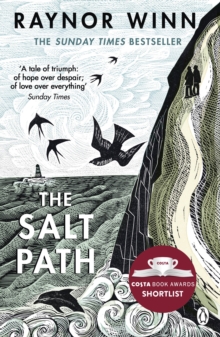
#BookReview The Salt Path by Raynor Winn @MichaelJBooks


About the Book

Just days after Raynor learns that Moth, her husband of 32 years, is terminally ill, their home and livelihood is taken away. With nothing left and little time, they make the brave and impulsive decision to walk the 630 miles of the sea-swept South West Coast Path, from Somerset to Dorset, via Devon and Cornwall.

They have almost no money for food or shelter and must carry only the essentials for survival on their backs as they live wild in the ancient, weathered landscape of cliffs, sea and sky. Yet through every step, every encounter, and every test along the way, their walk becomes a remarkable journey.

The Salt Path is an honest and life-affirming true story of coming to terms with grief and the healing power of the natural world. Ultimately, it is a portrayal of home, and how it can be lost, rebuilt, and rediscovered in the most unexpected ways.

Format: Paperback (288 pages) Publisher: Penguin
Publication date: 22nd March 2018 Genre: Nonfiction, Memoir

Find The Salt Path on Goodreads

Purchase links*
Amazon UK | Hive (supporting UK bookshops)
*links provided for convenience not as part of an affiliate programme

My Review

The Salt Path recounts the author’s experience of walking the South West Coast Path alongside her husband, Moth. The circumstances which lead them to embark on this journey only added to my appreciation of the immensity of their undertaking. As the author notes, walking the entire South West Coast Path is “the equivalent of climbing Mount Everest nearly four times, walking 630 miles on a path often no more than a foot wide, sleeping wild, living wild“.

As someone not keen on heights and for whom camping, let alone wild camping, holds no attraction whatsoever, I cannot imagine taking on such a challenge. And doing it with virtually no money, limited food (and that mostly noodles), equipped with only what could be fitted in a rucksack and without any creature comforts. Yet at one point, Raynor writes that they were “Homeless, dying, but strangely, in that sweaty, dehydrated moment, shyly, reluctantly happy”. Which just goes to show that you have to choose your attitude.

At times the pair are surprised by the reaction of others they meet. Some react negatively once they learn they are homeless. Others admire their spirit or envy their freedom to undertake such a journey. And along the way, Raynor and Moth meet a number of ‘Good Samaritans’ ranging from the pink-haired girl who gives them free food to the people who buy them tickets for the Minack Theatre.

Alongside the account of their journey are occasional sections devoted to information about homelessness, dolphin protection or the geology of the areas they pass through. And of course, the flora and fauna. Raynor’s connection with the land and the natural world, forged in childhood and passed on to her own children, really comes across. “The wild was never something to fear or hide from. It was my safe place; the thing I ran to. Our land gave that to our children. Growing like saplings in the storm, bent by it, but strengthened at the core, rooted but flexible and strong, running free in the wind, but guided by it.”

Having visited the south coast of Cornwall on a number of occasions, I was particularly drawn to the sections of the book where Raynor and Moth travel through places I’ve been to such as Mousehole, Fowey, Polruan, Falmouth and St. Mawes. One section that caught my eye was when they arrive in Morwenstow and visit the cliff top hut built by Robert Hawker, the smallest property owned by the National Trust. The same Parson Hawker features in the historical crime novel, The Mermaid’s Call by Katherine Stansfield.

More than anything, I found myself moved by Raynor’s and Moth’s enduring devotion to each other. Recalling their time together, Raynor writes, “Years passed with our legs entwined, in endless chatter and laughter. And all the time we lived with a passion that didn’t die…

The author writes with unflinching honesty about the low points they experience on their journey, such as when they reach Bude and find less than they were expecting in their bank account. Raynor blames herself for the events that caused them to lose their home and, as always, Moth’s welfare is at the forefront of her mind. “We’re lost. No money, no food, no home. You need to eat; you’re ill… Now I’ve dragged you out here when you should be somewhere safe, resting, not hauling a bag round the edgeland of life”. To counteract this, there are moments of humour such as their bafflement when Moth is repeatedly mistaken for a well-known poet (although not well-known to them clearly).

I recently had the pleasure of hearing Raynor talk about The Salt Path, and its follow-up, The Wild Silence, at this year’s online Henley Literary Festival. As well as telling the fascinating story of how The Salt Path came to be written and published, and the original title she came up with (it got used as a chapter title instead), Raynor revealed she and Moth are planning another “long walk” (location undisclosed). So readers can look forward to another book in future.

For me, the abiding message of The Salt Path is, in the author’s words, “Life is now, this minute, it’s all we have. It’s all we need.”

In three words: Honest, intimate, inspiring

Try something similar: The Outrun by Amy Liptrot

Follow this blog via Bloglovin

About the Author

Since completing the South West Coastal Path, Raynor Winn has become a regular long-distance walker and writes about nature, homelessness and wild camping. She now lives in Cornwall with her husband Moth and their dog, Monty.

Connect with Raynor
Twitter