My Week in Books – 17th March 2024

My Week in Books

On What Cathy Read Next last week

Monday – I shared my review of Our Souls at Night by Kent Haruf, my book club’s choice for last month.

Tuesday – Once again I strayed from this week’s ‘official’ Top Ten Tuesday topic instead sharing a list of the Ten Books by Irish Authors.

Wednesday – I welcomed author Karen Jewell to my blog to talk about her debut novel, In the Garden of Sorrows. And as always WWW Wednesday is a weekly opportunity to share what I’ve just read, what I’m currently reading and what I plan to read next… and to take a peek at what others are reading. 

Thursday – I published my review of the first in a new historical adventure series about Roman general Agricola, Invader by Simon Turney.

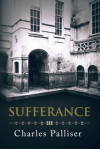
Friday – I shared my review of Sufferance by Charles Palliser.


New arrivals

Two eARCs and a prize from the Bookmarks team for reaching Emerald level
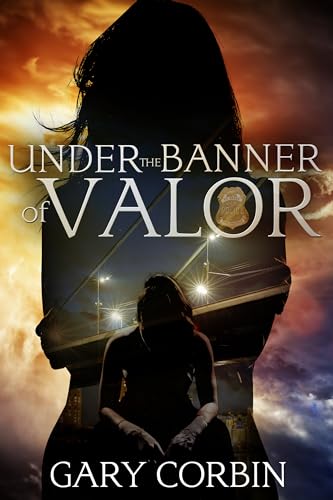
Under the Banner of ValorUnder the Banner of Valor by Gary Corbin (eARC courtesy of the author) 

When a fanatical sniper takes aim at women entering family planning clinics, Val risks everything to protect her closest friend.

Valorie Dawes and the WAVE Squad get called into action after Clayton’s family planning clinics receive ominous threats: Close the clinics, or else.

Valorie takes this threat personally, as her closest friend since childhood, Beth, discloses that she’s pregnant and is considering an abortion.

Can Val support her friend and keep her safe from the armed madman? Or will Beth’s stubborn recklessness thrust her into harm’s way?
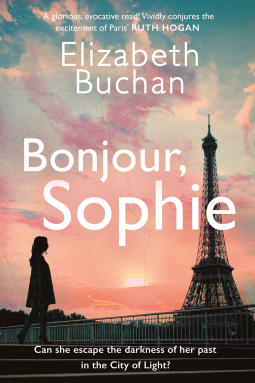
Bonjour, SophieBonjour, Sophie by Elizabeth Buchan (eARC, Corvus via NetGalley)

It’s 1959 and eighteen-year-old Sophie is determined that now is the time for her real life to start. Her existence in the village of Poynsdean, Sussex, with her austere foster-father, the Reverend Osbert Knox, and his frustrated wife Alice, is stultifying. She finds brief excitement in an illicit love affair, but soon realizes that if she wants to live life on a bigger canvas she must take matters into her own hands.

She dreams of escape to Paris, the Wartime home her mother fled before her birth. Getting there will take spirit and ingenuity, but also offers the chance to discover more about her family background, and perhaps find a place where she can finally belong.

When Sophie eventually arrives in the city of her dreams it’s both everything she imagined, and not at all what she expected.
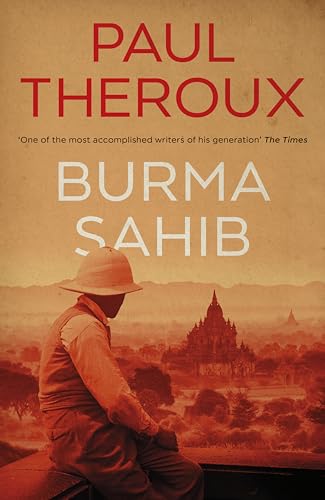
Burma SahibBurma Sahib by Paul Theroux (Penguin)

Before George Orwell was Orwell – the pen name he took on becoming a writer – he was Eric Blair, an unlikely policeman in Burma.  Nineteen years old, unusually tall, highly intelligent, a diffident loner fresh from Eton, Blair stood out amongst his fellow trainees in 1920s Mandalay.

It was here, over five years in the narrow colonial world of the Raj – a decaying system steeped in overt racism and petty class conflict – that Eric Blair became the George Orwell we know: an anti-imperialist, a socialist and a writer of rare commitment.

The inner journey he made in these years is remarkable, but in the absence of letters or diaries from the period, this richly complex transformation can only be told in fiction, as it is here by Paul Theroux in one of his most striking and accomplished novels. 

Drawing on all his powers of observation and imagination, Paul Theroux brings Orwell’s Burma years to radiant life, tracing the development of the young man’s consciousness as he confronts both the social, racial and class politics of his colonial colleagues, and the reality of the Burma beyond, which he yearns to grasp.

Through one writer, we come to understand another – and to see how what Orwell called ‘five boring years within the sound of bugles’ were in fact the years that made him.


On What Cathy Read Next this week

Currently reading


Planned posts

  • Book Review: Hungry Ghosts by Kevin Jared Hosein
  • Book Review: Diva by Daisy Goodwin
  • Book Review: Clear by Carys Davies

My Week in Books – 10th March 2024

My Week in Books

On What Cathy Read Next last week

Monday – I shared my Top 5 February Reads.

Tuesday – I strayed from this week’s official Top Ten Tuesday topic instead sharing a list of the Ten Oldest Books in my TBR Pile.

Wednesday – As always WWW Wednesday is a weekly opportunity to share what I’ve just read, what I’m currently reading and what I plan to read next… and to take a peek at what others are reading. 

Thursday – Slowly working my way my oldest review copies, I published my review of historical mystery, The Madras Miasma by Brian Stoddart.

Saturday – I published my review of Perfume River by Robert Olen Butler.


New arrivals

A book on the longlist for The Walter Scott Prize for Historical Fiction 2024, an ARC and two non-fiction purchases.

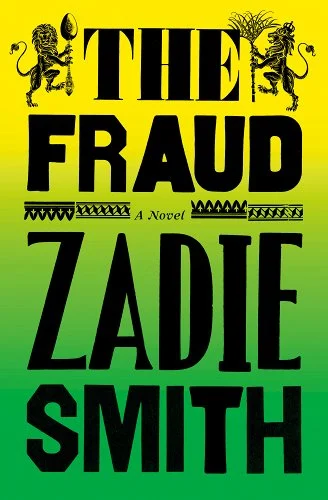
The FraudThe Fraud by Zadie Smith (Hamish Hamilton) Longlisted for The Walter Scott Prize 2024

It is 1873. Mrs Eliza Touchet is the Scottish housekeeper – and cousin by marriage – of a once famous novelist, now in decline, William Ainsworth, with whom she has lived for thirty years.

Mrs Touchet is a woman of many interests: literature, justice, abolitionism, class, her cousin, his wives, this life and the next. But she is also sceptical. She suspects her cousin of having no talent; his successful friend, Mr Charles Dickens, of being a bully and a moralist; and England of being a land of facades, in which nothing is quite what it seems.

Andrew Bogle meanwhile grew up enslaved on the Hope Plantation, Jamaica. He knows every lump of sugar comes at a human cost. That the rich deceive the poor. And that people are more easily manipulated than they realise. When Bogle finds himself in London, star witness in a celebrated case of imposture, he knows his future depends on telling the right story.

The ‘Tichborne Trial’ captivates Mrs Touchet and all of England. Is Sir Roger Tichborne really who he says he is? Or is he a fraud? Mrs Touchet is a woman of the world. Mr Bogle is no fool. But in a world of hypocrisy and self-deception, deciding what is real proves a complicated task…

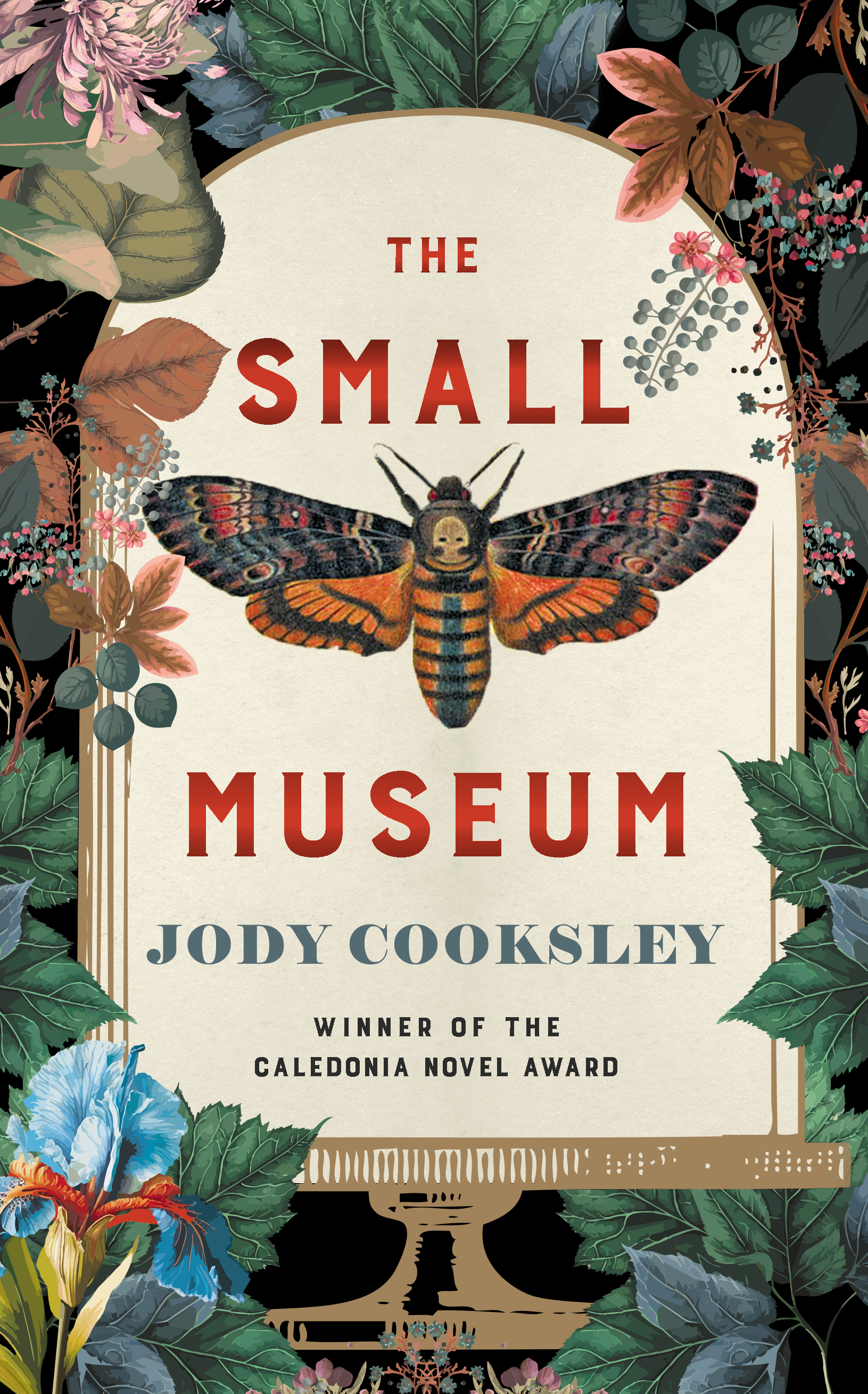
Book cover of The Small Museum by Jody CooksleyThe Small Museum by Jody Cooksley (eARC, Allison & Busby via NetGalley) 

London, 1873. Madeleine Brewster’s marriage to Dr Lucius Everley was meant to be the solution to her family’s sullied reputation. After all, Lucius is a well-respected collector of natural curiosities, his ‘Small Museum’ of bones and things in jars is his pride and joy, although kept under lock and key. His sister Grace’s philanthropic work with fallen women is also highly laudable. However, Maddie is confused by and excluded from what happens in what is meant to be her new home.

Maddie’s skill at drawing promises a role for her though when Lucius agrees to let her help him in making a breakthrough in evolutionary science, a discovery of the first ‘fish with feet’. But the more Maddie learns about both Lucius and Grace, the more she suspects that unimaginable horrors lie behind their polished reputations. Framed for a crime that would take her to the gallows and leave the Everleys unencumbered, Maddie’s only hope is her friend Caroline Fairly. But will she be able to put the pieces together before the trial reaches its fatal conclusion?

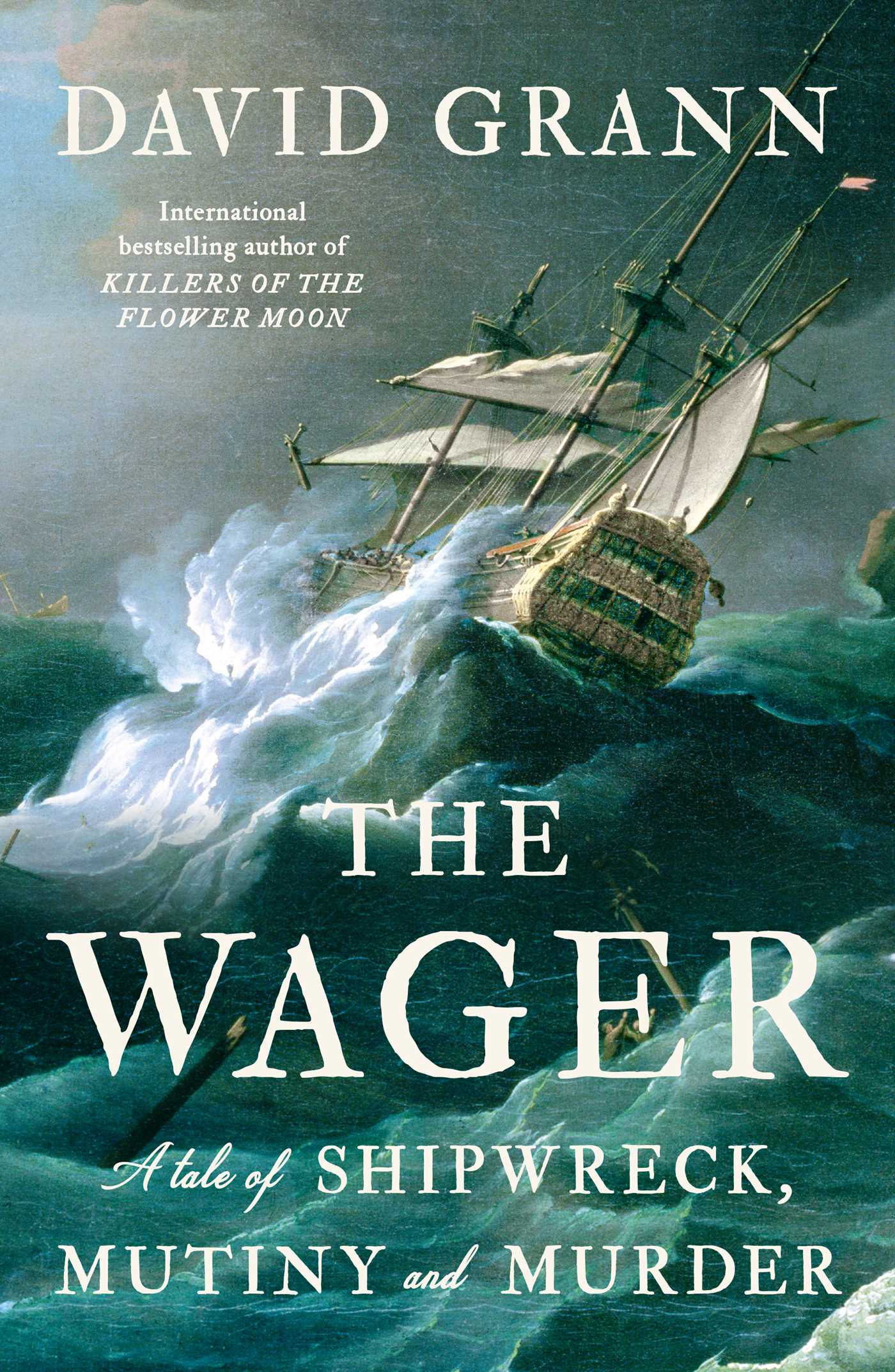
Book cover of The Wager by David GrannThe Wager by David Grann (Simon & Schuster) 

1742: A ramshackle vessel of patched-together wood and cloth washes up on the coast of Brazil. Inside are thirty emaciated men, barely alive. Survivors from the Wager, a British vessel wrecked while on a secret mission to raid a Spanish treasure-filled galleon, they have an extraordinary story to tell. 

Six months later, an even more decrepit boat comes ashore on the coast of Chile, containing just three castaways with their own, very different account of what happened. The thirty sailors who landed in Brazil, they maintain, were not heroes – they were mutineers.

As accusations of treachery and murder fly, who is telling the truth? The stakes are life-and-death — for whoever is guilty could hang.

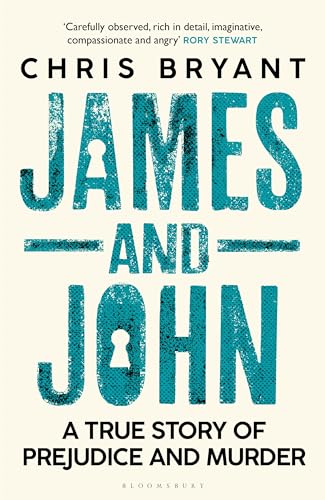
James and JohnJames and John: A True Story of Prejudice and Murder by Chris Bryant (Bloomsbury) 

They had nothing to expect from the mercy of the crown; their doom was sealed; no plea could be urged in extenuation of their crime, and they well knew that for them there was no hope in this world.

When Charles Dickens penned these words in 1835 after visiting the infamous Newgate Prison, where seventeen men who had been sentenced to death were awaiting news of their pleas for mercy. Two men stood out: James Pratt and John Smith, who had been convicted of the ‘unnatural offense’ of ‘s-d-my’, a crime so unmentionable it was never named. That was why they alone despaired and, as the turnkey told Dickens, why they alone were ‘dead men’.

The 1830s ushered in great social reform in Britain. In a few short years the government swept away slavery, rotten boroughs, child labour, bribery and corruption in elections, the ban on trade unions and civil marriage. They also curtailed the ‘bloody code’ that treated 200 petty crimes as capital offences. Some thought the death penalty itself was wrong; there had not been a hanging at Newgate for two years. Yet when the King met with his ‘hanging’ Cabinet, they decided to reprieve all bar two men. When James and John were sent to the gallows in November 1935, they became the last men in England to be executed for being gay. Why were they alone not spared? 

In this masterful work, Chris Bryant delves deep into the archives to recreate the lives of two men whose names are known to history – but whose story has been lost, until now.


On What Cathy Read Next this week

Currently reading


Planned posts

  • Book Review: Our Souls at Night by Kent Haruf
  • Book Review: Sufferance by Charles Palliser
  • Book Review: Clear by Carys Davies
  • Book Review: Diva by Daisy Goodwin