Book Review – How To Make A Bomb: A Novel by Rupert Thomson

About the Book

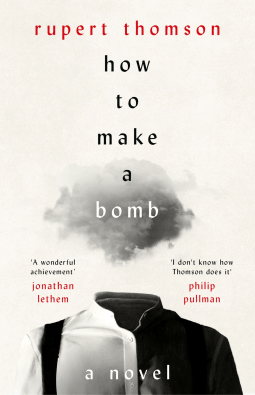
Book cover of How To Make A Bomb: A Novel by Rupert Thomson

If he suddenly found what surrounded him unbearable, it was because it was artificial
Everything had been designed and manufactured, and he was trapped in it

Philip Notman, an acclaimed historian, attends a conference in Bergen, Norway. On his return to London, and to his wife and son, something unexpected and inexplicable happens to him, and he is unable to settle back into his normal life.

Seeking answers, he flies to Cadiz to see Inés, a Spanish academic with whom he shared a connection at the conference, but his journey doesn’t end there. A chance encounter with a wealthy, elderly couple sends him to a house on the south coast of Crete. Is he thinking of leaving his wife, whom he claims he still loves, or is he trying to change a reality that has become impossible to bear? Is he on a quest for a simpler and more authentic existence, or is he utterly self-deluded?

As he tries to make sense of both his personal circumstances and the world surrounding him, he finds himself embarking on a course of action that will push him to the very brink of disaster.

Format: ebook (402 pages) Publisher: Head of Zeus
Publication date: 11th April 2024 Genre: Contemporary Fiction

Find How To Make A Bomb on Goodreads

Purchase How To Make A Bomb from Bookshop.org [Disclosure: If you buy books linked to our site, we may earn a commission from Bookshop.org, whose fees support independent bookshops]


My Review

I’ve only read one other book by Rupert Thomson and that was back in 2016, a historical mystery called Secrecy. How To Make A Bomb is very different. Firstly it’s not set in 17th century Florence but in the present day. Stylistically it’s different too. Each sentence in the book starts on a new line, there are no quotation marks or full stops, but plenty of commas and the occasional question mark.

I liked the idea of a malaise created by the modern world with its proliferation of choices and where everything has been designed to the nth degree. For Philip Notman this ‘civilisation sickness’ manifests itself both physically, as he experiences bouts of intense nausea and dizziness, and psychologically, as he starts to question the artificiality of modern life. ‘Everything I see around me has been thought about. Everything has been made.’

Leaving his wife Anya behind because he fears she won’t understand what he’s experiencing – and who could blame her – he retreats to a house in a remote part of Crete in search of a simpler more unconnected lifestyle. ‘He had clicked on unsubscribe.’

It offers a temporary respite but he becomes unnerved when he learns about the violent history of both the house and the island. Various events make him conclude that positive action, as opposed to eloquent manifestos, is sometimes the only way to achieve change.

I enjoyed the observational humour, such as Philip’s experience of navigating the Duty Free zone at the airport, the ‘glitzy, tyrannical no-man’s-land that lay between Security and the Departure Lounge’. I also enjoyed the insights into the early days of Philip and Anya’s relationship when he seemed like a genuinely funny and appealing person. And I liked the fact that often the wisest insights came from female characters. However, as the book progressed, for me, Philip’s story began to resemble more a mid-life crisis than an earth-shattering revelation about modern day life. And the ending left me a bit puzzled. Did he actually carry out his plan or did he just imagine doing it? Although maybe we’re being invited to think about what might cause someone to take such an action…

How To Make A Bomb was one of those books that made me wonder if I was quite clever enough to understand what the author was attempting to communicate. But it was fun trying.

I received a review copy courtesy of Head of Zeus via NetGalley

In three words: Inventive, witty, thought-provoking


About the Author

Author Rupert Thomson

Rupert Thomson is the author of more than a dozen acclaimed novels, including Barcelona Dreaming, Never Anyone But You, Katherine Carlyle, Secrecy, The Insult, which was shortlisted for the Guardian Fiction Prize and selected by David Bowie as one of his 100 Must-Read Books of All Time, The Book of Revelation, which was made into a feature film by Ana Kokkinos, and Death of a Murderer, which was shortlisted for the Costa Novel of the Year Award. His memoir, This Party’s Got to Stop, was named Writers’ Guild Non-Fiction Book of the Year. He lives in London. (Photo: Amazon author page)

Connect with Rupert
X/Twitter

Book Review – James by Percival Everett

About the Book

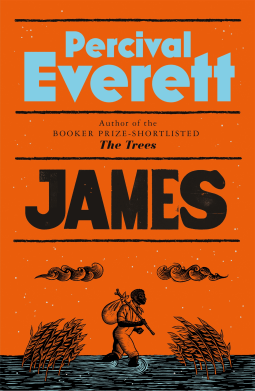
book cover of James by Percival Everett

The Mississippi River, 1861. When the enslaved Jim overhears that he is about to be sold to a new owner in New Orleans and separated from his wife and daughter forever, he decides to hide on nearby Jackson’s Island until he can formulate a plan. Meanwhile, Huck Finn has faked his own death to escape his violent father who recently returned to town. Thus begins a dangerous and transcendent journey by raft along the Mississippi River, towards the elusive promise of the free states and beyond. As James and Huck begin to navigate the treacherous waters, each bend in the river holds the promise of both salvation and demise.

With rumours of a brewing war, James must face the burden he the family he is desperate to protect and the constant lie he must live. And together, the unlikely pair must face the most dangerous odyssey of them all . .

Format: eARC (313 pages) Publisher: Mantle
Publication date: 11th April 2024 Genre: Historical Fiction

Find James on Goodreads

Purchase James from Bookshop.org [Disclosure: If you buy books linked to our site, we may earn a commission from Bookshop.org, whose fees support independent bookshops]


My Review

If I ever read Adventures of Huckleberry Finn it was probably at school and, if I did, I remember next to nothing about the story. If you’re in the same position, I’d recommend reading a summary of Mark Twain’s book so you can appreciate the ways in which Percival Everett has reimagined the story, especially in the first part of the book. This follows broadly the events in Huckleberry Finn but told from the point of view of the enslaved Jim. He prefers the name James but, of course, as a slave he’s used to being addressed in far more abusive terms.

James is not the person his owner thinks he is. He’s intelligent, knowledgeable, can read and write, and possesses an extensive vocabulary. At one point he debates with another slave whether something is ‘proleptic irony’ or ‘dramatic irony’. There’s sly humour in the fact the slaves use eloquent language when conversing amongst themselves but adopt a way of speaking they believe their masters expect when in their presence. “White folks expect us to sound a certain way and it can only help if we don’t disappoint them.” It’s as if their only power is to hide their true selves.

Escaping with Huck on a flimsy raft, the pair have many adventures on their voyage along the Mississippi. There are narrow escapes from death and they encounter many colourful, but not necessarily commendable, characters. Each saves the other from potential death at some point but, of course, it’s James who risks certain death if he is recaptured. Although Huck and James form a bond, there are still things James keeps from him, such as hiding the fact he can read. Other things as well.

In later sections of the book, the pair are separated for a time and it’s just James’s experiences we witness. This includes the bizarre episode when James is recruited into a minstrel show and finds himself a black man disguised as a white man entertaining white people by pretending to be a black man. They even perform a cakewalk, something actually intended to mock white people but which their audience doesn’t realise. A double irony, notes James.

The book doesn’t shy away from describing the brutality endured by enslaved people: the grotesquely harsh punishments for minor offences, the sexual abuse of women and young girls. And for all James’s intelligence, he’s still the possession of another person, and so are his wife and children. His desperation to be reunited with them is inspiring but also heart-breaking as we witness just what it’s like to have no power over your own future.

James is a brilliantly inventive, subversive retelling of an American classic that touches on issues of inequality that persist today. I can see it winning many literary prizes.

I received a digital review copy courtesy of Mantle Books via NetGalley.

In three words: Powerful, clever, thought-provoking.
Try something similar: Demon Copperhead by Barbara Kingsolver


About the Author

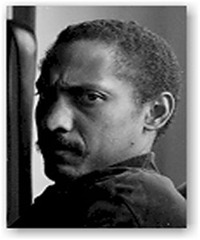
Author Percival Everett

Percival Everett is the author of over thirty books, including So Much Blue, Telephone, Dr No and The Trees, which was shortlisted for the 2022 Booker Prize and won the 2022 Bollinger Everyman Wodehouse Prize. He has received the Hurston/Wright Legacy Award and the PEN Center USA Award for Fiction, has been a Pulitzer Prize finalist, and is Distinguished Professor of English at the University of Southern California. His novel Erasure has now been adapted into the major film American Fiction. He lives in Los Angeles. (Image: Goodreads author page}