Book Review: White Houses by Amy Bloom

White HousesAbout the Book

In 1933, President Franklin and Eleanor Roosevelt took up residence in the White House. With them went the celebrated journalist Lorena Hickok – Hick to friends – a straight-talking reporter from South Dakota, whose passionate relationship with the idealistic, patrician First Lady would shape the rest of their lives.

Told by the indomitable Hick, White Houses is the story of Eleanor and Hick’s hidden love, and of Hick’s unlikely journey from her dirt-poor childhood to the centre of privilege and power. Filled with fascinating back-room politics, the secrets and scandals of the era, and exploring the potency of enduring love, it is an imaginative tour-de-force from a writer of extraordinary and exuberant talent.

Format: ebook, hardcover (240 pp.) Publisher: Granta Books
Published: 1st Feb 2018 (ebook), 24th Apr 2018 (hardcover) Genre: Historical Fiction

Pre-order/Purchase Links*
Amazon.co.uk  ǀ  Amazon.com  ǀ Hive.co.uk (supporting UK bookshops)
*links provided for convenience, not as part of any affiliate programme

Find White Houses on Goodreads


My Review

Opening in 1945, shortly after the death of President Franklin D Roosevelt, Lorena Hickok, known as ‘Hick’, recalls her first meetings with Eleanor, the development of their relationship and her move into the White House.  What follows is a series of flashbacks to the years they shared together.

One such flashback is to a train trip during which they share their most intimate secrets and childhood memories.  Eleanor’s stories take only a few minutes of reading time.  Hick’s take much longer.  Indeed the story sharing scene seems to act as a pretext for a long section depicting the traumatic events Hick endured as a child, her escape from an abusive home, her time spent with some delightfully eccentric circus folk and her eventual move to a career in journalism.  At the same time, it charts the awakening of Hick’s sexuality and her growing realisation that marriage was never going to be a route she would take, that ‘Women were not interruptions, for me.’

Now don’t get me wrong, I loved the way Hick’s early life was written about but I wasn’t expecting it would form such a focus of the book.  Throughout the book, I felt I was getting to know Hick a whole lot better than I was getting to know Eleanor, who always remained somewhat elusive as a character even during flashbacks to scenes in the White House.  At times, Hick’s adoration for Eleanor serves to make that undoubtedly great lady appear a little like a saint on a pedestal.  ‘I loved being the brave and battered little dinghy.  She loved being the lighthouse.’

I really liked the narrative voice the author created for Hick with its sharp dialogue, witty wisecracks and waspish putdowns.  ‘I’d met Wallis Simpson.  Twice.  She wasn’t pretty.  She was a skinny rough-houser from a shitbox Southern town but she had done a phenomenal job of remaking herself, vanquishing good looking rivals, and turning a genial, not stupid, sort of spineless royal into her love-slave.’   

What I also admired was the convincing, heartfelt and sincere depiction of the love between two women.   There were lovely little intimate moments that revealed the women’s affection for each other.

‘She smiled when she saw me coming and I did the same.  When we had breakfast together, I sometimes took a sausage off her plate.’ 

‘And when I was the object of her love, when her eyes lit up across the room, when she touched her fingertips to the pulse at the base of her throat, to mark the spot for me, to mark herself, I thought that there was no sacrifice I wouldn’t make.’

As a story about the relationship between two women at a time when such relationships had to remain largely secret, White Houses scores highly and there was a great deal that I enjoyed about the book.  The true nature of Eleanor and Lorena’s relationship has been disputed by historians over the years and the author freely admits that White Houses is a ‘work of fiction, from beginning to end.’

I received an advance reader copy courtesy of NetGalley and publishers, Granta Books, in return for an honest and unbiased review.

Follow my blog with Bloglovin

In three words: Tender, intimate, moving

Try something similar…Carol by Patricia Highsmith (click here to read my review)


Amy BloomAbout the Author

Amy Bloom is the author of Come to Me, a National Book Award finalist; A Blind Man Can See How Much I Love You, nominated for the National Book Critics Circle Award; Love Invents Us; and Normal. Her stories have appeared in Best American Short Stories, O. Henry Prize Short Stories, The Scribner Anthology of Contemporary Short Fiction, and many other anthologies here and abroad. She has written for The New Yorker, The New York Times Magazine, The Atlantic Monthly, Vogue, Slate, and Salon, among other publications, and has won a National Magazine Award. Bloom teaches creative writing at Yale University.

Connect with Amy

Website  ǀ  Facebook  ǀ  Twitter ǀ  Goodreads

Book Review: Dear Mrs. Bird by AJ Pearce

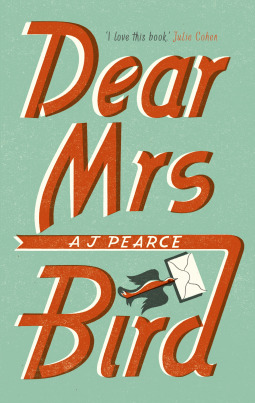
Dear Mrs BirdAbout the Book

London, 1940. Emmeline Lake is Doing Her Bit for the war effort, volunteering as a telephone operator with the Auxiliary Fire Services. When Emmy sees an advertisement for a job at the London Evening Chronicle, her dreams of becoming a Lady War Correspondent suddenly seem achievable. But the job turns out to be working as a typist for the fierce and renowned advice columnist, Henrietta Bird. Emmy is disappointed, but gamely bucks up and buckles down.

Mrs. Bird is very clear: letters containing any Unpleasantness must go straight in the bin. But when Emmy reads poignant notes from women who may have Gone Too Far with the wrong men, or who can’t bear to let their children be evacuated, she is unable to resist responding. As the German planes make their nightly raids, and London picks up the smouldering pieces each morning, Emmy secretly begins to write back to the readers who have poured out their troubles.

Format: ebook, hardcover (320 pp.) Publisher: Picador Books
Published: 5th April 2018                    Genre: Historical Fiction

Pre-order/Purchase Links*
Amazon.co.uk ǀ  Amazon.com ǀ Hive.co.uk (supporting UK bookshops)
*links provided for convenience, not as part of any affiliate programme

 Find Dear Mrs. Bird on Goodreads


My Review

Dear Mrs. Bird opens in a jolly, lively style full of ‘chin up’ and ‘stiff upper lip’ spirit – a spirit of which the domineering (and let’s be honest, quite frightful) Mrs. Henrietta Bird would be proud.   As far as Mrs. Bird is concerned, any problem can be resolved by showing the right amount of grit and by Not Giving In.

However, beneath the spirit of ‘Keep Calm and Carry On’, the book demonstrates through the letters sent to Woman’s Friend magazine, the impact of war on people’s personal lives.  ‘Women whose worlds had been turned upside down by war, who missed their husbands, or got lonely and fell in love with the wrong man Or who were just young and naïve and had their heads turned in a trying time.’  Not just the constant air raids and the rationing but the displacement, separation and life plans changed – engagements, marriages, even conceptions delayed or brought forward – because who knows what tomorrow will bring or if there will even be one?

Emmy’s friendship with Bunty is what helps her get through the days – that and the occasional luxury of a Garibaldi biscuit, a fig roll or a bath in more than an inch of lukewarm water.  But as events unfold, that friendship will be tested.

The reader is transported to a time when people still wrote letters and used them to express their feelings.  As Emmy notes, ‘I could see people were ever so frank when they wrote in, which I thought was quite brave.’  The importance of letters to those serving away from home comes across clearly, providing those receiving them with details of ‘normal life’ to which they can cling; a reminder of what they are fighting for.

The resilience shown by Emmy, her friends and work colleagues reminds us of the courage and fortitude of the people of London during the blitz.  ‘Mother always worried about how we kept going.  I had no idea.  We just did.’  Oh, and the often underappreciated role of tea in sustaining the war effort.

Humour played a key role in maintaining morale and there are some very funny bits in the book, such as Bunty’s and Emmy’s plan to use the hideous globe-shaped drinks cabinet bequeathed to them by Bunty’s grandmother as an offensive weapon.  ‘Bunty and I had decided that if the Germans invaded London and broke in, we would push it down the stairs at them.  The full extent of the British Empire was featured in a rather confident orange and we thought that would make them wonderfully cross.’

Dear Mrs. Bird also acts as a reminder of the important role played by women in World War 2 – manning fire station telephones (like Emmy), acting as dispatch riders and couriers, serving in the Women’s Voluntary Service, Red Cross, Land Army and so much more.  And that constant danger wasn’t only faced by those serving on the front line but also by men who served in the Fire Service and Bomb Disposal on the home front.

As the book progresses, the tone changes and darkness comes, showing the true costs of war, the horrors of the blitz (‘noise was coming from everywhere at once, as if we were being eaten by the very sound itself’) and the fact that sometimes ‘carrying on’ just isn’t enough.  ‘Stiff upper lips and getting on with things were all very well, but sometimes there was nothing to do but admit that things were quite simply awful.  War was foul and appalling and unfair.’

This makes it sound like Dear Mrs. Bird is a depressing book; far from it.  It is funny, charming and heart-warming.  The narrative voice sets the tone of the book delightfully: ‘The sun had pulled its socks up and was making a good effort in the almost cloudless winter sky’.  However, I liked that the author wasn’t afraid to feature darker moments amongst the light-hearted elements (because, of course, the cloudless winter sky just mentioned would be a gift to the Luftwaffe bombers.)

I received an advance reader copy courtesy of NetGalley and publishers, Picador, in return for an honest and unbiased review.

Follow my blog with Bloglovin

In three words: Spirited, compassionate, touching

Try something similar…The Chilbury Ladies’ Choir by Jennifer Ryan


A J PearceAbout the Author

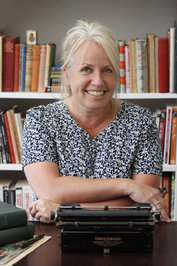
AJ Pearce grew up in Hampshire and studied at the University of Sussex. A chance discovery of a 1939 women’s magazine became the inspiration for her ever-growing collection and her first novel Dear Mrs Bird. She now lives and writes in the south of England.

Connect with AJ Pearce

Publisher website  ǀ  Facebook  ǀ  Twitter  ǀ  Goodreads