
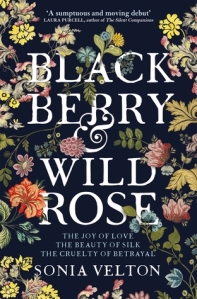
 About the Book
When Esther Thorel, the wife of a Huguenot silk-weaver, rescues Sara Kemp from a brothel she thinks she is doing God’s will. Sara is not convinced being a maid is better than being a whore, but the chance to escape her grasping ‘madam’ is too good to refuse.
Inside the Thorels’ tall house in Spitalfields, where the strange cadence of the looms fills the attic, the two women forge an uneasy relationship. The physical intimacies of washing and dressing belie the reality: Sara despises her mistress’s blindness to the hypocrisy of her household, while Esther is too wrapped up in her own secrets to see Sara as anything more than another charitable cause.
It is silk that has Esther so distracted. For years she has painted her own designs, dreaming that one day her husband will weave them into reality. When he laughs at her ambition, she unwittingly sets in motion events that will change the fate of the whole Thorel household and set the scene for a devastating day of reckoning between her and Sara.
The price of a piece of silk may prove more than either is able to pay.
Format: Hardcover, ebook (416 pp.) Publisher: Quercus Books
Published: 10th January 2019 Genre: Historical Fiction
Pre-order/Purchase Links*
Amazon.co.uk ǀ Amazon.com ǀ Hive.co.uk (supporting UK bookshops)
*links provided for convenience, not as part of any affiliate programme
Find Blackberry and Wild Rose on Goodreads
My Review
Tricked into prostitution as an innocent newcomer to London, Sara Kemp’s rescue by Esther Thorel from the clutches of the awful Mrs. Swann offers her the possibility of gaining control over her life. However, Sara soon finds that it seems she may have swapped one form of dependence for another, constantly at the beck and call of her new mistress. Furthermore, the possibility that the shameful details of her previous life may be revealed is a constant fear, especially since not everyone in the Thorel household welcomes her arrival.
Esther’s desire and determination to use her artistic talent to produce designs for silk is a search for her own form of emancipation, an escape from what she describes at one point as ‘her gilded cage’. It also becomes an act of defiance in response to her husband Elias’s hypocrisy and deceit – ‘He was not the man I had thought he was and I no longer took his word for granted’ – and his dismissal of her role as nothing more than social status symbol, bed-mate or organiser of their household. ‘There was no mistress of silk in this house, only a master.’
The stories of Esther and Sara are revealed to the reader in alternating points of view. Alongside learning their stories, I also enjoyed discovering fascinating detail about the silk weaving process and its place in the Huguenot community of the time. In an early example of the affects of globalisation, it was interesting to witness how the pressures on the industry as a result of imports from abroad and competition from cheaper material create unrest between the journeymen silk weavers and those who control the Guild system and the silk weavers’ livelihoods.
At the end of the book, Esther and Sara both find themselves facing difficult personal and moral choices that may affect others, some with tragic consequences. Might their experiences leave both women stronger and open up the possibility of them forging different, more fulfilling paths in the future?
Blackberry and Wild Rose is an impressive, assured debut that will be a treat for fans of historical fiction that feature skilfully crafted female characters and an interesting historical setting. I received an advance review copy courtesy of publishers, Quercus, and NetGalley.
In three words: Well-crafted, richly textured, engaging
Try something similar…The Blue by Nancy Bilyeau or A Light of Her Own by Carrie Callaghan (follow links from titles to read my reviews)
 About the Author
Sonia Velton has been a solicitor in Hong Kong, a Robert Schuman Scholar in Luxembourg and spent eight years being a full-time Mum of three in Dubai. She now lives in Kent. Her first novel, Blackberry and Wild Rose, tells the story of a fictional household of master silk weavers living in eighteenth century Spitalfields. The protagonist is loosely inspired by Anna Maria Garthwaite who was the foremost silk designer of the mid-eighteenth century and the title takes its name from an actual silk design. The novel was shortlisted as a work in progress for the Lucy Cavendish Fiction Prize 2015 and longlisted for the Myslexia Novel Competition. (Photo credit: Goodreads author page)
Connect with Sonia

 About the Book
 About the Author

