10 Things I Loved About The Night Tiger by Yangsze Choo

The Night TigerAbout the Book

They say a tiger that devours too many humans can take the form of a man and walk among us…

In 1930s colonial Malaya, a dissolute British doctor receives a surprise gift of an eleven-year-old Chinese houseboy. Sent as a bequest from an old friend, young Ren has a mission: to find his dead master’s severed finger and reunite it with his body. Ren has forty-nine days, or else his master’s soul will roam the earth forever.

Ji Lin, an apprentice dressmaker, moonlights as a dancehall girl to pay her mother’s debts. One night, Ji Lin’s dance partner leaves her with a gruesome souvenir that leads her on a crooked, dark trail.

As time runs out for Ren’s mission, a series of unexplained deaths occur amid rumours of tigers who turn into men. In their journey to keep a promise and discover the truth, Ren and Ji Lin’s paths will cross in ways they will never forget.

Format: Hardcover, ebook (480 pp.)    Publisher: Quercus
Published: 12th February 2019     Genre: Historical Fiction, Fantasy

Purchase Links*
Amazon.co.uk  ǀ  Amazon.com  ǀ Hive.co.uk (supporting UK bookshops)
*links provided for convenience, not as part of any affiliate programme

Find The Night Tiger on Goodreads


10 Things I Loved About The Night Tiger

The setting.  The book vividly conjures up the culture of Malaya in the 1930s through descriptions of food, clothing and customs and a social structure divided between the colonial and indigenous populations.

Characters you love to hate.  For me  (and I suspect other readers) this chiefly means Lydia (memorably described as having hair like a sponge cake) who starts out as plain annoying and clingy but develops into something quite different.

Characters you love to love.  I defy any reader not to fall in love with houseboy, Ren, with his honest, trusting character and his devotion to his previous master and to carrying out his deathbed promise.  However, caring about Ren entails a constant state of worry as he gets into one scrape after another, endangering both himself and possibly others.

Characters you’re just not sure about. For me, this was chiefly William, the ‘dissolute British doctor’ mentioned in the blurb.  He’s a gifted surgeon but also a man with secrets in his past that he fears being revealed and some dubious morals.  On the credit side, he takes Ren under his wing and recognises the boy’s talent so perhaps he can’t be all bad?  He certainly seems to have luck (or fate) on his side at times.

The theme of twins.  As well as actual twins, there are frequent references to similarities between characters, including in appearance.  This will turn out to be pivotal to one particular plot strand.

The five Confucian virtues. This was something completely new to me but I loved the way the author incorporated the concept into the story, including through the use of the names of characters. I love when a book teaches me something new.

The imagery.  I promise you that, having read the book, you will never think about a railway station in quite the same way again.

The Easter egg.  For those unfamiliar with the meaning (outside of the chocolate-y treat) it refers to an intentional inside joke, in this case a reference to the title of the author’s previous book.   

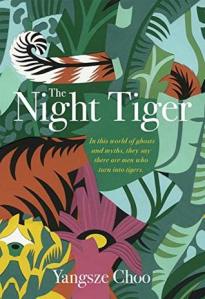
The gorgeous cover.  As well as being beautiful, it has a dreamlike quality that captures the spirit of the book with the abundant, encroaching jungle hiding tigers and who knows what else.  I think it also encapsulates the beautiful, lush writing, especially in the recurring dream sequences, and the elements of mysticism and magic that run alongside the main story.

The buddy read organised by Quercus.  It was great to read the book, section by section,  alongside other readers sharing thoughts on what we’d read so far and ideas on what we thought might happen next (usually wrong).  The involvement of the author – offering insights on the book, her writing process and alternative plot ideas she’d considered, plus answering questions from readers – was an additional delight.  Check out the hashtag #NightTigerTogether on Twitter to get a flavour of the discussion, although be aware there will be spoilers.

I received an advance review copy courtesy of publishers, Quercus, and NetGalley.

Follow my blog with Bloglovin

In three words: Magical, multi-layered, mysterious

Try something similar…Things Bright and Beautiful by Anbara Salam (read my review here)

Yangsze ChooAbout the Author

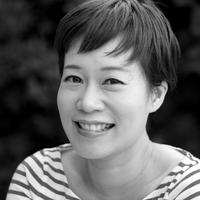
Yangsze Choo is a fourth generation Malaysian of Chinese descent. Due to a childhood spent in various countries, she can eavesdrop (badly) in several languages. After graduating from Harvard, she worked as a management consultant before writing her first novel. Yangsze eats and reads too much, and often does both at the same time. (Photo credit: Goodreads author page)

Connect with Yangsze

Website  ǀ  Facebook  ǀ  Twitter  ǀ  Goodreads

Reading The Walter Scott Prize 2019 Longlist: After the Party by Cressida Connolly

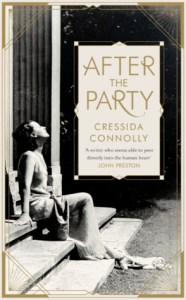
After the PartyAbout the Book

‘Had it not been for my weakness, someone who is now dead could still be alive. That is what I believed and consequently lived with every day in prison.’

It is the summer of 1938 and Phyllis Forrester has returned to England after years abroad. Moving into her sister’s grand country house, she soon finds herself entangled in a new world of idealistic beliefs and seemingly innocent friendships. Fevered talk of another war infiltrates their small, privileged circle, giving way to a thrilling solution: a great and charismatic leader, who will restore England to its former glory.

At a party hosted by her new friends, Phyllis lets down her guard for a single moment, with devastating consequences. Years later, Phyllis, alone and embittered, recounts the dramatic events which led to her imprisonment and changed the course of her life forever.

Format: Hardcover, ebook (272 pp.)    Publisher: Viking
Published: 7th June 2018                         Genre: Historical Fiction

Purchase Links*
Amazon.co.uk  ǀ  Amazon.com ǀ Hive.co.uk (supporting UK bookshops)
*links provided for convenience, not as part of any affiliate programme

Find After the Party on Goodreads


My Review

It’s 1938 and returning to England from abroad, Phyllis gets involved with helping her sister, Nina, organise the summer camp Nina runs as part of her ‘peace work’ for a political movement. For quite a while the identity of the charismatic individual who heads the movement, referred to only as ‘the Leader’, is not revealed, although readers will probably have their suspicions given some of the unpalatable views espoused and the period in which the events take place.  What the book does well is reflect the range of views that prevailed at the time.  How many people were fearful of the prospect of war not so much because they were advocates of appeasement or supporters of the Nazi regime but because they feared the upheaval of war, remembering only too well the carnage wrought by the First World War.

I really enjoyed the way the book explores the changing dynamics of the relationship between the sisters – Phyllis, Nina and Patricia – and their different characters.  Phyllis is the peacemaker of the trio, trying to accommodate other’s wishes.  ‘I always wanted to be friends with both my sisters.  Perhaps that was the source, really, of all the troubles of my life.’

It has to be said that the social circle the sisters move in, particularly Patricia, is not populated by the nicest of people.  It is made up of individuals who don’t really seem to like each other that much but preserve the social niceties whilst attending dinner parties and the like.  Gossipy anecdotes, cruel little asides, mockery and petty snobbery seem to be the order of the day.   It’s a picture of a section of society, with their cooks, parlour maids and drivers, which despite all the airs and graces seem removed from the everyday lives and experiences of most people.    The sort of people who live in houses with a ‘morning room’, such as the house Phyllis’s husband, Hugh, plans to build.  ‘In the mornings Phyllis would be able to take her coffee and write her letters there; perhaps they might install a nice little sofa too, where she might like to sew or read.’

The book opens in 1979 as Phyllis recounts her memories of the period just before the Second World War and during the War itself to an unnamed and unidentified individual researching the history of that time.  What follow are extensive flashbacks as Phyllis recalls events, both public and private.  Some of what she recalls, especially the circumstances of her imprisonment, was certainly new to me and rather an eye-opener.  These sections of the book have a real feeling of authenticity, albeit the events described are slightly bizarre at times.

The author is a skilful writer; I especially liked the imaginative descriptions and quirky similes.  A few of my favourites:
‘Nina’s house stood a little way along from the garage, set back from the road politely, like someone waiting to be introduced.’
‘The tide was out and little boats lolled on their sides in their sandy mud, like the tongues of overheated dogs.’
‘There were blackberries plumping in the hedgerows now and buddleia, giving off a faint scent like pencil sharpenings.’

Although there were elements of After the Party I very much enjoyed, overall I was left with a slight sense of disappointment; the feeling that the book was less than the sum of its parts.  For example, the ‘moment of weakness’ referred to in the blurb seems a minor misdemeanour on Phyllis’s part and one in which she is not really the most guilty party or responsible for what follows.  Yet it seems to weigh on her conscience for the rest of her life so much so that she treats her draconian imprisonment as justified punishment.  Later Phyllis experiences what she views as a ‘betrayal’ but which did not really to amount to anything like that, it seemed to me.

I learned a lot from reading After the Party and appreciated the skilful writing but wanted to feel more enthusiastic about the story than I did. In this respect I seem to be out of step with other readers given the book’s inclusion on the longlist for The Walter Scott Prize for Historical Fiction 2019.

I received a review copy courtesy of publishers, Penguin Books UK/Viking, and NetGalley.

Follow my blog with Bloglovin

In three words: Fascinating, well-researched, intimate


About the Author

Cressida Connolly is a reviewer and journalist, who has written for Vogue, The Telegraph, the Spectator, The Guardian and numerous other publications.

Cressida is the author of three books: The Happiest Days, which won the MacMillan/PEN Award, The Rare and the Beautiful and My Former Heart. Cressida is the daughter of writer Cyril Connolly. In 1985 she married Worcestershire farmer Charles Hudson. They have three children.

Connect with Cressida

Website  ǀ  Goodreads