#BookReview The Honey and the Sting by E.C. Fremantle @MichaelJBooks

9780718180508About the Book

Three sisters. Three secrets. Three ways to fall…

England, 1628. Forcibly seduced by the powerful George Villiers, doctor’s daughter Hester is cast aside to raise her son alone and in secret. She hopes never to see Villiers again. Melis’s visions cause disquiet and talk. She sees what other’s can’t – and what has yet to be. She’d be denounced as a witch if Hester wasn’t so carefully protective. Young Hope’s beauty marks her out, drawing unwelcome attention to the family. Yet she cannot always resist others’ advances. And her sisters cannot always be on their guard.

When Villiers decides to claim his son against Hester’s wishes, the sisters find themselves almost friendless and at his mercy. But the women hold a grave secret. The question is, will what they know be their undoing or their salvation? Because in the right hands, a secret is the deadliest weapon of all…

Format: Hardcover (368 pages)       Publisher: Michael Joseph
Publication date: 6th August 2020 Genre: Historical fiction

Find The Honey and the Sting on Goodreads

Pre-order/Purchase links*
Amazon UK | Hive (supporting UK bookshops)
*links provided for convenience not as part of an affiliate programme


My Review

When George Villiers, Duke of Buckingham, tries to claim his illegitimate son Rafe from Hester, the young woman he seduced, she and her younger sisters, Hope and Melis, are forced to flee their home and seek safety in a remote house in Shropshire owned by a loyal family friend. It has to be said the group make rather poor fugitives, risking discovery on their journey by discarding their disguises, drawing unnecessary attention to themselves and through Hope’s dangerous naivety.

The story is told in the first person by Hester and in the third person from the point of view of Hope. The thoughts of Melis and the nature of her strange visions and glimpses of the future, remain unknown to the reader making her all the more enigmatic a character.  Her affinity with bees and her keen sense of the presence of danger her sisters would do well to heed.

It becomes clear that Hester has underestimated George Villiers’ determination to possess whatever he desires or the lengths to which he will go to remove the hold she has over him, a secret which could bring about his downfall. When the name of the individual he engages to remove the threat the sisters pose is revealed, those with any knowledge of the history of the period are likely to be as intrigued as me. From this point on, the way the author blends fiction with fact is imaginative and completely compelling.

As the reader discovers, there are more ways to defeat an enemy than may be supposed. “The bees know it – honey and sting – sweetness and sharpness. That is what you need.”

The Honey and the Sting is the third book I’ve read by Elizabeth Fremantle. Although not quite my favourite (that accolade would go to The Poison Bed), it is still an absorbing story that demonstrates the power of maternal love and women’s ability to determine their own futures, with just a touch of the supernatural. (You can read my reviews of The Girl in the Glass Tower and The Poison Bed by following the links from the titles.)

My thanks to Michael Joseph for my advance review copy of The Honey and the Sting via NetGalley.

In three words: Intriguing, imaginative, mystery

Try something similar: Earthly Joys by Philippa Gregory

Follow this blog via Bloglovin


3k3wyu0L_400x400About the Author

E.C. Fremantle is the critically acclaimed author of The Poison Bed, ‘an electrifying, brilliantly executed thriller,’ and a Times Book of the Year. As Elizabeth Fremantle she has published four Tudor and Elizabethan set novels: Queen’s Gambit, Sisters of Treason, Watch the Lady and The Girl in the Glass Tower. She has contributed to various publications including The Sunday Times, Vogue, Vanity Fair, The Financial Times and the Wall Street Journal. She lives in London.

Connect with Elizabeth
Website | Twitter | Facebook | Goodreads


#BookReview The Housing Lark by Sam Selvon

9780241441329About the Book

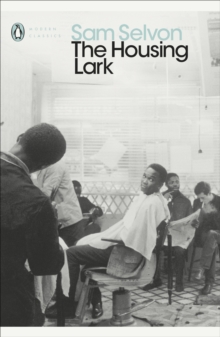
Sitting in his cramped basement room in Brixton, Battersby dreams of money, women, a T-bone steak – and a place to call his own. So he and a group of friends decide to save up and buy a house together. But amid grasping landlords, the temptations of spending money and the less-than-welcoming attitude of the Mother Country, can this motley group of hustlers and schemers, Trinidadians and Jamaicans, men and women make their dreams a reality?

‘Selvon’s meticulously observed narratives of displaced Londoners’ lives created a template for how to write about migrant, and postmigrant, London for countless writers who have followed in his wake, including Hanif Kureishi and Zadie Smith’ (Caryl Phillips)

Format: Ebook (160 pages)               Publisher: Penguin Modern Classics
Publication date: 6th August 2020 [1965] Genre: Contemporary fiction

Find The Housing Lark on Goodreads

Pre-order/Purchase links*
Amazon UK | Hive (supporting UK bookshops)
*links provided for convenience not as part of an affiliate programme


My Review

The Housing Lark is definitely a lark as it’s full of humorous episodes and laugh out loud character studies of Battersby’s house mates and friends. However, behind the humour, what the book does so well is to shed light on more serious issues: whether that’s the Anglo-centric nature of the history syllabus, the overt raciscm faced by immigrants or the lack of access to decent housing.

For example, although it has the serious issue of discrimination at its heart, one of my favourite stories concerns Sylvester. In order to find a room to rent, he is forced to convince the landlord he is from India rather than from Trinidad (the former being more acceptable seemingly than the latter.) He succeeds but has to keep up the part despite knowing little about India. Entering Sylvester’s room one day to find him standing on his head, the landlord asks what he is doing. Sylvester replies, “I am practising my yoghourt”. There are many more episodes of that kind.

One of Battersby’s moneymaking schemes to help raise the deposit for a house is to organise a coach excursion. The destination chosen is “Hamdon Court” and much hilarity ensues from the very start. “And the food and drink – well, it look like they setting off for an expedition to the North Pole or something.” When they finally get going, “like if fete start up right away. Fellars begin beating bottle and spoon and singing calypso…three bottles of rum start to make rounds…a woman open up a pot of pilau and start dishing out food.”

On arrival at their destination, most of the men choose not to tour the palace, opting instead for the delights of the rum bottle and showing off their (supposed) knowledge of history. All English history, of course.
“Nights of the round table and Richard with the lion heart and them fellars“, offers one. “Don’t forget Robin Hood and the Merry Men. And what about the fellar who was watching a spider and make the cakes burn?“, says another.

The book challenges the notion that people from the Caribbean region are a homogenous group. “To introduce you to all these characters would take you into different worlds, don’t mind all of them is the same colour.” It would be nice to think we can all deny the following accusation: “All you interested in is that he black – to English people, every black man look the same. And to tell you he come from Trinidad and not Jamaica – them two places a thousand miles apart – won’t matter to you, because to Englishers the West Indies is the West Indies, and if a man say he come from Tobago or St. Lucia or Grenada, you none the wiser.” As someone who has been lucky enough to visit several Caribbean islands over the years, I confess I was initially guilty of some of this thinking, imagining that the people from one island would frequently “pop over” to a neighbouring one. Of course, as I learned, they all have entirely different cultures, histories and, in some cases, languages.

The book demonstrates that, just as the British struggle to understand some of the immigrants’ customs, the newcomers are equally confused by what they find. For example, Battersby is perplexed by the UK’s changeable weather, so different from his homeland of Trinidad. “Funny thing in this country, you could never tell what sort of day waiting to pounce on you.” He also finds it hard to comprehend the British fixation with trying to forecast the weather. For instance, he marvels that on the television “they have this big map spread out, and a fellar come with a stick like a school master” who seems to have the power to determine the weather by moving symbols to different places.

I confess I struggled a little with some of the male characters’ attitude to women, especially the use of what seemed to me demeaning terms for them and a fixation with making sexual conquests. However, I’ll freely admit that this may be my own cultural prejudices and all the author is doing is faithfully recording the attitudes of the period.

The female characters come across as far more sensible than their male counterparts. For example, Battersby’s sister, Jean, does her best to keep him on the straight and narrow and ensure he looks respectable. This also extends to contributing to his rent, even though that means she has to work as, what she euphemistically describes, a kind of receptionist, explaining “I have to entertain the customers, and make sure they satisfy“.

As Battersby eventually realises, the idea of buying a house might be a lark to some of them but to women like Teena, struggling to bring up a family in cramped accommodation, it’s anything but. As she says, “Shame, shame and sorrows, is what scalliwags and scoundrels like the set of you bring on the heads of. Everything is a skylark and a fete and a bacchanal.” The omniscient narrator seems to agree. “You say this whole plan to buy a house was doom to turn old mask from the very beginning. Look at all these dreamers, and imagine that characters like these could get serious.”

In a recent online article recommending books about the Windrush generation, including Sam Selvon’s The Lonely Londoners, Sara Collins (author of The Confessions of Frannie Langton) writes, “Selvon said that he was the first Caribbean writer to employ dialect in a full-length novel for narrative and dialogue. The result is musical, addictive, unparalleled prose.” I think you can see the evidence of this from the quotes I’ve included – the rhythmic speech, the colloquialisms and use of dialect. At one point the word ‘buttards’ is used and the narrator notes, “That’s a good word, but you won’t find it in the dictionary…. It ain’t have no word in the English language to mean that, so make it up.”

Published on 6th August 2020 as part of Penguin’s Modern Classics series, The Housing Lark is a fascinating insight into the experiences of immigrants to Britain in the 1960s. It’s also a huge amount of fun. My thanks to Matt Hutchinson at Penguin for my advance review copy via NetGalley.

In three words: Spirited, authentic, funny

Try something similar: The Lonely Londoners by Sam Selvon

Follow this blog via Bloglovin


About the Author

Sam Selvon was born in San Fernando, Trinidad, in 1923 and worked in his homeland as a wireless operator and reporter. In 1950 he left Trinidad for the UK, where after hard times he established himself as a writer with A Brighter Sun (1952). Many other books followed, including his best-known novel, The Lonely Londoners (1956), and its two sequels, Moses Ascending(1975) and Moses Migrating (1983). He moved to Canada in the late 1970s and died in 1994. (Bio credit: Publisher website)