
 About the Book
Lucia’s fingers found her own. She gazed at Caro as if from a distance. Her lips parted, her words a whisper: ‘He knows.’
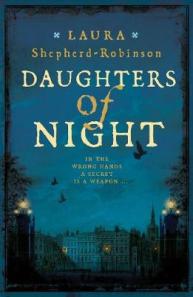
London, 1782. Desperate for her politician husband to return home from France, Caroline ‘Caro’ Corsham is already in a state of anxiety when she finds a well-dressed woman mortally wounded in the bowers of the Vauxhall Pleasure Gardens. The Bow Street constables are swift to act, until they discover that the deceased woman was a highly-paid prostitute, at which point they cease to care entirely. But Caro has motives of her own for wanting to see justice done, and so sets out to solve the crime herself. Enlisting the help of thief-taker, Peregrine Child, their inquiry delves into the hidden corners of Georgian society, a world of artifice, deception and secret lives.
But with many gentlemen refusing to speak about their dealings with the dead woman, and Caro’s own reputation under threat, finding the killer will be harder, and more treacherous than she can know . . .
Format: Hardcovere (592 pages) Publisher: Mantle
Publication date: 18th February 2021 Genre: Historical Fiction, Crime, Mystery
Find Daughters of Night on Goodreads
Purchase links
Bookshop.org
Disclosure: If you buy a book via the above link, I may earn a commission from Bookshop.org, whose fees support independent bookshops
Hive | Amazon UK
Links provided for convenience only, not as part of an affiliate programme
My Review
In my review of Laura Shepherd-Robinson’s first book, Blood & Sugar, I recall mentioning how good it would have been for Caroline, wife of the novel’s protagonist Harry Corsham, to have had a bigger role. And do you know what, in Daughters of Night I got my wish!
Teaming up with thief-taker, Peregrine Child, Caroline – known as ‘Caro’ – sets out to investigate the death of the woman she believed to be an Italian Countess but whose real identity was somewhat different. They make a great partnership with Peregrine especially admiring of Caro’s questioning skills, likening it to ‘having Torquemada on your team’. What their enquiries reveal is that firstly, no-one in authority particularly cares about solving the murder and secondly, there are those who definitely do not want any light shone on their activities. Despite the risks to their reputations (such as remain), to their lives and those of their loved ones, Peregrine and Caro press on with their investigation, uncovering some very sordid secrets in the process. Despite pressure from her family, Caro remains defiant to the end, managing to bring about her revenge on the culprits in her own way.
Daughters of Night positively oozes period atmosphere, transporting the reader from the bowers and pathways of the Vauxhall Pleasure Gardens to the taverns, coffee-houses and “fleshpots” of Covent Garden. It was fascinating to discover the existence of things such as ‘Puss and Mew’ shops (illegal gin shops) and mixed doubles boxing matches. Equally fascinating, but rather more distasteful, was learning about the varieties of brothels that existed in Georgian London including ‘posture houses’ where girls posed naked and ‘tableaux houses’ where young girls acted out classical scenes before audiences of men, often in order to solicit bids for their virginity. The book reveals there existed a hierarchy of prostitutes with those at the top of their ‘profession’ becoming celebrities of their day.
Daughters of Night is another hugely impressive historical crime novel from the pen of Laura Shepherd-Robinson. Its intricate plot, with its twists and turns, kept me glued to the book until the final page. And was it my imagination or were Caro’s closing thoughts a nod to those of another famous literary heroine, Scarlett O’Hara? “There will be a plan, she told herself. I just haven’t thought of it yet. Let tomorrow bring what it will bring.” I’m sure I’m not the only reader keen to find out what tomorrow does bring for Caro. Although Laura has revealed her next novel will be a standalone historical mystery, she also hasn’t ruled out a return for Harry and Caro at some point. Fingers crossed from this reader.
I received a digital review copy courtesy of Mantle Books via NetGalley, although having seen the gorgeous hardcover with its fabulous endpapers, I may have to treat myself when my first post-lockdown trip to a bookshop finally comes about.
In three words: Gripping, atmospheric, immersive
Try something similar: To The Dark (Simon Westow #3) by Chris Nickson
Follow this blog via Bloglovin
 About the Author
Laura Shepherd-Robinson was born in Bristol in 1976. She has a BSc in Politics from the University of Bristol and an MSc in Political Theory from the London School of Economics. Laura worked in politics for nearly twenty years before re-entering normal life to complete an MA in Creative Writing at City University. She lives in London with her husband, Adrian.
Blood & Sugar, her first novel, won the Historical Writers’ Association Debut Crown, was a Waterstones Thriller of the Month, and a Guardian and Telegraph novel of the year. It was also shortlisted for the Crime Writers’ Association John Creasey (New Blood) Dagger and the Sapere Historical Dagger; and the Amazon Publishing/Capital Crime Best Debut Novel. (Photo/bio credit: Author website)
Connect with Laura
Website | Twitter | Facebook | Instagram

 About the Book

