
About the Book
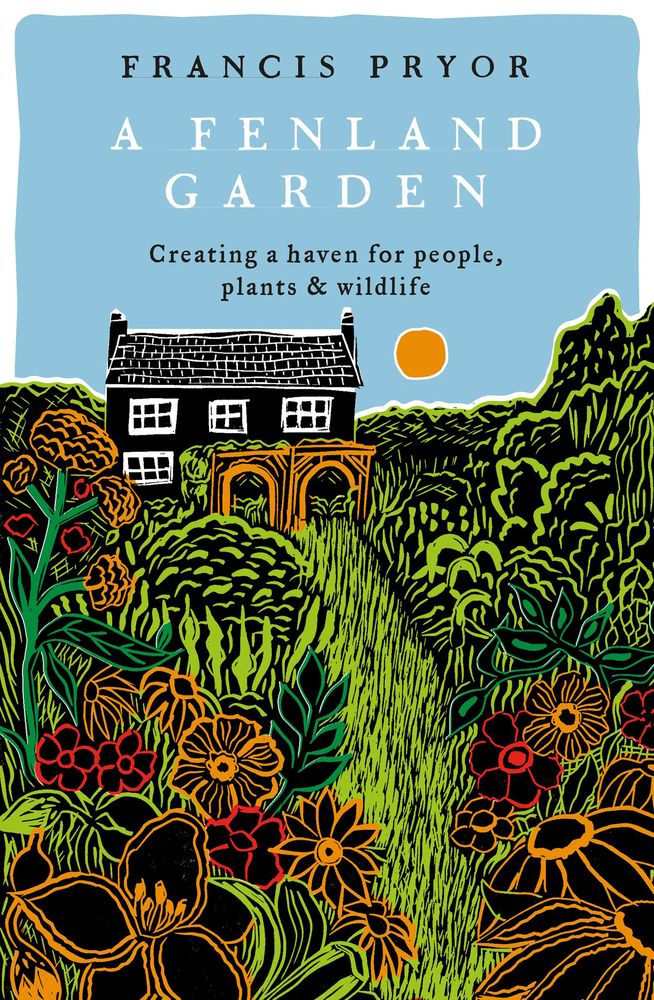
A Fenland Garden is the story of the creation of a garden in a complex and fragile English landscape – the Fens of southern Lincolnshire – by a writer who has a very particular relationship with landscape and the soil, thanks to his distinguished career as an archaeologist and discoverer of some of England’s earliest field systems. It describes the imagining, planning and building of a garden in an unfamiliar and sometimes hostile place, and the challenges, setbacks and joys these processes entail.
This is a narrative of the making of a garden, but it is also about reclaiming a patch of ground for nature and wildlife – of repairing the damage done to a small slice of Fenland landscape by decades of intensive farming.
A Fenland Garden is informed by the empirical wisdom of a practising gardener (and archaeologist) and by his deep understanding of the soil, landscape and weather of the region; Francis’s account of the development of the garden is counterpointed by fascinating nuggets of Fenland lore and history, as well as by vignettes of the plantsman’s trials and tribulations as he works an exceptionally demanding plot of land.
Above all, this is the story of bringing something beautiful into being; of embedding a garden in the local landscape; and thereby of deepening and broadening the idea of home.
Format: ebook (352 pages) Publisher: Head of Zeus
Publication date: 6th July 2023 Genre: Nonfiction, Gardening
Find A Fenland Garden on Goodreads
Purchase links
Bookshop.org
Disclosure: If you buy a book via the above link, I may earn a commission from Bookshop.org, whose fees support independent bookshops
Hive | Amazon UK
Links provided for convenience only, not as part of an affiliate programme
My Review
As a fan of the TV programme Time Team, in which the author appeared for many years, and as a keen gardener who’s spent a fair amount of time trying to create a garden that’s both a haven for myself and my husband, and for wildlife, I was immediately drawn to this book. The beautiful cover was a definite draw as well.
The book details the process of transforming an area of neglected farmland into a garden, whilst also building a house. It’s a task that took patience, dedication, imagination, a few run-ins with the planning authorities and not a little hard graft by the author and his wife, Maisie. In the book the author describes the painstaking process of planning, setting out and planting. In particular, planting trees and hedges to protect parts of the garden from the vicious and potentially damaging winds experienced in their part of Lincolnshire. But whereas you or I might plant one, possibly two trees, if we had the space, the author planted hundreds, establishing an area of woodland and, later, creating an orchard.
At the same time as doing this, Francis and his wife were living in a barn in very basic conditions. And on top of that, they keep sheep. Their relationship is one of the wonderful things about the book. Both archaeologists, they are obviously kindred spirits in other ways as well, sharing a love of plants, a concern for wildlife but also a clear vision of how a garden should look and feel. At one point Francis says, ‘I like gardens that can retain their secrets’ and this principle has informed how they have set out their garden so that one section always leads to another. Keen visitors to other gardens, they also now open their own garden as part of the National Garden Scheme. You can find details of opening times here as well as a few photographs of the garden. (I’m green with envy of their long border.)
If I’m honest, at times there was a little too much detail – such as the process of setting out paths and resolving problems with drainage – but I attributed this to the author’s passion for the project and his satisfaction at what he and Maisie have created together. They’re definitely right to be proud and Francis makes it clear that the garden is very much a team effort. The final section of the book contains some wonderful colour photographs of the garden as it looks now, followed by the sort of detailed end notes you’d expect from a scientist.
A Fenland Garden is a fascinating book and a testament to what you can achieve if you put your mind to it. Much of the author’s philosophy chimes with my own thoughts about gardening. As he says, ‘Gardeners have to garden; that’s all there is to it.’
I received a digital review copy courtesy of Head of Zeus via NetGalley.
In three words: Informative, passionate, inspiring
Try something similar: Where the Hornbeam Grows by Beth Lynch
About the Author

Francis Pryor is one of Britain’s most distinguished living archaeologists, the excavator of Flag Fen and a sheep farmer. Based in Lincolnshire, he is the author of seventeen books including The Fens (a Radio 4 Book of the Week), Stonehenge, Flag Fen, Britain BC, Britain AD, The Making of the British Landscape and Scenes from Prehistoric Life. Francis lives in the South Lincolnshire Fens.
Connect with Francis
Website | Twitter | Facebook

 About the Book
 From the moment Jane arrives at Moor End, the farm owned by her Uncle William and Aunt Kate, she notices the differences between town and country life: the lack of traffic noise, the unimpeded view from her bedroom window, the sound of bird song and the daily rhythm of farming life. As time goes by she learns more about animal husbandry and how food is produced. As she discovers, the operation of Moor End Farm still relies largely on manual labour, horse-drawn ploughs and basic farm machinery. The changing seasons are marked by tasks in the farming calendar – sowing, threshing, harvesting – with Jane enthusiastically joining in some of these tasks.
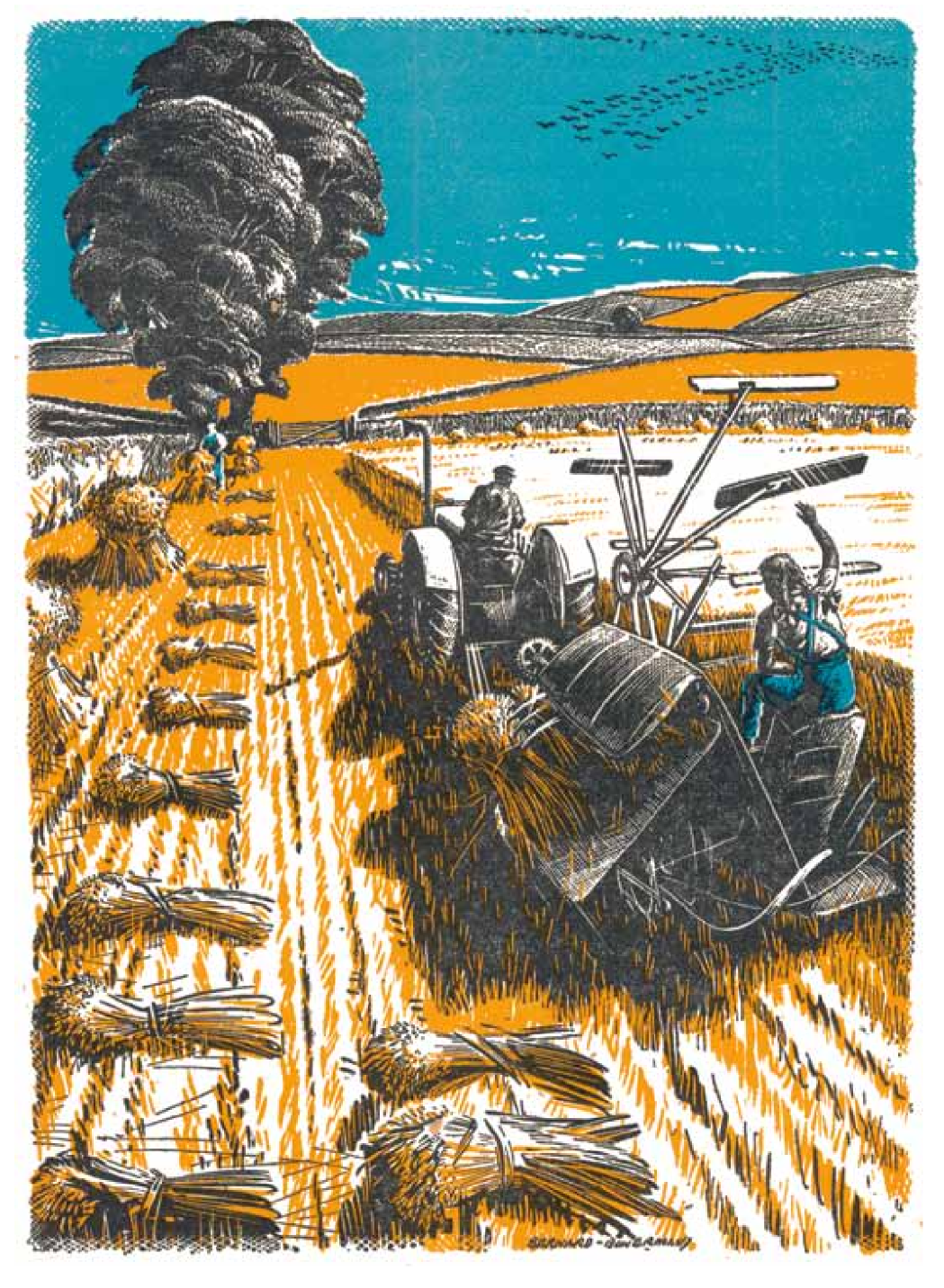 The book has beautiful full colour illustrations by Bernard Bowerman reproduced from the original edition. I think they would make a wonderful calendar.
 What Cathy Read Next...