Blog Tour/Q&A: The Brotherhood by Shannon Condon

TheBrotherhood

I’m delighted to be hosting today’s stop on the blog tour for The Brotherhood by Shannon Condon, the follow-up to the exciting Finding Magdalena. I’m thrilled that Shannon has agreed to answer some questions about The Brotherhood and her approach to writing.

Check out the full tour schedule here

Follow my blog with Bloglovin


TheBrotherhoodCoverAbout the Book

Starting where Finding Magdalena left off, nineteen-year-old Maggie marries her fiancé, Mateo, and moves to Milan for his new job and her scholarship at the famous Milan Conservatory. She has barely settled into her new home when Maggie uncovers The Brotherhood – a secret organization – and finds herself unwittingly involved in its sinister plans. Along with Shep and the rest of his team, she leads the covert mission to bring The Brotherhood to its knees.  Once again, Maggie embarks on a dangerous journey that tests her mental and physical limits. Can she escape The Brotherhood’s long reach and survive?

Format: ebook Publisher: Austin Macauley Pages: 374
Publication: 28th Apr 2017 Genre: Fiction    

Purchase Links*
Amazon.co.uk ǀ Amazon.com ǀ
*links provided for convenience, not as part of any affiliate programme

Find The Brotherhood on Goodreads


Interview: Shannon Condon, author of The Brotherhood

The Brotherhood carries on the story of Maggie whom we were first introduced to in Finding Magdalena. What are the challenges of writing a sequel compared to a standalone novel?

I didn’t find it challenging; I found it exciting. When I finished Finding Magdalena I felt there was still so much of Maggie’s story to be told. The Brotherhood flowed out of my imagination so quickly I had a challenging time keeping up with the typing and had to write little shorthand notes for myself so I wouldn’t forget to add certain details.

Why did you decide to make Maggie the subject of a second book?

Maggie is such an interesting, multilayered character. As mentioned above, there were so many places Maggie’s life could take her. I couldn’t leave her character after just one book. This sentiment was echoed by quite a few readers who wanted another Maggie book. I found this to be both a compliment and encouraging. I am currently working on the third instalment of Maggie’s story.

In The Brotherhood, Maggie has left the US behind and moved to Milan. What made you choose Milan as a location for the book?

Maggie was living in Malaga, Spain when she married Mateo. Since Mateo was an architect it made sense for them to move to the most metropolitan city in Italy, known for its architecture and the arts. Maggie, a music major, would be able to finish her music degree at the Milan Conservatory.

Maggie has experienced tragedy in her life. How do you think this has influenced her character?

It influenced her personality and the way she deals with situations. The first tragedy was the loss of her parents when she was fifteen. Maggie was already in a new environment at a US boarding school. Previously, she moved with her parents all over Europe and was homeschooled. When her parents died, she initially withdrew, experiencing anxiety and night terrors. Her best friend Graham was the only one who could reach her. Eventually, she learned to deal with her pain by throwing herself into her studies, running daily and her music. Basically, she kept herself busy all the time.

She had the ability to compartmentalize and push things down so she didn’t have to deal with it. Unfortunately, this kept her anxiety steady and she kept her Xanax handy. It was not the healthiest solution but her ability to focus and tune everything else out would serve her well in the months and years ahead.

The plot revolves around a secret organization, The Brotherhood. Why do you think secrets are so enticing to us as readers?

It invokes a level of excitement and intrigue. You can’t help but to guess who is involved and what is the purpose of the organization. Usually, when you are privy to a secret you feel special, maybe even entitled. In The Brotherhood, however, the secrets are difficult for Maggie to accept.

Do you have a special place to write or any writing rituals?

I don’t physically start writing until I have the story and characters worked out. I guess you could say I spend a lot of time writing in my head before I begin typing. I write from the first page to the last. I never skip around or write chapters out of order. The characters are so well developed in my mind it almost seems as if they lead the story!

What is your favourite and least favourite part of the writing process?

My favourite part is the actual writing. Sometimes I find myself changing the story and taking it in a different direction than what I had originally imagined. I love having the ability to do that. My least favourite part is the editing process. While very necessary, it takes a long time to go back and forth between writer and publisher before the book is ready for print. Once I finish a book, I am anxious for people to read it and see what they think of it.

Which other writers do you admire and why?

I admire the late Tom Clancy, Robert Ludlum and William Golding. I love reading Clancy and Ludlum because they write such tight action/thriller stories with characters that resonate and live on from book to book. William Golding’s Lord of the Flies is the first book I read that completely swept me up and left me peeling back the layers through a second and third reading of it.

What are you working on next? Will there be more adventures for Maggie?

I am currently working on the third instalment of the Magdalena series. I am not sure if I will end the series as a trilogy or continue. I will likely see how Maggie’s fans feel after the third book!

Thank you, Shannon, for those fascinating answers and the good news that Magdalena’s story hasn’t finished quite yet…
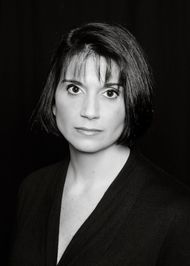

ShannonCondonAbout the Author

Shannon writes: Born in upstate New York, I was raised in South Florida where I was exposed to a multicultural background. From the time I was in elementary school, I was writing prolifically in journals and poetry. I attended the University of Florida College of Journalism and Communications and graduated with honours. Life happens and it was necessary for me to put my writing aspirations on hold for a while. I still wrote poetry as time allowed, but as a single mother of three boys, there wasn’t much time. But time passes quickly and the opportunity presented itself for me to begin writing again. I developed the first story in the Magdalena series, Finding Magdalena, in my head before I put anything down on paper. I had the storyline, well-developed characters and ending before I began writing. I also took the opportunity to travel to Spain and Italy to do location research. It was a labour of love. The second book in the series, The Brotherhood, came pouring forth like a waterfall. The characters, now old friends to me, seemed to take over and write the book themselves. I am currently working on the third instalment of the Magdalena series and another book which is a different genre, one that deals with the relationship between three generations of women over three time periods.  For me, writing has always been a release, never work. I hope that continues. When it becomes work, I will probably stop. Right now, just the idea that people read my work and find enjoyment in it is a thrill for me.

Connect with Shannon

Website ǀ Twitter ǀ Goodreads

Sage'sBlogTours

Q&A: Scott Kauffman, author of Revenants: The Odyssey Home

question-1828268__340

Today’s guest on What Cathy Read Next is Scott Kauffman, author of Revenants: The Odyssey Home. I recently read Scott’s book – you can read my review here – and it generated lots of questions in my mind. So I’m thrilled that Scott has agreed to answer some of my questions and talk more about the book and his inspiration for writing it. If you need any further persuading to read the book, you can find an excerpt from the opening chapter here.

Follow my blog with Bloglovin


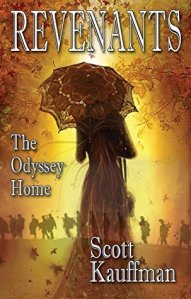
RevenantsAbout the Book

Only Betsy can get him home in time; only he can bring her back before it’s too late.   A grief-stricken candy-striper serving in a VA hospital following her brother’s death in Vietnam struggles to return home an anonymous veteran of the Great War against the skulduggery of a congressman who not only controls the hospital as part of his small-town fiefdom but knows the name of her veteran. The name, if revealed, would end his political ambitions and his fifty-year marriage. In its retelling of Odysseus’ journey, Revenants casts a flickering candle upon the Charon toll exacted not only from the families of those who fail to return home but of those who do.

Format: ebook Publisher: Moonshine Cove Pages: 275
Publication: 23rd Dec 2015 Genre: Historical Fiction    

Purchase Links*
Amazon.co.uk ǀ Amazon.com ǀ Barnes & Noble
*links provided for convenience, not as part of any affiliate programme

Find Revenants: The Odyssey Home on Goodreads


Interview: Scott Kauffman, author of Revenants: The Odyssey Home

Without giving too much away, can you tell us a bit about Revenants: The Odyssey Home?  

When a grief-stricken candy striper resolves to return home a nameless veteran of the Great War, she must overcome not only his reticence to reveal his past but the skulduggery of a local congressman who controls the hospital as part of his small-town political fiefdom.

What was the inspiration for the book?

Literary inspiration came from Johnny Got His Gun, Legends of the Fall, and The English Patient. Personal inspiration came in part from my late-wife’s uncle who may have been the last American combat death in Viet Nam and is the only American to have died on an MIA recovery mission. Also, I came of age during the Viet Nam war. From 1963 to 1975 it was television and front page news every day. I only missed getting shipped to Viet Nam myself because I pulled a high enough number in the draft lottery.

America involved itself in Viet Nam because after the Republicans bludgeoned the Democrats at the polls as being responsible for losing China in 1949 (not that it was ours to lose) neither party was willing to be the party in power should another country fall to the Communists. But once America involved itself in Viet Nam, it only committed enough resources to not lose the war, never to win it. A study contained within the infamous Pentagon Papers opined that the United States would have to accept 50,000 casualties a year for five to ten years in order to defeat the Communists. By the end of World War II, the American public was rebelling at comparable losses and was one of the reasons for the Hiroshima bomb. They would never have accepted losses of 250,000 to 500,000 to defeat the Communists in Viet Nam.

The book references Homer’s epic poem The Odyssey but is not a straight re-telling. What aspects of The Odyssey did you want to reflect in the book?

Odysseus faced mythological monsters in order to get home; Jamie and Betsy had to face their inner monsters if they too were ever to get home. The Odyssey has been such an inspiration across millennia and in so many genres (think Star Trek) but is at bottom a story of a soldier’s struggle to come home. So many soldiers who come home never really come home. I read somewhere that more veterans of Viet Nam have died at their own hands than were killed in combat. So what I wanted to reflect on was Jamie Hamilton’s odyssey home and Betsy’s odyssey to bring her brother home for her by understanding Jamie’s odyssey.

A number of characters in the book seem to feel the need to do penance. Can you talk a bit more about this?

I think for many soldiers who go through combat and come home there is tremendous guilt. Often they are ill trained, young and frightened out of their wits and, like all of us would in a similar situation, they make bad decisions where the innocent suffer. These are the monsters they too must overcome if they are ever to come home.

Another theme of the book is the consequences of war, not just for the participants but for their families and their communities. Why did you want to explore this?

I think nations go to war much too readily. We have been indoctrinated to believe that government knows what it is doing when it comes to war and that it is unpatriotic not to go along. For governments, it is all too easy to send someone else’s child off to die while they sit at home fat, dumb, happy and safe. Seldom do you see the children of the elites enlisting. On the other hand, young men, because they are in such a rush to prove themselves heroes, are easy cannon fodder. We do not really consider the consequences of war other than the immediate death and destruction. Consider, however, these questions. But for the invasion of Iraq would there have been an Isis? If America had stayed out of World War I, would the war have ended in stalemate? Would there have been a Versailles Treaty, German reparations, German hyper-inflation, a Hitler, a Holocaust, an atom bomb and a Cold War? The consequences are just staggering.


The book involves a secret that has been long hidden. Why do you think secrets are so enticing to us as readers?

I think uncovering secrets is hardwired into us by evolution. The caveman who went into the mystery of the forest looking for food was more likely to survive. So long as he wasn’t the one eaten.

How did you approach your research for the book – for example, the scenes set in the First World War. Do you enjoy the process of research?

I hate to disappoint you but I did not need to do a lot of novel-specific research. I have always been a bit of a history buff so many of the scenes came from what I have read over the years.

What was the biggest challenge you encountered when writing the book?

As in gymnastics, sticking my landing was the most difficult. Over 8 years and 14 major rewrites, the beginning did not change all that much. It was the final third I couldn’t stick. I finally found my ending when I was working on a short story that eventually became my new chapter 1. When I had my beginning, the ending just flowed out of it.

Which other writers do you admire and why?

My favorite living writer is Cormac McCarthy because he writes with the vividness of William Faulkner and the conciseness of Ernest Hemingway.

What are you working on next?

Working title – The Song of Deborah. Before a grief-stricken bounty hunter risks the wrath of the Midwest mob that hired him to track down their fifteen-year old runaway, he must come to terms with his culpability for the suicide of his teenage daughter. As you can see, another character in need of penance. Thank you so much, Cathy! This has been fun.

Thank you, Scott, for such detailed and thoughtful answers to my questions.


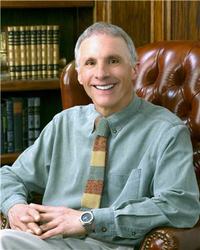
ScottKauffmanAbout the Author

Scott claims his fiction career began with an in-class book report written in Mrs. Baer’s eighth-grade English class when, due to a conflict of priorities, he failed to read the book. An exercise of imagination was required. Scott snagged a B, better than the C he received on his last report when he actually read the book. Thus began his life-long apprenticeship as a teller of tales and, some would snidely suggest, as a lawyer as well, (but they would be cynics; a race Oscar Wilde warned us knew the price of everything and the value of nothing).

Scott is the author of the legal-suspense novel, In Deepest Consequences, and a recipient of the 2011 Mighty River Short Story Contest and the 2010 Hackney Literary Award. His short fiction has been appeared in Big Muddy, Adelaide Magazine, and Lascaux Review. He is now at work on two novel manuscripts and a collection of short stories.

Scott is an attorney in Irvine, California, where his practice focuses upon white-collar crime and tax litigation with his clients providing him endless story fodder.

Connect with Scott

Website ǀ Facebook ǀ Twitter ǀ Goodreads