
Welcome to the opening stop on the blog tour for The Stone Diaries by Carol Shields. My thanks to Anne at Random Things Tours for inviting me to participate in the tour and to World Editions for my digital review copy.
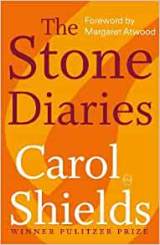 About the Book
Widely regarded as a modern classic, The Stone Diaries is the story of one woman’s life; that of Daisy Goodwill Flett, a seemingly ordinary woman born in Canada in 1905. Beautifully written and deeply compassionate, it follows Daisy’s life through marriage, widowhood, motherhood, and old age, as she charts her own path alongside that of an unsettled century. A subtle but affective portrait of an everywoman reflecting on an unconventional life, this multi-award-winning story deals with everyday issues of existence with an extraordinary vibrancy and irresistible flair.
Format: Paperback (392 pages) Publisher: World Editions
Publication date: 22nd October 2020 [1993] Genre: Literary Fiction
Purchase links
Bookshop.org
Disclosure: If you buy a book via the above link, I may earn a commission from Bookshop.org, whose fees support independent bookshops
Hive | Amazon UK
Links provided for convenience only, not as part of an affiliate programme
My Review
I must admit it’s a little daunting to write a review of a book that has a foreword by Margaret Atwood. However, I’ll do my best! In her foreword Margaret Atwood describes The Stone Diaries as Carol Shields’ ‘glory book’ praising her ‘large intelligence’, powers of observation and humane wit. Originally published in 1993, The Stone Diaries was shortlisted for that year’s Booker Prize and was awarded the Pulitzer Prize in 1995. Most excitingly for me, it also won Canada’s Governor General’s Literary Award for Fiction in 1993, a prize established in 1936 by the Governor General at the time, Lord Tweedsmuir (better known as the author John Buchan, of whose works I am a great fan, as regular followers of this blog will know).
The Stone Diaries is the story of a life, a long life punctuated by tragedy but also by moments of happiness and fulfilment. As the author notes, “What is the story of a life? A chronicle of fact or a skillfully wrought impression?” In this case, it’s a bit of both because, as the reader is warned earlier in the book, “Maybe now is the time to tell you that Daisy Goodwill has a little trouble with getting things straight; with the truth, that is.”
The story of Daisy’s life is told in a variety of narrative styles, including through letters and newspaper articles, and is accompanied by photographs and even a family tree. As noted earlier, Daisy experiences a number of tragedies in her life, starting with the circumstances of her birth, but also periods of happiness, including motherhood.
Although there are moments of sadness, The Stone Diaries is also full of wit and humour. For example, the scene in which Daisy reveals to her daughter, Alice, the facts of life and tries to persuade her that what takes place between her father and mother is beautiful, not ‘icky’. Or the advice of Daisy’s prospective mother-in-law that “tomato juice ought never to be served at breakfast“, “that white shoes are worn only between Memorial Day and Labour Day” and that when travelling to the continent she should steer well clear of the ‘curious device’ she may find in her hotel bathroom. Or the advice in a women’s magazine that “the wearing of pyjamas in bed has driven many a man to seek affection elsewhere”.
One of the sections of the book I particularly enjoyed was that entitled ‘Work’. Although it starts with melancholy news, it also contains some very funny letters from appreciative readers in response to the gardening column Daisy writes for the local newspaper. “Dear Mrs. Green Thumb, Really enjoyed your dramatic struggle with the ant colony. Also your words of enlightenment on the European leaf beetle”. It has to be said Carol Shields creates inventive if rather violent deaths for some of her characters, including being crushed beneath a soft drinks vending machine. (By the way, he deserved it.)
The Stone Diaries is the story of a century as well as a woman although the focus is always at the micro rather than the macro level. Significant world events, even world wars, happen ‘off-stage’ as it were. Although Daisy experiences bereavement and periods of depression, she also enjoys – if we are to believe her – lifelong friendships, finds fulfilment in work and family, and remains positive and resilient to the end of her life.
The Stone Diaries is moving, funny, compassionate and, as Margaret Atwood notes, a book that is “full of delights”.
In three words: Tender, assured, touching
Try something similar: Stoner by John Williams
Follow this blog via Bloglovin
 About the Author
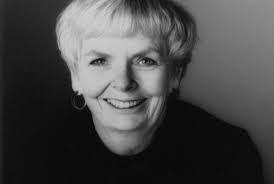
Carol Shields (1935–2003) was born in the United States and emigrated to Canada when she was 22. She is acclaimed for her empathetic and witty, yet penetrating insights into human nature.
Her most famous novel, The Stone Diaries, was awarded the Pulitzer Prize for Fiction, along with the Governor General’s Award, and the National Book Critics Circle Award. Happenstance was praised as her tour de force, masterly combining two novels in one. The international bestseller Mary Swann was awarded with the Arthur Ellis Award for best Canadian mystery, while The Republic of Love was chosen as the first runner-up for the Guardian Fiction Prize.
In 2020, the Carol Shields Prize for Fiction, a North American literary award dedicated to writing by women, was set up in her honour. Her work has been published in over thirty languages.



 What Cathy Read Next...