
Book Review: A Countess in Limbo by Olga Hendrikoff & Sue Carscallen

One remarkable woman’s experiences of living through turbulent times
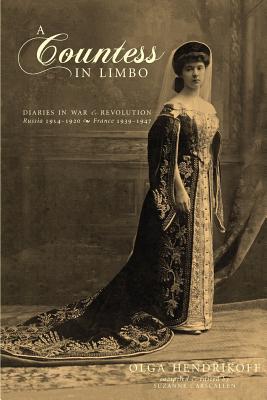
CountessAbout the Book

Countess Olga “Lala” Hendrikoff was born into the Russian aristocracy, serving as lady-in-waiting to the empresses and enjoying a life of great privilege. But on the eve of her wedding in 1914 came the first rumours of an impending war—a war that would change her life forever and force her to flee her country as a stateless person with no country to call home. Her personal writings have been collected and translated by her great niece, Sue Carscallen, to form A Countess in Limbo: Diaries in War and Revolution.

Spanning two of the most turbulent times in modern history—World War I in Russia and World War II in Paris—Countess Hendrikoff’s journals demonstrate the uncertainty, horror, and hope of daily life in the midst of turmoil. Her razor-sharp insight, wit, and sense of humour create a fascinating eyewitness account of the Russian Revolution and the occupation and liberation of Paris.

Book Facts

  • Format: ebook
  • Publisher: Archway Publishing
  • No. of pages: 337
  • Publication date: 3rd November 2016
  • Genre: Memoir, Non-Fiction, History

Purchase links*
Amazon
Barnes and Noble
Archway Publishing

*links provided for convenience, not as part of any affiliate programme

Find A Countess in Limbo on Goodreads


My Review

I found these journals absolutely fascinating and I was amazed how a woman could live through such upheaval, struggle, loss and privation and still provide such an objective commentary on events, managing to see the good – and bad – on both sides.

In the first section, the young Olga recounts some of her experiences living in Russia at the outbreak of World War I. There are touching scenes, such as when she and her mother witness the departure of her younger brother to join the army.

‘To the strains of martial music, the train, illuminated by the last rays of the setting sun, started pulling away from the platform and soon vanished in the evening darkness. With long-repressed tears flowing without measure, my mother and I stood on the platform for a few more minutes.’

Olga did not keep journals throughout her life – or at least, none remain – so there are gaps where only her great niece’s research can try to provide welcome answers. One such mystery is the circumstances around the ending of her marriage after only three years.

The sections of the book containing the journals Olga Hendrikoff kept during World War 2 – covering the onset of war, the occupation of France and its liberation – I found particularly compelling. Throughout there is a sense of incredulity that nations should so quickly repeat the mistakes of history.

‘Another war with Germany seems incredible to me when no-one has yet forgotten the last one.’

‘I often wake up in the morning thinking I have had a bad dream – the war, the departure of friends and relatives… The first few days after the war was declared, it was if I was stunned. I could not bring myself to believe that the country I live in is really at war.’

Olga documents the daily struggle to find food, fuel to keep warm and employment so that items only available on the thriving black market can be purchased. She vividly describes how the German advance into France provokes the desperate flight of people.

‘The route nationale is still clogged with refugees who make use of any means of locomotion: men on bicycles, women on foot pushing baby carriages, babies in wheelbarrows pulled like trailers by bicycles, mule- or horse-drawn carriages, strollers…in a word, anything on wheels, anything that rolls, has been mobilised for the exodus.’

The liberation of Paris brings no end to the food shortages, power cuts and daily struggle. It also brings something worse – reprisals against those deemed to have been collaborators.

‘In the troubled times we are going through, alas, the spirit of personal vengeance is naturally given free rein.’

Olga becomes one of hundreds of thousands stateless émigrés, in her case unable to return to Russia following the revolution and its transformation into the Soviet Union.  However, she never loses her affection for her homeland, which she looks back on fondly.

‘Would it suddenly be possible to go back to your own country and see Russian forests again, the rivers you knew as a child, the landscapes you still hold in your heart?’

In the end, economic pressures force her to leave France and, since a return to Russia is impossible, she embarks for America where she spent the remainder of her long life.

Countess Hendrikoff was clearly a remarkable woman with wit, intelligence, resilience, compassion for others and a relentless determination to survive. It is wonderful that her journals survive in order that modern readers can share her experiences and her admirable outlook on life. There is so much more that I could mention about this book but I will simply urge you to read it for yourself. One final quotation, should you need further persuading:

‘All war seems absurd to me anyway. The victors often lose in the exchange, and the vanquished think only of revenge.’

A lesson we do not yet seem to have learned.

I received a review copy courtesy of the author and publishers, Archway Publishing, in return for an honest review.

Follow my blog with Bloglovin

In three words: Enthralling, moving, inspirational

Try something similar…The Past is Myself by Christabel Bielenberg


About the Authors

Olga Hendrikoff was born in 1892 in Voronezh, Russia, and attended the famous Smolny Institute. In 1914, she married Count Peter Hendrikoff just as World War I began. In the ensuing years, Hendrikoff lived in Constantinople, Rome, Paris, and Philadelphia. She spent her last 20 years in Calgary. She died in 1987.
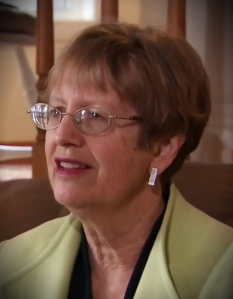
CarscallenSue Carscallen spent 20 years with Olga Hendrikoff before her great aunt’s passing in 1987. Carscallen stumbled upon Hendrikoff’s diaries hidden in a trunk at her great aunt’s Calgary home. Over time she unraveled the mysteries hidden in the manuscripts, traveling to France and Russia to supplement her research into Hendrikoff’s life. Today, Carscallen resides in Calgary.

Find out more…

Read a fascinating interview with Sue Carscallen about her great aunt, the discovery of her journals and how this book came into being.

Website: www.acountessinlimbo.com

Interview: Sue Carscallen, A Countess in Limbo

CountessToday I am delighted to welcome to my blog Sue Carscallen, co-author of A Countess in Limbo: Diaries in War and Revolution. If you’re interested in history or personal memoirs, I’m sure you’ll find Sue’s answers to my questions absolutely fascinating and a tantalising glimpse into this wonderful book.


About the Book

Countess Olga “Lala” Hendrikoff kept diaries chronicling her life through some of the most turbulent times in modern history. Her personal writings have been collected and translated by her great niece, Sue Carscallen, to form A Countess in Limbo: Diaries in War and Revolution. A Countess in Limbo showcases Hendrikoff’s transformation from a privileged woman of society to a stateless émigré. Her unbreakable will, combined with razor-sharp wit, provide a fascinating voice to narrate the day-to-day life of those living through World War I, World War II and the Russian Revolution.

Buy a copy of A Countess in Limbo:
Amazon
Barnes and Noble
Archway Publishing


Q&A with Sue Carscallen 

What is your first memory of your great aunt?

Before I ever met my great aunt LaLa I knew that she was a kind, loving person. My mother would send her bits of leftover wool from her knitting projects and voila! at Christmas a large box would arrive containing hand knitted hats, sweaters, scarves and mittens for us four children. They all fitted perfectly since my mother provided the measurements. My family could not find an affordable graduation dress for me in Calgary so aunt LaLa scoured the next to new shops in New York and sent me a fabulous dress which I was so very proud to wear. The first time I saw her was when she made her first visit to Calgary when I was 10. I remember her regally walking down the steps of the airplane. She had such a straight posture.

What was she like as a person?

There are many adjectives to describe my great aunt: highly educated, private, reserved, observant, wise, generous, mentally strong, a survivor, calm in a crisis, politically astute, kind and talented.

Can you tell us how you first learned about your great aunt’s journals?

I learned about the journals from my mother who thought they were interesting but nothing special. She only alerted me to the French diary about World War II which was written in French. Neither of us knew about the Russian journal, which was written in Russian longhand detailing World War I and the Russian Revolution. I did not really discover these treasures until after I opened aunt LaLa’s old Russian trunk after my mother had passed away.

What made you decide to publish the journals?

Two reasons. Firstly, I was the only one left alive that really knew aunt LaLa as well as many of the characters who passed through her life. If I didn’t do it, no one else would. Secondly, my French translator was really intrigued by aunt LaLa’s voice in her story.

How did you go about selecting the material to be included in the book?

The material selection was easy. I published every word she wrote with no additions other than the first chapter, a transition chapter in the middle between the two wars and the last chapter.  I also included the photos she had pasted into the World War II diary which she took herself. I included much of the memorabilia that she had saved.

Did anything in the journals surprise or shock you?

I was shocked to realize how many times she was so very close to being put in prison or killed. How matter-of-factly and calmly she dealt with crisis. She never talked about any of this to us.

I understand you undertook additional research to supplement the journals, including travelling abroad. Can you tell us a bit about that?

Yes, a lot of research went into this book as I wanted to do my best to present her life as accurately as possible. Thank goodness for the internet as this book would still not be finished! I had the help of many to identify people who were only mentioned by initials. This was done on purpose as aunt LaLa did not want to incriminate anyone should her diaries be found.  I went twice to the famous Russian cemetery ‘Sanite-Genevieve-des-bois’ outside of Paris and photographed headstones with the idea that it would help me identify those only mentioned by an initial and a last name. It helped, but what was really beneficial was the discovery and translation of the Russian journal.  Some of those who were in her life in Russia turned up again in Paris. I did not know about the Russian journal when I began the project. The initial idea was to do the French diaries as a standalone book. I also went to Russia to our family’s estate (in ruins) in backwoods Russia and was chased off by the mafia, as well as to see the beautiful family home in St. Petersburg. Today, it is an expensive apartment condo.

For those who haven’t yet read the book, can you give us one or two of your favourite stories from it?

There are so many stories. I love the sad, poignant story of aunt LaLa going with her mother to the train station in St. Petersburg to see her brother, Nicholas, off to war. How he joked with them, then the priest saying prayers, the troops singing hymns as the train rolled out of the station, their singing fading in the distance.  Nicholas survived the War but stayed in Russia on purpose to help change the system. He died a prisoner in the Gulag about 1940. Aunt LaLa never ceased trying to get him out of Russia!  In WW II she went with a chamber maid, who was to be deported probably to her death.  Aunt LaLa realized that a man standing off to the side was the Gestapo and really had the power and not the others doing the questioning. Aunt LaLa went right up to the Gestapo and speaking to him in German told him that they could not take the maid as she was desperately needed. This worked and the maid survived.

How do you now reflect on what your great aunt’s generation went through?

It is humbling to realize what they went through. I am the first generation of women in our family for at least 200 years who has not been directly involved in a war. My generation in Canada has had a wonderful opportunity to live freely. They did it for us and we stand on their shoulders. By publishing this book, I have also had an insight into my great grandparents’ lives. Aunt LaLa’s father was the Russian governor of Riga, Latvia . He also had a large estate south and east of Moscow far off in the Russian Steppes.  He gave up much of this land to the local population when there was a mini-revolution in 1905. I gained much respect and understanding for his position when I travelled to this remote estate. I realized that nothing has changed in Russia . How carefully he had to step between the Tsar who was an absolute ruler and the peasants. Displease either and you would never be seen again. The mafia has control of the estate now and we were asked ‘to get the hell out’ fearing I was back to claim the land!

What message would you like the reader to be left with from reading your great aunt’s journals?

My great aunt’s message is one that resonates universally today. It is a timely message: “All war seems absurd to me anyway. The victors only lose in the exchange and the vanquished think only of revenge.”  Long before the term ‘fake news’ she was well aware of its dangers.  She always got her news from many sources such as the BBC when it was illegal, German, French, English and Italian newspapers and radio. She did not believe the rumours that often swirl around in turbulent times. The final message to women that she would want to say is that women are stronger than they think.

Thank you so much, Sue, for taking the time to answer my questions and for providing such fascinating answers. Your great aunt was clearly an amazing woman.


About the Authors

Olga Hendrikoff was born in 1892 in Voronezh, Russia, and attended the famous Smolny Institute. In 1914, she married Count Peter Hendrikoff just as World War I began. In the ensuing years, Hendrikoff lived in Constantinople, Rome, Paris, and Philadelphia. She spent her last 20 years in Calgary. She died in 1987.

CarscallenSue Carscallen spent 20 years with Olga Hendrikoff, before her great aunt’s passing in 1987. Carscallen stumbled upon Hendrikoff’s diaries hidden in a trunk at her great aunt’s Calgary home. Over time she unraveled the mysteries hidden in the manuscripts, traveling to France and Russia to supplement her research into Hendrikoff’s life. Today, Carscallen resides in Calgary.

Website: www.acountessinlimbo.com