

Hosted by Taking on a World of Words, this meme is all about the three Ws:
- What are you currently reading?
- What did you recently finish reading?
- What do you think you’ll read next?
Why not join in too? Leave a comment with your link at Taking on a World of Words and then go blog hopping!
Currently reading
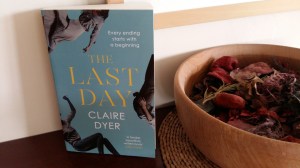 The Last Day by Claire Dyer (paperback, review copy courtesy of The Dome Press)
They say three’s a crowd but when Boyd moves back into the family home with his now amicably estranged wife, Vita, accompanied by his impossibly beautiful twenty-seven-year-old girlfriend, Honey, it seems the perfect solution: Boyd can get his finances back on track while he deals with his difficult, ailing mother; Honey can keep herself safe from her secret, troubled past; and Vita can carry on painting portraits of the pets she dislikes and telling herself she no longer minds her marriage is over.
But the house in Albert Terrace is small and full of memories, and living together is unsettling. For Vita, Boyd and Honey love proves to be a surprising, dangerous thing and, one year on, their lives are changed forever.
 War Girl Ursula (War Girl #1) by Marion Kummerow (ebook, review copy courtesy of the author)
Berlin 1943: Compassion is a crime.
A prisoner escapes. A guard looks the other way. Why does Ursula Hermann risk her life and brave the Gestapo to save a man she barely knows?
Ursula has always lived the law, never broken the rules in her life. That is until the day she finds escapee British airman Tom Westlake and all the right she’s worked so hard to maintain goes wrong… He runs. And she does nothing to stop him.
Torn with guilt about what she did, Ursula battles with her decision when suddenly Tom returns, injured and pleading for her help. This is her opportunity to make things right. But shadows from the past tug at her heart, convincing her to risk everything, including her life, in order to protect a man from the nation her country is fighting.
As they brave the perils and dangers of the ever-present Gestapo, will Ursula find a way to keep Tom safe? Or will being on the opposite sides of the war ultimately cost both of them their lives?
Recently finished (click on title for review)
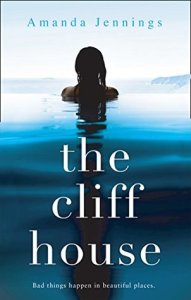 The Cliff House by Amanda Jennings (eARC, NetGalley)
Cornwall, summer of 1986. The Davenports, with their fast cars and glamorous clothes, living the dream in a breathtaking house overlooking the sea.
If only… thinks sixteen-year-old Tamsyn, her binoculars trained on the perfect family in their perfect home. If only her life was as perfect as theirs. If only Edie Davenport would be her friend. If only she lived at The Cliff House…
Amanda Jennings weaves a haunting tale of obsession, loss and longing, set against the brooding North Cornish coastline, destined to stay with readers long after the final page is turned.
 The Biographies of Ordinary People, Vol. 2 by Nicole Dieker (eARC courtesy of the author)
Millennial-era Little Women that follows three sisters from 1989 to the present.
The Biographies of Ordinary People is the story of the Gruber family: Rosemary and Jack, and their daughters Meredith, Natalie, and Jackie. The two-volume series begins in July 1989, on Rosemary’s thirty-fifth birthday; it ends in November 2016, on Meredith’s thirty-fifth birthday.
The second volume follows the three Gruber sisters as they each leave their rural Midwestern hometown and try to make their way in the larger world. Meredith is determined to pursue a career in the theater. Natalie begins sorting and filing for an insurance company. Jackie… well, Jackie still wants to sing, and if the classical music world isn’t interested in what she can do, she’ll figure out how to do it on her own.
Set against the Great Recession, Presidents Obama and Trump, and a growing sense of national unrest, this final volume explores Meredith’s question: is it possible for ordinary people to make art? It also takes us into the close emotional connections between mothers and daughters, sisters and friends, and the people we choose to love as adults.
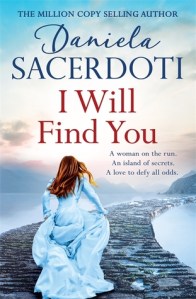 I Will Find You (Seal Island #2) by Daniela Sacerdoti (eARC courtesy of Headline)
After her mother dies, grief-stricken Cora discovers she has been left a cottage, a crumbling shelter on a mysterious Scottish island. The moment Cora arrives on the windswept isle of Seal, she falls under its spell and is drawn to brooding Innes, back on the island to confront his past.
As Cora begins to trace her mother’s roots, she learns Gealach Cottage has a dark, turbulent history. Another young woman has sought refuge here, fleeing terrible danger, and waiting for her lover to return. What became of her? Only by unravelling a forgotten story of passion and courage can Cora understand what has pulled her to Seal…and led her to a man of many secrets.
 That Summer in Puglia by Valeria Vescina (paperback, review copy courtesy of Eyewear Publishing and Bookollective)
Tommaso has escaped discovery for thirty years but a young private investigator, Will, has tracked him down. Tommaso asks him to pretend never to have found him. To persuade Will, Tommaso recounts the story of his life and his great love. In the process, he comes to recognise his true role in the events which unfolded, and the legacy of unresolved grief. Now he’s being presented with a second chance – but is he ready to pay the price it exacts?
What Cathy (will) Read Next
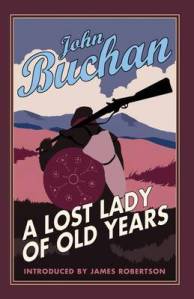 A Lost Lady of Old Years by John Buchan (ebook)
Set in Scotland in 1745, during the Jacobite Rebellion, this dark story of loyalty and betrayal on the road to Culloden Moor recounts the adventures of Francis Birkenshaw. The Jacobite cause means nothing to him until a chance meeting with the beautiful Margaret Murray presents an opportunity for profit and adventure. The fateful encounter marks the beginning of Francis’s involvement with John Murray of Broughton, an infamous traitor and turncoat.
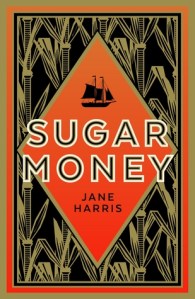 Sugar Money by Jane Harris (hardcover)
Martinique, 1765, and brothers Emile and Lucien are charged by their French master, Father Cleophas, with a mission. They must return to Grenada, the island they once called home, and smuggle back the 42 slaves claimed by English invaders at the hospital plantation in Fort Royal. While Lucien, barely in his teens, sees the trip as a great adventure, the older and worldlier Emile has no illusions about the dangers they will face. But with no choice other than to obey Cleophas – and sensing the possibility, however remote, of finding his first love Celeste – he sets out with his brother on this ‘reckless venture’.


 This week’s topic is


