Hosted by Taking on a World of Words, this meme is all about the three Ws:
- What are you currently reading?
- What did you recently finish reading?
- What do you think you’ll read next?
Why not join in too? Leave a comment with your link at Taking on a World of Words and then go blog hopping!
Currently reading
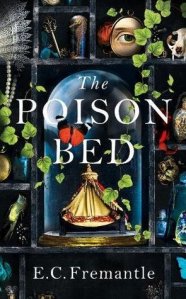 The Poison Bed by E. C. Fremantle (eARC, NetGalley)
A king, his lover and his lover’s wife. One is a killer.
In the autumn of 1615 scandal rocks the Jacobean court when a celebrated couple are imprisoned on suspicion of murder. She is young, captivating and from a notorious family. He is one of the richest and most powerful men in the kingdom.
Some believe she is innocent; others think her wicked or insane. He claims no knowledge of the murder. The king suspects them both, though it is his secret at stake.
Who is telling the truth? Who has the most to lose? And who is willing to commit murder?
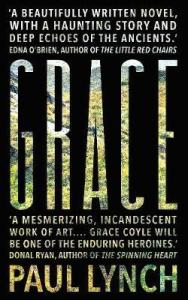 Grace by Paul Lynch (ebook)
Early one October morning, Grace’s mother snatches her from sleep and brutally cuts off her hair, declaring, ‘You are the strong one now.’ With winter close at hand and Ireland already suffering, Grace is no longer safe at home. And so her mother outfits her in men’s clothing and casts her out. When her younger brother Colly follows after her, the two set off on a remarkable journey in the looming shadow of their country’s darkest hour.
The broken land they pass through reveals untold suffering as well as unexpected beauty. To survive, Grace must become a boy, a bandit, a penitent and, finally, a woman – all the while afflicted by inner voices that arise out of what she has seen and what she has lost.
Recently finished (click on title for review)
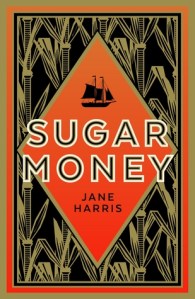 Sugar Money by Jane Harris (hardcover)
Martinique, 1765, and brothers Emile and Lucien are charged by their French master, Father Cleophas, with a mission. They must return to Grenada, the island they once called home, and smuggle back the 42 slaves claimed by English invaders at the hospital plantation in Fort Royal. While Lucien, barely in his teens, sees the trip as a great adventure, the older and worldlier Emile has no illusions about the dangers they will face. But with no choice other than to obey Cleophas – and sensing the possibility, however remote, of finding his first love Celeste – he sets out with his brother on this ‘reckless venture’.
 Spirit of Lost Angels (The Bone Angel #1) by Liza Perrat (ebook, review copy courtesy of the author)
Her mother executed for witchcraft, her father dead at the hand of a noble, Victoire Charpentier vows to rise above her poor peasant roots. Forced to leave her village of Lucie-sur-Vionne for domestic work in Paris, Victoire is raped and threatened by her Marquis master, and must abandon her newborn, Rubie, on the church steps.
Accused of a heinous crime, Victoire is imprisoned in La Salpêtrière mental asylum, where she bonds with fellow prisoner, Jeanne de Valois – conwoman of the infamous Necklace Affair that brought down Queen Marie Antoinette. She dreams of escaping the asylum but wonders if the price of freedom – losing Jeanne – is worth it.
Enmeshed in the fervour of the 1789 Bastille storming, Victoire hears the name ‘Rubie’ called. Could her foundling daughter be alive, and living in Paris?
 Forsaking All Other by Catherine Meyrick (ebook, review copy courtesy of HF Virtual Book Tours)
Love is no game for women; the price is far too high.
England 1585. Bess Stoughton, waiting woman to the well-connected Lady Allingbourne, has discovered that her father is arranging for her to marry an elderly neighbour. Normally obedient Bess rebels and wrests from her father a year’s grace to find a husband more to her liking.
Edmund Wyard, a taciturn and scarred veteran of England’s campaign in Ireland, is attempting to ignore the pressure from his family to find a suitable wife as he prepares to join the Earl of Leicester’s army in the Netherlands. Although Bess and Edmund are drawn to each other, they are aware that they can have nothing more than friendship. Bess knows that Edmund’s wealth and family connections place him beyond her reach. And Edmund, with his well-honed sense of duty, has never considered that he could follow his own wishes. Until now.
With England on the brink of war and fear of Catholic plots extending even into Lady Allingbourne’s household, time is running out for both of them.
What Cathy (will) Read Next
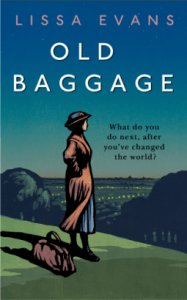 Old Baggage by Lissa Evans (eARC, NetGalley)
What do you do next, after you’ve changed the world?
It is 1928. Matilda Simpkin, rooting through a cupboard, comes across a small wooden club – an old possession of hers, unseen for more than a decade.
Mattie is a woman with a thrilling past and a chafingly uneventful present. During the Women’s Suffrage Campaign she was a militant. Jailed five times, she marched, sang, gave speeches, smashed windows and heckled Winston Churchill, and nothing – nothing – since then has had the same depth, the same excitement.
Now in middle age, she is still looking for a fresh mould into which to pour her energies. Giving the wooden club a thoughtful twirl, she is struck by an idea – but what starts as a brilliantly idealistic plan is derailed by a connection with Mattie’s militant past, one which begins to threaten every principle that she stands for.
 Manhattan Beach by Jennifer Egan (ebook)
Anna Kerrigan, nearly twelve years old, accompanies her father to the house of a man who, she gleans, is crucial to the survival of her father and her family. Anna observes the uniformed servants, the lavishing of toys on the children, and some secret pact between her father and Dexter Styles.
Years later, her father has disappeared and the country is at war. Anna works at the Brooklyn Navy Yard, where women are allowed to hold jobs that had always belonged to men. She becomes the first female diver, the most dangerous and exclusive of occupations, repairing the ships that will help America win the war. She is the sole provider for her mother, a farm girl who had a brief and glamorous career as a Ziegfield folly, and her lovely, severely disabled sister. At a night club, she chances to meet Styles, the man she visited with her father before he vanished, and she begins to understand the complexity of her father’s life, the reasons he might have been murdered.

 Top Ten Tuesday is a weekly meme created by The Broke and the Bookish and now hosted by Jana at