
Hosted by Taking on a World of Words, this meme is all about the three Ws:
- What are you currently reading?
- What did you recently finish reading?
- What do you think you’ll read next?
Why not join in too? Leave a comment with your link at Taking on a World of Wordsand then go blog hopping!
Currently reading
Happy New Year! A last minute flurry of reading meant quite a few books finished last week but sadly not enough for me to reach my Goodreads challenge target for 2019. And now I have some reviews to write!
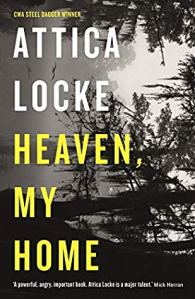 Heaven, My Home (Highway 59 #2) by Attica Locke (audiobook)
Nine-year-old Levi King knew he should have left for home sooner; now he’s alone in the darkness of vast Caddo Lake, in a boat whose motor just died. A sudden noise distracts him – and all goes dark.
Darren Matthews is trying to emerge from another kind of darkness; after the events of his previous investigation, his marriage is in a precarious state of re-building, and his career and reputation lie in the hands of his mother, who’s never exactly had his best interests at heart. Now she holds the key to his freedom, and she’s not above a little maternal blackmail to press her advantage.
An unlikely possibility of rescue arrives in the form of a case down Highway 59, in a small lakeside town where the local economy thrives on nostalgia for ante-bellum Texas – and some of the era’s racial attitudes still thrive as well. Levi’s disappearance has links to Darren’s last case, and to a wealthy businesswoman, the boy’s grandmother, who seems more concerned about the fate of her business than that of her grandson.
Darren has to battle centuries-old suspicions and prejudices, as well as threats that have been reignited in the current political climate, as he races to find the boy, and to save himself.
Recently finished
 Mrs P’s Book of Secrets by Lorna Gray (eARC, courtesy of One More Chapter and NetGalley)
The Cotswolds, Christmastime 1946: A young widow leaves behind the tragedy of her wartime life, and returns home to her ageing aunt and uncle. For Lucy – known as Mrs P – and the people who raised her, the books that line the walls of the family publishing business bring comfort and the promise of new beginnings.
But the kind and reserved new editor at the Kershaw and Kathay Book Press is a former prisoner of war, and he has his own shadows to bear. And when the old secrets of a little girl’s abandonment are uncovered within the pages of Robert Underhills’s latest project, Lucy must work quickly if she is to understand the truth behind his frequent trips away.
For a ghost dwells in the record of an orphan girl’s last days. And even as Lucy dares to risk her heart, the grief of her own past seems to be whispering a warning of fresh loss.
There are no white shrouded spectres here, no wailing ghouls. Just the echoes of those who have passed, whispering that history is set to repeat itself. (Review to follow as part of blog tour)
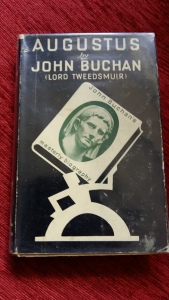 Augustus by John Buchan (hardcover)
In 27 BC, out of the carnage of two civil wars, one man emerged to rule absolutely the Roman world. This man was Octavian, the adopted son of Julius Caesar, and he was perhaps the least likely candidate to return stability to the Republic.
But by AD 14 Octavian had established peace over an empire that stretched from the shores of Britain to Anatolia. Power, prosperity and propaganda had seen him renamed as Augustus, ‘The Divinely Favoured One.’ He had become a God, and had changed the face of the Republic forever. (Review to follow)
 Burning Cold (Cara Walden Mystery #2) by Lisa Lieberman (ebook, courtesy of the author)
Budapest: 1956. Newlywed Cara Walden’s brother Zoltán has disappeared in the middle of the Hungarian revolution, harboring a deadly wartime secret. Will Cara or the Soviets find him first?
Cutting short her honeymoon in Paris to rescue a sibling she’s never met was not Cara’s idea, but her husband Jakub has a reckless streak, and she is too much in love to question his judgment. Together with her older brother Gray, they venture behind the Iron Curtain, seeking clues to Zoltán’s whereabouts among his circle of fellow dissidents, all victims of the recently overthrown Communist regime. One of them betrayed him, and Cara realizes that the investigation has put every person they’ve met at risk. Inadvertently, they’ve also unmasked a Russian spy, who is now tailing them in the hope that they will lead him to Zoltán. (Review to follow)
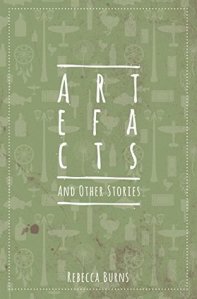 Artefacts and Other Stories by Rebecca Burns (ebook, courtesy of the author and Odyssey Books)
That dandelion. A flash of stubborn yellow in a dark box of space. It had promised sunshine but had tasted sour.
Artefacts. A dandelion. A mayfly. A family, bereft. Items and mementos of a life, lived hard and with love, or long, empty, bitter.
In these sharply drawn and unflinching short stories, Rebecca Burns unpicks the connection between the lives we live and what we leave behind. (Review to follow)
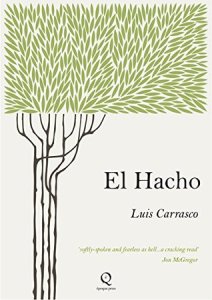 El Hacho by Luis Carrasco (ebook, courtesy of Epoque Press)
The brilliant debut novel by Luis Carrasco, El Hacho is a timeless evocation of inheritance, duty and our relationship to the landscape that defines us.
Set in the stark beauty of the Andalusian mountains it tells the story of Curro, an olive farmer determined to honour his family tradition in the face of drought, deluge and the lucrative temptations of a rapidly modernising Spain. (Review to follow)
What Cathy (will) Read Next
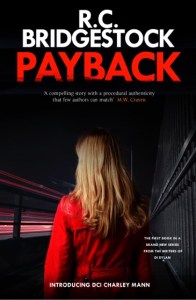 Payback (DI Charley Mann #1) by R. C. Bridgestock (advance review copy courtesy of The Dome Press)
The brand new series from the storyline consultants to TV’s Happy Valley and Scott & Bailey and author of the DI Jack Dylan novels.
Charley Mann left Yorkshire for the Met and a fast-track career – but now she’s back, she’s in charge and the area’s first young, female DI. Her hometown, the Yorkshire countryside, and her old friends all seem unchanged, but appearances can be deceptive. When a brutal murder is discovered, Charley is forced to question everything, and the interest of her ex – reporter Danny Ray – doesn’t make it easier.


