Top Ten Tuesday is a weekly meme created by The Broke and the Bookish and now hosted by Jana at That Artsy Reader Girl.
The rules are simple:

Each Tuesday, Jana assigns a new topic. Create your own Top Ten list that fits that topic – putting your unique spin on it if you want. Everyone is welcome to join but please link back to That Artsy Reader Girl in your own Top Ten Tuesday post. Add your name to the Linky widget on that day’s post so that everyone can check out other bloggers’ lists. Or if you don’t have a blog, just post your answers as a comment.
This week’s topic is Opening Lines. Here are some examples of memorable opening lines from books I’ve read…
 ‘Last night I dreamt I went to Manderley again.’ (Rebecca by Daphne du Maurier)
Why it’s so good: Every time I read this I can’t help hearing Joan Fontaine’s voice at the beginning of Alfred Hitchcock’s wonderful 1940 film version of Rebecca. I think she’s perfect as the unnamed second wife alongside Laurence Olivier as the mysterious Max, George Sanders as the caddish Jack Favell and Judith Anderson as the creepiest housekeeper ever, Mrs Danvers. It’s a great opening line because you know immediately the narrator is speaking about something that happened in the past. So it straightaway begs the question why can she only visit Manderley in her dreams? What is it about Manderley that makes her long to go back there? You’re hooked – at least, I am.
 ‘It was a pleasure to burn.’ (Fahrenheit 451 by Ray Bradbury)
Why it’s so good: It’s arresting. Burning things shouldn’t be a pleasure as it’s an activity associated with destruction. So why does our narrator take pleasure in it? What is being burned? Why? Already your mind is coming up with questions and it’s only the first sentence.
 ‘My name is Salmon, like the fish; first name, Susie. I was fourteen when I was murdered.’ (The Lovely Bones by Alice Sebold)
Why it’s so good: Firstly, if you were named Susie Salmon don’t you think you’d be constantly explaining to people about your surname? So let’s get it over and done with in the first sentence. Then, whoa, you’ve been murdered. How is that possible because you’re telling us about it and you’re dead aren’t you? Straightaway you know the author has come up with something original, isn’t afraid to tell you from the off and probably knows she has already got you hook, line and sinker (see what I did there?). OK, technically this is two lines but let’s not quibble.
 ‘The monster showed up just after midnight. As they do.’
A Monster Calls by Patrick Ness
Why it’s so good: We’re straight into the story – no ifs, no buts. The book’s title told us there’d be a monster and here it is – it’s real and it’s turned up right from the off. And, of course, everyone knows midnight is the time that monsters arrive… (I know this is another two line example but you could argue it should have been a semi-colon not a full stop between the two phrases, couldn’t you?)
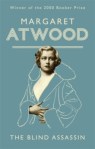 ‘Ten days after the war ended, my sister Laura drove a car off a bridge.’ (The Blind Assassin by Margaret Atwood)
Why it’s so good: You’ve just got to read on to find out more about Laura and what could have happened to make her do that. What has the timing of the ending of the war got to do with it? What has Laura’s death got to do with a ‘blind assassin’? Was Laura the ‘blind assassin’ or did the ‘blind assassin’ somehow bring about her death? The other brilliant thing about it is that it’s stated so matter-of-factly. As if it could have been, ‘Ten days after the war ended, my sister Laura bought a cabbage for dinner.’
 “In the moment before they caught him, Adolfo Sykes was dreaming of oranges.”
The Saracen’s Mark by S. W. Perry
Why it’s so good: It’s another example of a clever opening line that provokes so many questions. Who are the ‘they’? Who is Adolfo Sykes? Why are people after him? Why in particular was he dreaming of oranges?
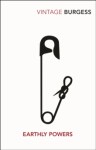 “It was the afternoon of my eighty-first birthday and I was in bed with my catamite when Ali announced that the Archbishop had come to see me.” (Earthly Powers by Anthony Burgess)
Why it’s so good: It’s clearly crafted to shock and amuse…and to end up on lists like this. I love the precision of it being the narrator’s eighty-first birthday and the inclusion of the exotic sounding ‘catamite’, a word I expect, like me, had many readers reaching for their dictionary. (We had them in those days.) By the way, this recent Guardian article recounts how Burgess toyed with alternative versions of the line.
 “They used to hang men at Four Turnings in the old days.” (My Cousin Rachel by Daphne du Maurier)
Why it’s so good: Well, it’s Daphne again for a start. It also harks back to earlier times and there’s a hint of ancient superstitions associated with the location, a crossroads known as the Four Turnings.
 “Marley was dead, to begin with.” (A Christmas Carol by Charles Dickens)
Why it’s so good: A Christmas Carol happens to be one of my favourite books and reading, listening to or watching an adaptation of it is an annual tradition in my house. When I read or hear that line, I know Christmas is upon us.
 ‘I knew I shouldn’t have gone’.
The Long and Winding Road by Alan Johnson
Why it’s so good: Why shouldn’t he have gone, and to what? You’ve just got to read on, haven’t you? In crafting that line, Alan Johnson proves himself to be not only a respected former Member of Parliament but a gifted author.
What are some of your favourite opening lines?