

Hosted by Taking on a World of Words, this meme is all about the three Ws:
- What are you currently reading?
- What did you recently finish reading?
- What do you think you’ll read next?
Why not join in too? Leave a comment with your link at Taking on a World of Words and then go blog hopping!
Currently reading
A book from my 20 Books of Summer list (and the winner of this year’s Walter Scott Prize for Historical Fiction), a book from my NetGalley shelf and an audiobook (and yes, it is a new one not the one that’s been appearing here for weeks…)
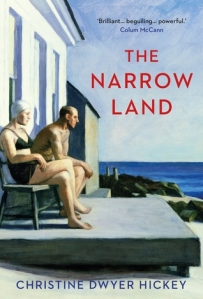 The Narrow Land by Christine Dywer Hickey (hardcover, courtesy of Atlantic Books and Readers First)
1950: late summer season on Cape Cod. Michael, a ten-year-old boy, is spending the summer with Richie and his glamorous but troubled mother. Left to their own devices, the boys meet a couple living nearby – the artists Jo and Edward Hopper – and an unlikely friendship is forged.
She, volatile, passionate and often irrational, suffers bouts of obsessive sexual jealousy. He, withdrawn and unwell, depressed by his inability to work, becomes besotted by Richie’s frail and beautiful Aunt Katherine who has not long to live – an infatuation he shares with young Michael.
A novel of loneliness and regret, the legacy of World War II and the ever-changing concept of the American Dream.
 The Offing by Benjamin Myers (audio book)
After all, there are only a few things truly worth fighting for: freedom, of course, and all that it brings with it. Poetry, perhaps, and a good glass of wine. A nice meal. Nature. Love, if you’re lucky.
One summer following the Second World War, Robert Appleyard sets out on foot from his Durham village. Sixteen and the son of a coal miner, he makes his way across the northern countryside until he reaches the former smuggling village of Robin Hood’s Bay. There he meets Dulcie, an eccentric, worldly, older woman who lives in a ramshackle cottage facing out to sea.
Staying with Dulcie, Robert’s life opens into one of rich food, sea-swimming, sunburn and poetry. The two come from different worlds, yet as the summer months pass, they form an unlikely friendship that will profoundly alter their futures.
 The Traitor by V. S. Alexander (e-book, courtesy of One More Chapter via NetGalley)
‘Someone had to make a start’ Sophie Scholl, leader of the White Rose, 21 February 1943 at her trial in Munich. A page-turning and heart-breaking historical novel about the daring White Rose group who stood up to the Nazis … and paid the ultimate price.
Munich, 1942. As war rages across Europe, a series of anonymous leaflets, criticizing the brutal Nazi regime, appear on the streets of Germany. Their message, written in secret, is a daring act of defiance.
Natalya Petrovich, a student, knows more than she should. As a member of the secret resistance group, the White Rose, Natalya is risking everything. But even among those she trusts most, there is no guarantee of safety. The Gestapo are everywhere and Natalya knows that falling into the hands of the secret police means torture–and almost certain death.
Recently finished
Links from the title will take you to my review or the book’s entry on Goodreads
 One Day in Summer by Shari Low (eARC, courtesy of Boldwood Books)
Three people. Twenty-four hours. A lifetime of secrets to unravel.
One day in summer, three lives are about to change forever.
After two decades of looking after others, this is the day that Agnetha McMaster is reclaiming her life. It’s her turn, her time but will she have the courage to start again?
Ten years ago, Mitchell McMaster divorced Agnetha and married her best friend, Celeste. Now he suspects his second wife is having an affair. This is the day he’ll discover if karma has come back to bite him.
Thanks to a DNA test, this is the day that Hope McTeer will finally meet her biological father. But will the reunion bring Hope the answers that she’s looking for?
 Then We Take Berlin (Joe Wilderness #1) by John Lawton (audiobook)
Joe Wilderness is a World War II orphan, a condition that he thinks excuses him from common morality. Cat burglar, card sharp, and Cockney wide boy, the last thing he wants is to get drafted. But in 1946 he finds himself in the Royal Air Force, facing a stretch in military prison . . . when along comes Lt Colonel Burne-Jones to tell him MI6 has better use for his talents.
Posted to occupied Berlin, interrogating ex-Nazis, and burgling the odd apartment for MI6, Wilderness finds himself with time on his hands and the devil making work. He falls in with Frank, a US Army captain, with Eddie, a British artilleryman and with Yuri, a major in the NKVD and together they lift the black market scam to a new level. Coffee never tasted so sweet. And he falls for Nell Breakheart, a German girl who has witnessed the worst that Germany could do and is driven by all the scruples that Wilderness lacks.
Fifteen years later, June 1963. Wilderness is free-lance and down on his luck. A gumshoe scraping by on divorce cases. Frank is a big shot on Madison Avenue, cooking up one last Berlin scam . . . for which he needs Wilderness once more. Only now they’re not smuggling coffee, they’re smuggling people. And Nell? Nell is on the staff of West Berlin’s mayor Willy Brandt, planning for the state visit of the most powerful man in the world: “Ich bin ein Berliner!” (Review to follow)
What Cathy (will) Read Next
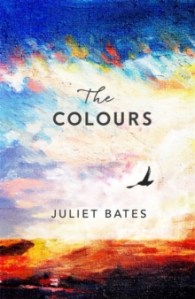 The Colours by Juliet Bates (eARC, courtesy of Fleet Press)
Ellen sees the world differently from everyone else, but living in a tiny town in the north-east of England, in a world on the cusp of war, no one has time for an orphaned girl who seems a little strange. When she is taken in to look after a rich, elderly widow all seems to be going better, despite the musty curtains and her aging employer completely out of touch with the world. But pregnancy out of wedlock spoils all this, and Ellen is unable to cope. How will Jack, her son, survive – alone in the world as his mother was? Can they eventually find their way back to each other?

 Top Ten Tuesday is a weekly meme created by The Broke and the Bookish and now hosted by Jana at


