
Hosted by Taking on a World of Words, this meme is all about the three Ws:
- What are you currently reading?
- What did you recently finish reading?
- What do you think you’ll read next?
Why not join in too? Leave a comment with your link at Taking on a World of Words and then go blog hopping!
Currently reading
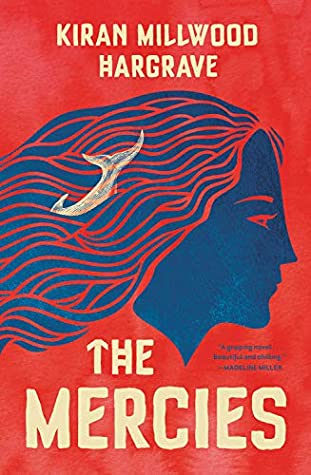 The Mercies by Kiran Millwood Hargrave (audiobook, Little Brown)
Finnmark, Norway, 1617. Twenty-year-old Maren Bergensdatter stands on the craggy coast, watching the sea break into a sudden and reckless storm. Forty fishermen, including her brother and father, are drowned and left broken on the rocks below. With the menfolk wiped out, the women of the tiny Northern town of Vardø must fend for themselves.
Three years later, a sinister figure arrives. Absalom Cornet comes from Scotland, where he burned witches in the northern isles. He brings with him his young Norwegian wife, Ursa, who is both heady with her husband’s authority and terrified by it. In Vardø, and in Maren, Ursa sees something she has never seen before: independent women. But Absalom sees only a place untouched by God and flooded with a mighty evil.
As Maren and Ursa are pushed together and are drawn to one another in ways that surprise them both, the island begins to close in on them with Absalom’s iron rule threatening Vardø’s very existence.
 A Woman Made of Snow by Elisabeth Gifford (eARC, Corvus)
Scotland, 1949: Caroline Gillan and her new husband Alasdair have moved back to Kelly Castle, his dilapidated family estate in the middle of nowhere. Stuck caring for their tiny baby, and trying to find her way with an opinionated mother-in-law, Caroline feels adrift, alone and unwelcome.
But when she is tasked with sorting out the family archives, Caroline discovers a century-old mystery that sparks her back to life. There is one Gillan bride who is completely unknown – no photos exist, no records have been kept – the only thing that is certain is that she had a legitimate child. Alasdair’s grandmother.
As Caroline uncovers a strange story that stretches as far as the Arctic circle, her desire to find the truth turns obsessive. And when a body is found in the grounds of the castle, her hunt becomes more than just a case of curiosity. What happened all those years ago? Who was the bride? And who is the body…?
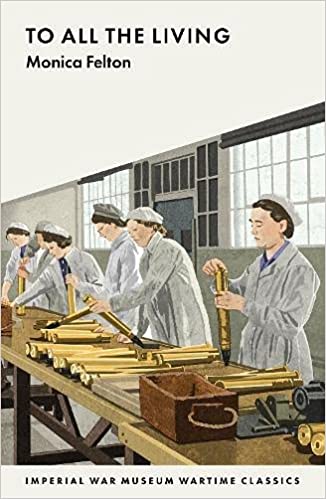 To All the Living by Monica Felton (ARC, Imperial War Museum)
In January 1941 Griselda Green arrives at Blimpton, a place ‘so far from anywhere as to be, for all practical purposes, nowhere.’
Monica Felton’s 1945 novel gives a lively account of the experiences of a group of men and women working in a munitions factory during the Second World War. Wide-ranging in the themes it touches on, including class, sexism, socialism, fear of communism, workers’ rights, anti-semitism, and xenophobia, the novel gives a vivid portrayal of factory life and details the challenges, triumphs and tragedies of a diverse list of characters. Adding another crucial female voice to the Wartime Classics series, To All the Living provides a fascinating insight into a vital aspect of Britain’s home front.
 Small Pleasures by Clare Chambers (Weidenfeld & Nicolson)
1957, south-east suburbs of London. Jean Swinney is a feature writer on a local paper, disappointed in love and — on the brink of forty — living a limited existence with her truculent mother: a small life from which there is no likelihood of escape. When a young Swiss woman, Gretchen Tilbury, contacts the paper to claim that her daughter is the result of a virgin birth, it is down to Jean to discover whether she is a miracle or a fraud.
But the more Jean investigates, the more her life becomes strangely (and not unpleasantly) intertwined with that of the Tilburys: Gretchen is now a friend, and her quirky and charming daughter Margaret a sort of surrogate child. And Jean doesn’t mean to fall in love with Gretchen’s husband, Howard, but Howard surprises her with his dry wit, his intelligence and his kindness — and when she does fall, she falls hard. But he is married, and to her friend — who is also the subject of the story she is researching for the newspaper, a story that increasingly seems to be causing dark ripples across all their lives. And yet Jean cannot bring herself to discard the chance of finally having a taste of happiness…
But there will be a price to pay, and it will be unbearable.
Recently finished
Splinter on the Tide by Phillip Parotti (Casemate Publishing)
The Tale of the Tailor and the Three Dead Kings by Dan Jones (Head of Zeus)
House of Beauty by Melba Escobar, translated by Elizabeth Bryer (4th Estate)
The Redeemed (West Country Trilogy #3) by Tim Pears, narrated by Jonathan Keeble (Isis Audio)
What Cathy (will) Read Next
 An Extra Pair of Hands by Kate Mosse (Profile Books)
As our population ages, more and more of us find ourselves caring for parents and loved ones – some 8.8 million people in the UK. An invisible army of carers holding families together.
Here, Kate Mosse tells her own personal story of finding herself a carer in middle age: first, helping her heroic mother care for her beloved father through Parkinson’s, then supporting her mother in widowhood, and finally as ‘an extra pair of hands’ for her 90-year-old mother-in-law.
This is a story about the gentle heroism of our carers, about small everyday acts of tenderness, and finding joy in times of crisis. It’s about juggling priorities, mind-numbing repetition, about guilt and powerlessness, about grief, and the solace of nature when we’re exhausted or at a loss. It is also about celebrating older people, about learning to live differently – and think differently about ageing.
But most of all, it’s a story about love.



