#BlogTour #BookReview Born of No Woman by Franck Bouysse @RandomTTours @wnbooks

FINAL Born of No Woman BT Poster

Welcome to today’s stop on the blog tour for Born Of No Woman by Franck Bouysse, translated by Lara Vergnaud. My thanks to Anne at Random Things Tours for inviting me to take part in the tour and to Weidenfeld & Nicolson for my digital review copy.


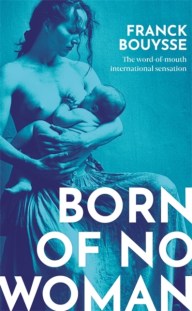
Born Of No WomanAbout the Book

Nineteenth-century rural France. Before he is called to bless the body of a woman at the nearby asylum, Father Gabriel receives a strange, troubling confession: hidden under the woman’s dress he will find the notebooks in which she confided the abuses she suffered and the twisted motivations behind them.

And so Rose’s terrible story comes to light: sold as a teenage girl to a rich man, hidden away in a old manor house deep in the woods and caught in a perverse web, manipulated by those society considers her betters.

A girl whose only escape is to capture her life – in all its devastation and hope – in the pages of her diary…

Born Of No Woman has won every prize awarded by readers in France, including the Grand Prix Des Lectrices Elle, one of the most important prizes in France. It has also won The Prix Des Libraires (given by booksellers), Prix Psychologies Magazine and and the Prix Babelio.

Format: Hardcover (368 pages)         Publisher: Weidenfeld & Nicolson
Publication date: 21st October 2021 Genre: Historical Fiction, Literature in Translation

Find Born Of No Woman on Goodreads


Purchase links
Bookshop.org
Disclosure: If you buy a book via the above link, I may earn a commission from Bookshop.org, whose fees support independent bookshops

Hive | Amazon UK
Links provided for convenience only, not as part of an affiliate programme


My Review

Born Of No Woman is a powerful story of injustice, suffering and the cruelty that human beings can inflict on one another. But it is also a love story, a mystery and an exploration of how people deal with – or attempt to deal with – trauma; how, although seemingly powerless, they can reclaim some power over their lives and destinies.  For Rose, it is writing that gives her the strength to carry on despite everything she has endured.  As she says, ‘All that’s keeping me alive now is writing, or rather, if there was some word that meant to both scream and write, that would be better’. It’s also about power; the power men are able to exert over women, and the power the rich can exert over the poor.

An interesting aspect of the book for me was how many of the characters are struggling with guilt or regret, often misplaced. Although believing initially that he was faced with no other choice if he was to save his family from penury, Onésime, Rose’s father, is soon filled with regret at his actions and attempts to put things right. Rose’s mother feels a sense of guilt that she was able to provide her husband with only daughters – ‘the promise she hadn’t been able to keep; for in the end, their misfortunes had sprouted there, in her repeated inability to bring a son into the world. Everything that had led precisely to their loss’.

Similarly, the man Rose meets soon after arriving at the house of the person she will learn to refer to as the Master’ (described chillingly as ‘One who never lets go of his prey’) regrets she does not heed his warning to leave. He feels a sense of guilt at having stood by and done nothing to stop the terrible things that have happened in the past and, he feels sure, will happen again. On the other hand, the people who should feel guilt – the Master and his mother – show no sign of it although they have more reason than most given the evil they inflict on others, in particular Rose.

The book has the feeling of a dark fairy tale: Les Forges, the castle-like home of the Master, the Master’s mother playing the role of an evil Queen, and the dense and ancient forest that surrounds Les Forges. ‘Veined wood, riddled by thorn scars, covered with ants swarming in search of honeydew. Sick leaves, stained with black, felted in white, the green dissolved.’  There are also echoes of Jane Eyre in the existence of a locked room whose macabre secrets will eventually be revealed.

Born Of No Woman is not an easy read as there are some harrowing scenes. What makes it bearable is that, alongside the brutality and cruelty, there are also examples of tenderness.  Strangely enough, at the end of the book I was left with a feeling of hope and a sense that evil and injustice will be punished.

In three words: Powerful, intense, chilling

Try something similar: The Bride Price by Buchi Emecheta

Follow this blog via Bloglovin


Franck Bouysse Author PicAbout the Author

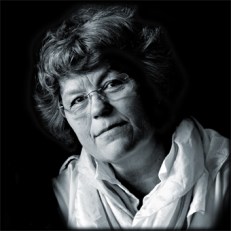
Franck Bouysse is a French author. His novels Grossir le ciel in 2014, Plateau in 2016 and Glaise in 2017 have met with wide success and won a vast array of literary awards. Previously a teacher of biology and horticulture, Bouysse lives in the south-west of France.

Connect with Franck
Goodreads 

#BookReview House of Beauty by Melba Escobar, translated by Elizabeth Bryer

House of BeautyAbout the Book

House of Beauty is a high-end salon in Bogotá’s exclusive Zona Rosa area, and Karen is one of its best beauticians. One rainy afternoon a teenage girl turns up for a treatment, dressed in her school uniform and smelling of alcohol. The very next day, the girl is found dead.

Karen was the last person to see the girl alive, so the girl’s mother is desperate to find out what Karen knows. Most important of all: who was her daughter going to meet that night?

Format: Paperback (247 pages)     Publisher: 4th Estate
Publication date: 7th March 2019 Genre: Contemporary Fiction, Literature in Translation, Crime

Find House of Beauty on Goodreads

Purchase links
Bookshop.org
Disclosure: If you buy a book via the above link, I may earn a commission from Bookshop.org, whose fees support independent bookshops

Hive | Amazon UK
Links provided for convenience only, not as part of an affiliate programme


My Review

Told from multiple points of view, initially I found it hard to distinguish between the different narrators, especially Lucia and her friend Claire, although it helped that Claire’s sections are written in the first person, whilst the others are in the third person. The story also skips forwards and backwards in time meaning, although billed as a crime novel, it’s not long before it becomes less of a ‘whodunnit’ but more a ‘will they get away with it?’

The House of Beauty of the book’s title not only provides a connection between many of the  characters but is also a place of work for beauticians like Karen and a place of indulgence.  ‘House of Beauty takes me in, I’m submerged in the silence and the expensive perfumes, the rosewater, oils and shampoo.’ In the case of Claire, the intimate services performed there are a kind of substitute for the affection that is lacking in her private life. It’s also an almost exclusively female environment, causing one of the male characters to refer to it as ‘that place, off limits to men, where there was room for all kinds of conspiracies and secrets’.

If it’s secrets and conspiracies you’re after, there’s no shortage of them amongst the male characters and there’s certainly little beauty. Take your pick from a rapist, a drug addict, a corrupt politician, a dodgy taxi driver, and any number of unfaithful husbands. The only male characters who display any integrity are Cojack, the private investigator hired by Consuelo, the mother of the dead girl, and Jorge, Consuelo’s ex-husband.  They find themselves pitted against corruption in high places and a bureaucratic legal system that moves at a snail’s pace.

As the book progresses, Karen becomes the dominant character in the story, finding herself in situations that force her to make increasingly more desperate and risky choices and casting her in the role of victim. But is Karen’s story true or is her life a fiction constructed by herself or others?

At one point, Lucia observes, ‘Life is a fabrication, don’t you think? Something we make up from start to finish.’ Whilst ostensibly about the search for the truth about a young girl’s death, House of Beauty exposes the corruption at the heart of Colombian society but also explores the notion of artifice, whether that’s the double lives led by many of the characters, the cosmetically enhanced faces and bodies presented to the world, or the external beauty that hides ugliness within.

In three words: Intriguing, thought-provoking, dark

Try something similar: The Liar by Ayelet Gundar-Goshen


Melba EscobarAbout the Author

Melba Escobar is a fiction writer and a journalist. She lives in Bogota, Colombia with her children and husband. (Photo credit: Goodreads suthor page)

Connect with Melba
Twitter | Goodreads

About the Translator

Elizabeth Bryer is a writer and translator from Australia. Her translation of Claudia Salazar Jiménez’s Blood of the Dawn was published by Deep Vellum in 2016. In 2017 she was a recipient of a PEN/Heim Translation Fund Grant.