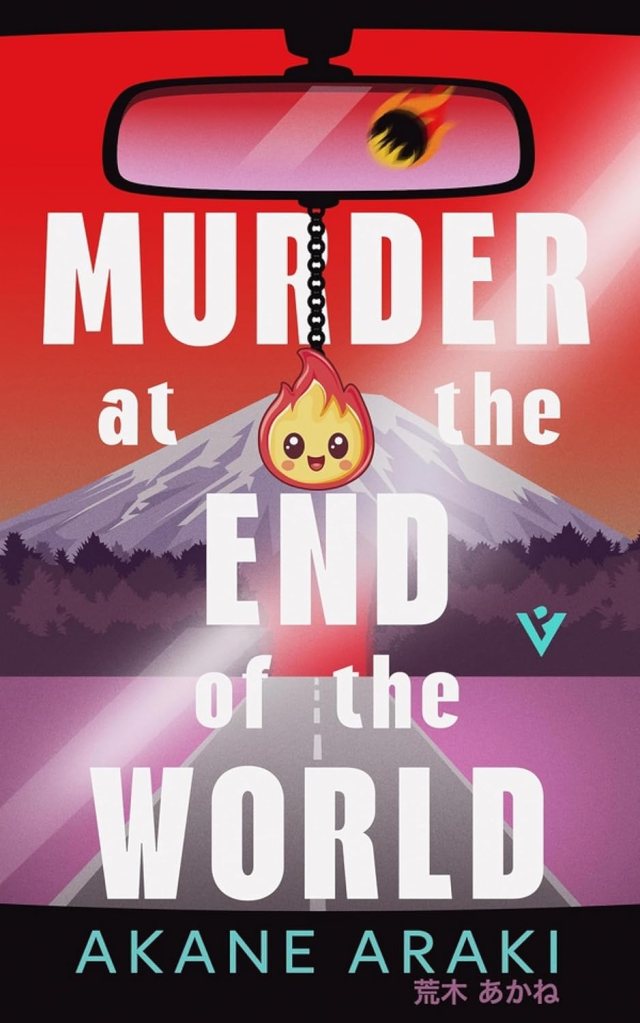
Book Review – Murder at the End of the World by Akane Araki, trans. by Jesse Kirkwood #20BOS26 @PushkinPress

About the Book

TWO MONTHS UNTIL THE APOCALYPSE. TWO WOMEN WITH NOTHING LEFT TO LOSE

An asteroid is hurtling towards Earth and the human race has just over two months to live. But twenty-three-year-old Haru, stargazer and chronic worrier, is still trying to pass her driving test.Then she finds a body in the boot of her car: a woman, stabbed and tortured. There’s a murderer on the loose. And it turns out that Haru’s driving instructor is an ex-cop with a manic devotion to justice.

So, despite the small matter of an impending apocalypse, the two women team up to catch the culprit regardless of the danger.

After all, the world’s not quite over yet…

Format: Paperback (336 pages) Publisher: Pushkin Press
Publication date: 2nd July 2026 Genre: Crime, Translated Fiction

Find Murder at the End of the World on Goodreads

Preorder/Purchase Murder at the End of the World from Bookshop.org [Disclosure: If you buy books linked to our site, we may earn a commission from Bookshop.org, whose fees support independent bookshops]

My Review

Trigger warning: Suicide

I’m not sure Japanese crime fiction and I are ever going to be best friends but I enjoyed this more than I did Butter. The question of what you’d do if you knew the world was ending in two months time is an interesting premise. In fact, that element probably engaged me more than the actual mystery.

Others may have different priorities but Haru has decided she wants to pass her driving test. She’s already passed the theory test but just needs a few more lessons with her driving instructor Isagawa. Obviously, no-one’s really going to worry if she’s got a licence or not but she has a journey in mind that she’d like to be confident about making. All that gets derailed when she and Isagawa discover a body in the boot of the training car. It’s not a pretty sight either but Isagawa doesn’t seem fazed and Haru soon discovers why. Encouraged by Isagawa, they set out to try to discover the culprit because the police are either unable or unwilling to investigate. They’re in the process of packing up like everyone else.

I don’t think it’s giving too much away to say there is more than one murder. In fact there’s no scarcity of dead bodies because many people have decided to take their own lives rather than wait for the asteroid to do it. The fact there’s no-one around to deal with the bodies brings a distinctly ghoulish aspect to the book.

Initially, there seems to be no connection between the victims. Haru’s and Isagawa’s task is made more complicated by the fact water and power supplies have failed, and there’s no mobile phone coverage. In the course of their investigation, Haru and Isagawa encounter other individuals who have stayed behind in what is forecast to be the impact zone of the asteroid, scavenging supplies of food, water and fuel from empty shops and warehouses. A few of these join Haru and Isagawa in the hunt for the person behind the killing spree. One of the puzzles is what the motive could possibly be. When most people are going to die in a few months anyway, why kill them now? I did actually guess the identity of the killer about two thirds of the way through the book.

I can’t say I ever warmed to Isagawa, especially as we see a quite different side to her at some points.

The aspect of the story that interested me most was people’s differing responses to the approaching apocalypse. Some, if they can afford it, have fled to countries further away from the impact zone although even that is unlikely to protect them from the disastrous environmental effects that will follow the asteroid strike. Many have decided to spend their remaining time with loved ones. Others are putting their faith in underground shelters or rather fantastical escape schemes. Some, as we’ve already learned, have decided to take things into their own hands and commit suicide. But with no-one around to enforce the rule of law, perhaps it’s possible to get away with anything?

Murder at the End of the World is an entertaining, if rather macabre, murder mystery peppered with black humour.

I received an uncorrected proof copy courtesy of Pushkin Press. Murder at the End of the World is book 6 of my 20 Books of Summer.

In three words: Quirky, intriguing, dark
Try something similar: The Last Murder at the End of the World by Stu Turton

About the Author & Translator
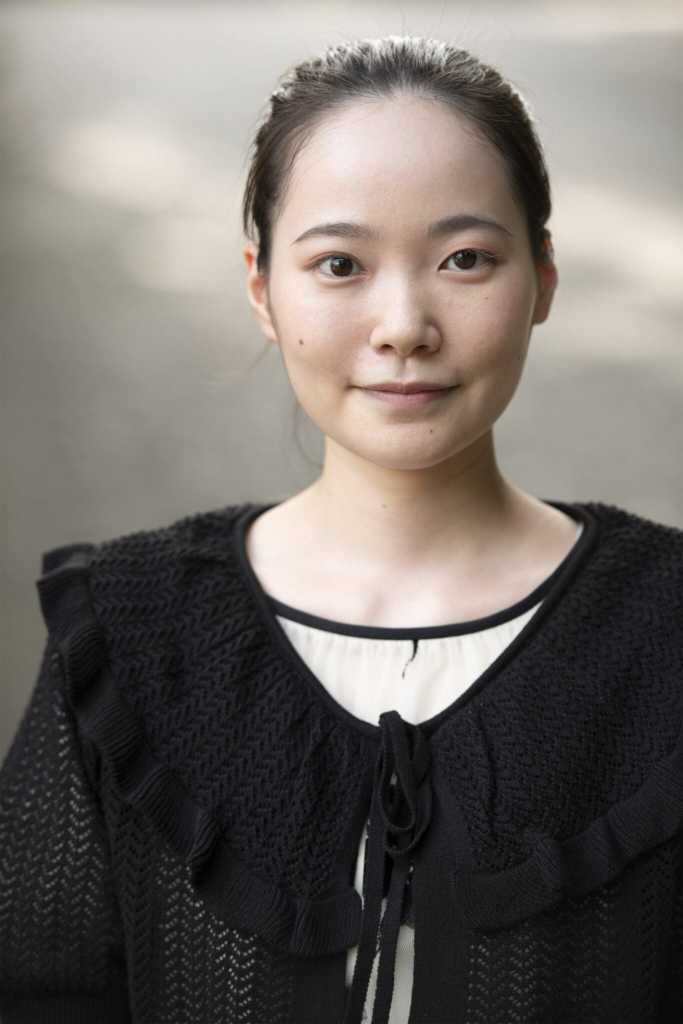
Akane Araki was born in 1998 in Fukuoka, Japan. She is a graduate of Kyushu University’s School of Letters. Murder at the End of the World is her first novel, and it won the prestigious Edogawa Rampo Prize. (Photo/bio: Publisher website)

Jesse Kirkwood is a literary translator working from Japanese into English. His translations include The Kamogawa Food Detectives by Hisashi Kashiwai, Tokyo Express by Seicho Matsumoto and The Man Who Died Seven Times by Yasuhiko Nishizawa.


Book Review – When the Cranes Fly South by Lisa Ridzén, translated by Alice Menzies

About the Book

Bo lives a quiet existence in his small rural village in the north of Sweden. He is elderly and his days are punctuated by visits from his care team and his son.

Fortunately, he still has his rich memories, phone calls with his best friend, and his beloved dog Sixten for company. Only now his son is insisting the dog must be taken away. The very same son that Bo is wanting to mend his relationship with before it’s too late.

With everyone telling him they know what’s best, can Bo speak up and make himself heard?

Format: Paperback (320 pages) Publisher: Penguin
Publication date: 1st January 2026 Genre: Contemporary Fiction

Find When the Cranes Fly South on Goodreads

Purchase When the Cranes Fly South on Bookshop.org [Disclosure: If you buy books linked to our site, we may earn a commission from Bookshop.org, whose fees support independent bookshops]

My Review

When the Cranes Fly South is an eloquent but unsparing depiction of the effects of ageing: the loss of independence, the indignities associated with needing help with the most intimate of activities, the daily reality of physical and/or mental decline.

Not being a dog owner I couldn’t completely relate to Bo’s determination to resist all attempts to part him from Sixten, given he must have known he could no longer care for him in the way the dog deserved. However I could appreciate that Sixten represents the one thing that links Bo to his previous, more active life. And that having lost so much else – his wife to dementia and now living in a care home, his own bodily strength and independence, the prospect of losing his best friend Ture – Sixten provides him with companionship and comfort.

Bo resents his son Han’s interventions, interpreting them as attempts to control his life. I saw it differently, feeling Hans had his father’s best interests at heart. Despite having a demanding job, he makes frequent visits, fills his freezer with food and brings treats he thinks his father might enjoy. His changes are kindly meant and practical, for example the installation of an adjustable bed. The heartbreaking thing is how father and son are unable to connect emotionally. We know Bo has things he’d like to tell Hans, things he regrets not saying but which he cannot find the courage to communicate. So different from when Hans was younger and they used to go on hunting and fishing trips together.

Bo’s thoughts are often drawn to the past and memories of his happy marriage. Sadly, his wife is in the advanced stages of dementia and no longer recognises him, making visits to her care home so traumatic he often avoids them. Again, it’s Hans who steps in with this.

When Bo’s thoughts turn to his childhood it’s of less happy memories. His recollections are of a father who was emotionally withdrawn, short-tempered, even cruel at times. It’s behaviour Bo attempted to avoid with his own son, sadly with limited success.

In the same way Bo knows the cranes will fly south as autumn approaches, the reader knows the end that awaits him. However, knowing this doesn’t make it any less emotional when it happens. Although When the Cranes Fly South is bleak at times, it’s also shot through with humanity exemplified by the case notes left by Bo’s carers which often demonstrate a willingness to go beyond what’s expected. The case notes also provide the reader with a different perspective on Bo’s condition, confirming that he is indeed a very sick man.

This was a book club pick. Everyone agreed it was a remarkable book and it provoked a lot of discussion. For some members who have direct experience of caring for a loved one living with dementia or of navigating the care system, reading the book was an emotional experience but also one rooted in realism.

In three words: Intimate, moving, thought-provoking
Try something similar: Tiny Pieces of Enid by Tim Ewins

About the Author

The idea for Lisa Ridzén’s heartrending debut When the Cranes Fly South came to her through the discovery of notes her grandfather’s care team had left the family as he neared the end of his life. She was also inspired by her research into masculinity in the rural communities of the Swedish far north, where she herself was raised and now lives in a small village outside Östersund.

Lisa began penning the novel whilst attending Långholmen Writer’s Academy. When the Cranes Fly South was a number one bestseller in Sweden, won the overall Swedish Book of the Year, and the Adlibris Prize both for Debut and Fiction of the Year – the first time in the awards’ history that an author has won in two categories. In the UK it was shortlisted for the Waterstones Debut Fiction Prize. Rights have been sold in thirty-nine languages around the world.

Connect with Lisa
X/Twitter