#BookReview #BlogTour The Unheard by Anne Worthington @Confingo @RichardsonHelen #TheUnheard

Welcome to today’s stop on the blog tour for The Unheard by Anne Worthington. My thanks to Helen at Helen Richardson PR for inviting me to take part in the tour and to Cōnfingō for my review copy.

The Unheard is a book that has been wowing readers. If you don’t believe me, check out this fabulous review by Linda at Linda’s Book Bag.


About the Book

Tom Pullan knows that the people who visit him are trying to tell him something, but he cannot remember what. He knows the faces in his memory, the ones he loved, are not the ones around him now.

We are drawn into a world where brutal events from the past lie just below the surface. Plunged inside the characters’ heads, we experience their thoughts and feelings: sorrow and rage they cannot share; the intense feelings and turbulent sexuality of a teenage girl; a boy who saw something that casts a long shadow over his life.

What do we do with a lifetime of unheard truths, questions and fears? The Unheard is a novel about memory, and what happens to the experiences that are too much for us but we are unable to leave behind.

Format: Paperback (160 pages) Publisher: Confingo Publishing
Publication date: 11th July 2023 Genre: Literary Fiction

Find The Unheard on Goodreads

Purchase links 
Publisher | Amazon UK 
Links provided for convenience only, not as part of an affiliate programme


My Review

Tom has dementia and May, his wife of many years, is seriously ill. They’d always promised each other they’d stay together to the end but now this seems it might not be possible. Tom forgets a lot these days, like what time it is or whether he’s had his tea. But there have also been things in his life that he couldn’t forget even though he wanted to, like his experiences during the war. And, as a child, there were things he was told he must forget, terrible things that he didn’t fully understand at the time. If your heart hasn’t been broken a little bit by the end of the first part of the book then prepare for it to have been torn asunder by the end. (Please can someone invent a way to reach into a book and give the characters a hug.)

Moving back in time, alongside depicting events in Tom’s life, the book explores social and political issues such as economic injustice and digital exclusion, particularly during the section of the book set in 1984, a time of industrial unrest in the UK. Tom has a visceral reaction to the person he calls ‘that woman’ (Prime Minister Margaret Thatcher) and has no truck with the theory of ‘trickle down’ economics. As he says, ‘When have the rich allowed their money to spill over for the rest of us? And when has money ever flowed down to the poor?’. Quite, Tom.

The experiences of Maggie, his teenage daughter, are raw and disturbing but demonstrate that there are many ways to be, or feel, unheard.

Being inside Tom’s head is often unsettling and heartrending but at other times his resilience and determination to do the best for his family make it joyous.

The writing is wonderful. Even when the author is describing pain or despair, there’ll be a phrase that makes you stop and think, yes, that must be what it’s like – or even, I know that feeling. I especially loved the use of repetition, the phrases that occur in Tom’s head over and over again, like a refrain.

The Unheard is one of those books that it’s difficult to do justice to in a review and I don’t think I’ve come close to communicating how brilliant I thought it was. It’s a short book but it packs a real punch. And after this I don’t think I’ll ever think about the song ‘You are my sunshine, my only sunshine’ in quite the same way again.

In three words: Moving, powerful, lyrical

Try something similarOld God’s Time by Sebastian Barry


About the Author

Anne Worthington is a documentary photographer and writer. She was awarded an MA with Distinction for Creative Writing in 2018. Anne was a finalist for Iceland Writers Retreat 2015, and shortlisted for the Fish Flash Fiction Prize 2018. She lives in the north of England. The Unheard is her first novel.

Connect with Anne
Twitter

#BookReview The Geometer Lobachevsky by Adrian Duncan @serpentstail @waltscottprize

About the Book

‘When I was sent by the Soviet state to London to further my studies in calculus, knowing I would never become a great mathematician, I strayed instead into the foothills of anthropology …’

It is 1950 and Nikolai Lobachevsky, great-grandson of his illustrious namesake, is surveying a bog in the Irish Midlands, where he studies the locals, the land and their ways. One afternoon, soon after he arrives, he receives a telegram calling him back to Leningrad for a ‘special appointment’.

Lobachevsky may not be a great genius but he is not he recognises a death sentence when he sees one and leaves to go into hiding on a small island in the Shannon estuary, where the island families harvest seaweed and struggle to split rocks. Here Lobachevsky must think about death, how to avoid it and whether he will ever see his home again.

Format: Hardback (208 pages)         Publisher: Tuskar Rock Press
Publication date: 31st March 2022 Genre: Historical Fiction

Find The Geometer Lobachevsky on Goodreads

Purchase links 
Bookshop.org 
Disclosure: If you buy a book via the above link, I may earn a commission from Bookshop.org, whose fees support independent bookshops

Hive | Amazon UK 
Links provided for convenience only, not as part of an affiliate programme


My Review

I’m not sure I ever imagined myself reading a book that combines events in the life of a man who fears persecution if he returns to his homeland in the Soviet Union, the surveying of Irish bogland and seaweed farming. And I probably wouldn’t have had it not appeared on the shortlist for the Walter Scott Prize for Historical Fiction.

The Geometer Lobachevsky contains some wonderful descriptions of the wilder parts of Ireland and I liked the gentle rhythm of the life of the islanders described in the second part of the book. I also loved the amiable humour of Nikolai’s attempts to spell Irish names.

Nikolai arrives as an advisor but is happy to get stuck into the job of surveying the bog in preparation for large scale peat extraction even if he can’t get the team led by Rhatigan to understand the shifting nature of the area they’re trying to survey. Perhaps it’s in the nature of things to think you’re on solid ground even when you’re not? Having adopted a false identity in order to cover his tracks and fled to a small island on the Shannon estuary, Nikolai learns the secrets of seaweed harvesting from the families who live there. But although he might join in with things, he remains somehow always isolated from others.

There is a theme of old versus new that runs through the book. Old crafts are being lost, labour intensive tasks are gradually being mechanised and the landscape is being changed by the building of new factories and houses with modern amenities. You get a sense it’s being done to the local people not for them.

Many of the characters exhibit obsessionial traits. Rhatigan, the chief surveyor, is a perfectionist when it comes to the accuracy of surveying. One of the locals, French, has a ‘museum’ full of curiosities, such as many different types of hammer, that he has collected over the years. Nikolai himself becomes obsessed with observing the moon through a telescope in order to make precise topographical drawings of its surface. And once on the island he witnesses a prolonged and dangerous attempt, led by the son of one of the local families, to split a huge boulder seemingly for no other reason than to prove it can be done.

Right from the beginning of the book there’s an ominous sense that a bleak future in one form or another awaits Nikolai. Having seen friends (possibly lovers?) persecuted for their views, he’s afraid of what will happen to him if he returns to the Soviet Union. He describes himself as living every day ‘tired with fear’. The book’s dramatic ending proves he was right.

Given the title of the book it’s no surprise that Nikolai sees things in terms of shapes, angles and geometric patterns. I’m afraid this is where I struggled with the book because the geometrical stuff went over my head. No matter how hard I tried I could not envision the existence of a curve in a straight line or a straight line in a curve. Where Nikolai looks at the incoming tide and sees ‘plummeting curvatures’ I just see the incoming tide. Where he sees a wetland ‘mapped out with a constantly collapsing Cartesianism of intensities’ I have no idea what that is. I think this prevented me forming a stronger connection with the story. Although I admired the wonderful writing, I was left with the feeling that this is a book I was not quite clever enough to appreciate fully.

In three words: Evocative, elegaic, complex


About the Author

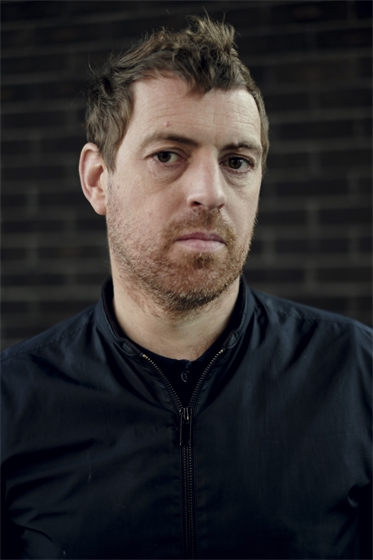
Adrian Duncan is an Irish artist and writer. His debut novel Love Notes from a German Building Site won the 2019 John McGahern Book Prize. His second novel A Sabbatical in Leipzig (2020) was shortlisted for the Kerry Novel of the Year. His collection of short stories Midfield Dynamo was published in 2021 and longlisted for the Edge Hill Prize. His third novel, The Geometer Lobachevsky, was published in April 2022. (Photo: Publisher author page)

Connect with Adrian
Twitter | Website