
About the Book
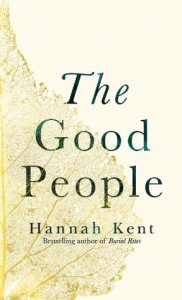
County Kerry, Ireland, 1825. Nóra, bereft after the sudden death of her beloved husband, finds herself alone and caring for her young grandson Micheál. Micheál cannot speak and cannot walk and Nóra is desperate to know what is wrong with him. What happened to the healthy, happy grandson she met when her daughter was still alive?
Mary arrives in the valley to help Nóra just as the whispers are spreading: the stories of unexplained misfortunes, of illnesses, and the rumours that Micheál is a changeling child who is bringing bad luck to the valley.
Nance’s knowledge keeps her apart. To the new priest, she is a threat, but to the valley people she is a wanderer, a healer. Nance knows how to use the plants and berries of the woodland; she understands the magic in the old ways. And she might be able to help Micheál.
As these three women are drawn together in the hope of restoring Micheál, their world of folklore and belief, of ritual and stories, tightens around them. It will lead them down a dangerous path, and force them to question everything they have ever known.
Format: Hardcover (400 pages) Publisher: Picador
Publication date: 9th February 2017 Genre: Historical Fiction
Find The Good People on Goodreads
Purchase The Good People from Bookshop.org [Disclosure: If you buy books linked to our site, we may earn a commission from Bookshop.org, whose fees support independent bookshops]
My Review
Still mourning the death of her daughter, newly widowed Nora finds herself alone and trying to care for her grandson, Micheál. She cannot understand what has happened to turn him from a healthy child into one who cannot speak or walk. Ashamed and fearful of what neighbours will say about the afflicted child, Nora hires a young girl, Mary, to help care for him out of the public gaze. However, rumours about the circumstances of her husband’s death and the presence of an ‘unnatural’ child soon start to circulate. Nora becomes convinced Micheál is a ‘changeling’ – a child of the fairies or ‘Good People’ substituted for the real Micheál. In the hope of restoring what she believes is her ‘real’ grandson, she enlists the help of Mary and the local wise-woman, Nance, embarking on a path that will have far-reaching consequences for them all.
The author creates an evocative and moving picture of what life was like for people eking out a subsistence existence in 19th century Ireland where famine and homelessness was only ever a short distance away: a cow that stops giving milk, a crop that fails, inclement weather, illness or bereavement.
‘They’re worried about the butter. About being forced on the road. About having no money to pay the rent with. About neighbours turning on them, wishing them ill. Wishing sickness and death on them.’
How it can lead to a community seeking answers in the supernatural – in this case, the ‘Good People’ or fairies who dwell amongst them and who it is believed can bring good or bad luck. The story of Nora and Michael shows the desperate actions to which people can be driven by grinding poverty, ignorance and fear, and hatred and suspicion of anyone who is different, like Nance Roche, or afflicted with physical or mental illness, like Micheál. Nora is a woman driven mad by grief and although she does some very terrible things, she never loses the reader’s sympathy completely. The fact the story is inspired by actual cases adds to the sense of realism.
I felt the author created a fully realised picture of a community of that time and its rituals: the customs associated with wakes and burials, gatherings around the well or at the blacksmith’s forge. I thought she captured the lilt and rhythm of the dialect without trespassing into “Oirishness”. There was some wonderfully lyrical writing, particularly descriptions of nature.
‘December arrived and bled the days of sunlight, while the nights grew bitter, wind-rattled.’
‘She thought of how , in the valley, the people would soon pluck the yellow flowers for the goodness they drew from the sun, pulling primrose and marsh marigold and buttercups, rubbing them on the cows’ udders to bless the butter in them, placing them on doorways and doorsteps, those thresholds where the unknown world could bleed into the known, flowers to seal the cracks from where luck could be leached…’
I have not read Hannah Kent’s first novel, Burial Rites, but on the strength of this book, it will definitely be going on my wishlist.
I received an advance review copy courtesy of Pan MacMillan via NetGalley.
In three words: Emotional, lyrical, enthralling
Try something similar: The Signal Flame by Andrew Krivak
About the Author

Hannah Kent’s debut novel, the international bestseller Burial Rites was translated into 28 languages. It won the ABIA Literary Fiction Book of the Year, the Indie Awards Debut Fiction Book of the Year and the Victorian Premier’s People’s Choice Award, amongst others. Burial Rites was also shortlisted for the Baileys Women’s Prize for Fiction (formerly the Orange Prize), the Guardian First Book Award, the Stella Prize and the International IMPAC Dublin Literary Award. It is currently being adapted to film.
Hannah co-founded the Australian literary journal Kill Your Darlings, where she is currently publishing director. The Good People is Hannah’s second novel and was shortlisted for the Walter Scott Prize for Historical Fiction 2017.
Connect with Hannah
Website | X | Instagram | Facebook


 What Cathy Read Next...