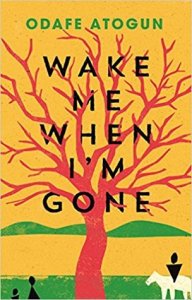
Book Review: Wake Me When I’m Gone by Odafe Atogun

Wake Me When I'm GoneAbout the Book

Everyone says that Ese is the most beautiful woman in the region, but a fool. A young widow, she lives in a village, where the crops grow tall and the people are ruled over by a Chief on a white horse. She married for love, but now her husband is dead, leaving her with nothing but a market stall and a young son to feed. When the Chief knocks on Ese’s door demanding that she marry again, as the laws of the land dictate she must, Ese is a fool once more. There is a high price for breaking the law, and an even greater cost for breaking the heart of a Chief. Ese will face the wrath of gods and men in the fight to preserve her heart, to keep her son and to right centuries of wrongs. She will change the lives of many on the road to freedom, and she will face the greatest pain a mother ever can.

Format: Hardcover Publisher: Canongate Pages: 247
Publication: 3rd August 2017 Genre: Literary Fiction    

Purchase Links*
Amazon.co.uk ǀ Barnes & Noble
*links provided for convenience, not as part of any affiliate programme

Find Wake Me When I’m Gone on Goodreads


My Review

Wake Me When I’m Gone tells the story of Ese, widowed and bringing up her young son, Noah, alone. The language is simple and straightforward, almost in the manner of a fable, and the sense that the reader is listening to a story is enhanced by the first-person narrative.  There is a timeless quality to the tale being told, although from the mention of items like radios, it is clear that it is set not that far off the present.  I felt the picture of the small village and the faraway big city also contributed to the feeling of a fairytale.

Through Ese’s eyes, the reader witnesses the inferior position of women in the social order of the village. In this patriarchal society, a woman’s role is circumscribed and tradition is used as a reason for preventing any change. Hence, the attempt by the Head Priest and Chief of the village to force Ese to remarry or face the prospect of losing custody of her son to a male relative.

This is also a community influenced by superstition, fearful of the wrath of their gods in case they send bad weather or other natural disaster and who believe that defiance of the gods will bring madness and death.  The people cling to cruel beliefs such as children made orphans by the death of their parents are responsible for those deaths because they are cursed. The orphans must be shunned, left homeless and without means of support.

Ese is unwilling to accept unquestioningly the customs of the village, particularly where they threaten her son or where they seem morally wrong. Her resistance brings unwelcome consequences and she is forced to begin a lonely search for safety and shelter.

Throughout the novel, stories play a key part. There are the fearsome stories the priests tell to prevent resistance to the laws of the village. And there are the stories Ese tells to help her son cope with the loss of his father and the difficulties they face; hopeful messages that ‘one day things will change’ and that she has given him ‘the secret of happiness’ so he will never be sad. Her simple wisdom is rooted in principles of truth, kindness and generosity.

I found Ese’s story, although sad at times, ultimately uplifting with its message that good can come out of tragedy and a person’s legacy can persist long after they are gone. I really enjoyed this book: for the story, the insight it provides into Nigerian customs and traditions, and its simple, graceful prose. I will definitely seek out the author’s first book, Taduno’s Song.

I received an advance reader copy courtesy of NetGalley and publishers, Canongate Books, in return for an honest review.

Follow my blog with Bloglovin

In three words: Uplifting, hopeful, magical

Try something similar…The Secret Lives of Baba Segi’s Wives by Lola Shoneyin


Odafe AtogunAbout the Author

Odafe Atogun was born in Nigeria, in the town of Lokoja, where the Niger and Benue rivers meet. He studied journalism at the Times Journalism Institute in Lagos and is now a full time writer. He is married and lives in Abuja.

His first novel, Taduno’s Song, was published by Canongate Books in 2016.

Connect with Odafe

Twitter ǀ Goodreads

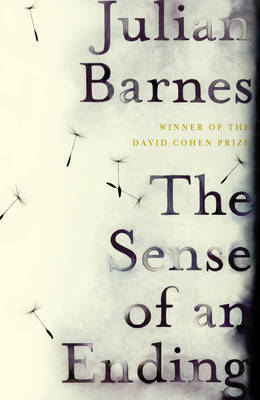
Book Review: The Sense of an Ending by Julian Barnes

What you end up remembering isn’t always the same as what you have witnessed

TheSenseofAnEndingAbout the Book

Publisher’s description: Tony Webster and his clique first met Adrian Finn at school. Sex-hungry and book-hungry, they would navigate the girl-less sixth form together, trading in affectations, in-jokes, rumour and wit. Maybe Adrian was a little more serious than the others, certainly more intelligent, but they all swore to stay friends for life. Now Tony is retired. He’s had a career and a single marriage, a calm divorce. He’s certainly never tried to hurt anybody. Memory, though, is imperfect. It can always throw up surprises, as a lawyer’s letter is about to prove.


Book Facts

Format: Hardcover Publisher: Jonathan Cape Pages: 150
Publication: 4th August 2011 Genre: Literary Fiction    

Purchase Links*
Amazon.co.uk ǀ Amazon.com ǀ
*links provided for convenience, not as part of any affiliate programme

Find The Sense of an Ending on Goodreads


My Review

This book forms part of my From Page to Screen challenge. I’ll be writing separately about my comparison of the book and the film.

I’m ashamed to say this is the first book I’ve read by Julian Barnes but, safe to say, it won’t be my last. As well as telling an intriguing story, whose lesson might be that actions have consequences, the book explores a familiar theme for writers, namely storytelling and the line between truth and fiction.

The book opens with fragments of memories that slot into place and make sense only as the book progresses. The narrator, Tony, reminisces about adolescent friendships, early romantic relationships and their aftermath. However, the book gradually evolves into something darker, centring on a key event, Tony’s reaction to it at the time and the events set in train by that response.  I can’t say much more for fear of spoilers but the reader knows early on that the narrator, Tony, is omitting or amending facts about his life both unconsciously and consciously.

‘I told her the story of my life. The version I tell myself, the account that stands up.’

He pretty much tells us that he is choosing what is and isn’t going to part of his story.

‘How often do we tell our own life story? How often do we adjust, embellish, make sly cuts?

As Tony ruminates on ageing and looks back on his life, he regrets not being more adventurous. He reflects that as a young man he’d imagined he’d live ‘as people in novels live and have lived’.

‘But time…how time first grounds us and then confounds us. We thought we were being mature when we were only being safe. We imagined we were being responsible but were only being cowardly. What we called realism turned out to be a way of avoiding things rather than facing them.’

Tony believes he is a good father to his daughter (he keeps telling us so), that he remains friends with his ex-wife and has never deliberately hurt anyone. This is the ‘story’, if you like, he has created for himself. I was reminded of Charles Dickens’ Great Expectations and Pip’s confession that: “All other swindlers upon earth are nothing to the self-swindlers and with such pretences did I cheat myself.”

In the end, faced with evidence from his past, Tony puts together the pieces of the jigsaw to form the picture he has been unable (or unwilling) to see and is forced to face up to his part in life-changing events.

A very accomplished piece of writing, as you might expect from an author of this calibre. It’s a slim volume and not a word is wasted.

Follow my blog with Bloglovin

In three words: Reflective, intimate, drama

Try something similar…Atonement by Ian McEwan


JulianBarnesAbout the Author

Julian Barnes is a contemporary English writer of postmodernism in literature. He has been shortlisted three times for the Man Booker Prize for Flaubert’s Parrot (1984), England, England (1998), and Arthur & George (2005) and won the prize for The Sense of an Ending (2011). He has written crime fiction under the pseudonym Dan Kavanagh. Following an education at the City of London School and Merton College, Oxford, he worked as a lexicographer for the Oxford English Dictionary. Subsequently, he worked as a literary editor and film critic. He now writes full-time. Julian lived in London with his wife, the literary agent Pat Kavanagh, until her death in October 2008.

Connect with Julian

Website ǀ Facebook ǀ Goodreads