

Throwback Thursday is a weekly meme hosted by Renee at It’s Book Talk. It’s designed as an opportunity to share old favourites as well as books that we’ve finally got around to reading that were published over a year ago. If you decide to take part, please link back to It’s Book Talk.
This week is a book I’ve had on my review stack for a while: Letting Go by Maria Thompson Corley.
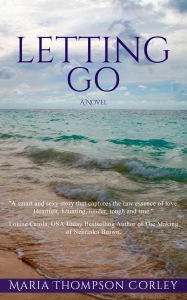 About the Book
Even though she lives hundreds of miles away, when Langston, who dreams of being a chef, meets Cecile, a Juilliard-trained pianist, he is sure that his history of being a sidekick, instead of a love interest, is finally over. Their connection is real and full of potential for a deeper bond but the obstacles between them turn out to be greater than distance. Can these busy, complicated people be ready for each other at the same time? Does it even matter? Before they can answer these questions, each must do battle with the ultimate demon – fear.
Told in a witty combination of standard prose, letters, emails and diary entries, Letting Go, in the tradition of Chimamanda Ngozi Adichie’s Americanah, is a long-distance love story that also examines race, religion and the difficult choices we make following our passions. From the Great White North to the streets of New York City, to the beaches of Bermuda, Letting Go is a journey of longing, betrayal, self-discovery and hope you will never forget.
Format: eBook (560 pp.) Publisher:
Published: 5th July 2016 Genre: Fiction
Purchase Links*
Amazon.co.uk ǀ Amazon.com
*links provided for convenience, not as part of any affiliate programme
Find Letting Go on Goodreads
My Review
In Letting Go, the reader follows the lives of two young people, Cecile and Langston. In separate story lines that converge at points, we see them navigate life, love and career over a period of more than twenty years. The author’s supreme achievement is to make Cecile and Langston seem so real that the reader cannot help feeling completely invested in their respective life journeys. In their different ways, both Cecile and Langston are searching for fulfilment. And, as so often in life, their stories are filled with missed opportunities, misunderstandings and things left unsaid.
Langston is trying to find love that goes beyond just a physical relationship. He doesn’t want a casual relationship or a series of one night stands. He’s a handsome guy; he could have plenty of those if he wanted. But Langston wants someone he can truly commit to and build a life with, someone who will share his love of food, films and books. Someone like Cecile, in fact. But life events seem destined to get in the way of that happening. Langston is someone who thinks very deeply (too deeply?) about things. He wrestles with his conscience, trying to balance his desire for freedom and independence with his feeling of responsibility for his beloved grandmother who brought him up. And underneath everything is the trauma of his parents’ drug addiction and their rejection of him and his siblings.
Cecile has her own family trauma to overcome. Furthermore, admitted to the prestigious Juilliard School, and alone in a strange city, Cecile initially struggles to overcome her shyness and form friendships with other students. Eventually she finds herself part of a group of fellow black students who can identify with her situation of being a black face in a predominantly white institution. As her life unfolds, Cecile too has inner demons to battle, struggling to balance her religious beliefs and the commitments she has made with her own happiness and fulfilment. Sometimes, it seems she is her own worst enemy: ‘Her brain had always been both a friend and an enemy, making her academic career easy and everything else difficult. Thinking, overthinking, trying not to think…’
The author’s own passion for music (and religious belief) shines through in Cecile. ‘She was amazed at the beauty of a phrase, the joy of flying through a technically difficult passage, the power of being able to create a deafening fortissimo, the delicacy of triple piano. She felt blessed beyond compare to be allowed the gift of music, so she wouldn’t give up on her talent. It would be an insult to the Giver of the gift, a surgical removal of a vital organ.’
And in a clever nod to those with musical knowledge, the book is structured to mirror the elements of a sonata: Introduction, Exposition, Codetta, Development, Recapitulation and Coda. I also liked the author’s use of letters to illustrate the development of the relationship between Cecile and Langston. I always think a shared sense of humour is a great indicator of the strength of, and likely future success of, a relationship.
The book explores a number of other themes, including racial discrimination and the idea that black people have to try harder and be better to be successful than their white counterparts.
I really enjoyed Letting Go and I’ll admit to shedding a little tear at the end and whispering ‘Thank you’ to the author for the book’s conclusion which treads that fine line between telling you too much and leaving you out on a limb. I heartily recommend Letting Go for readers who appreciate a character-driven, authentic story that really immerses you in the lives of its characters.
I received a review copy courtesy of the author in return for an honest and unbiased review. I’d like to thank Maria for her patience in waiting much longer than originally envisaged for me to read and review her book. For me, it was well worth the wait.
As well as being an author, Maria is a gifted pianist. Listen to Maria performing some of the beautiful music she has chosen to accompany Letting Go:
https://www.youtube.com/watch?v=F7X42fibmEQ
To purchase the CD, which also includes Maria reading passages from the book, click here
In three words: Emotional, intimate, character-driven
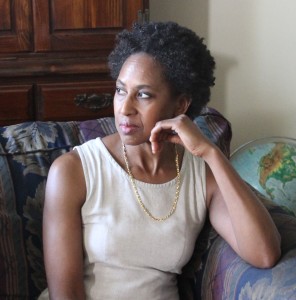 About the Author
Award-winning Jamaican-born Canadian pianist, Maria Thompson Corley, gave her first public performance at the age of eight. Since then, she has appeared on radio, television, and concert stages in Canada, the United States, Central America, the Caribbean, Bermuda and Europe, both as a solo and collaborative artist.
Maria received both Master’s and Doctorate degrees in piano performance from the Juilliard School, where she was a student of renowned Hungarian pianist Gyorgy Sandor. Dr. Corley was the only pianist admitted into Juilliard’s doctoral program for the period of two years. She was also chosen to represent her alma mater in a tour of Central America, where she gave performances and master classes. Aside from being an accomplished pianist, Maria Corley is an author. She contributes regularly to Broad Street Review, an online arts magazine, and her first novel, Choices, was published by Kensington. Letting Go is her second novel.
Connect with Maria
Website ǀ Facebook ǀ Twitter ǀ Goodreads

 About the Book
 About the Author
 What Cathy Read Next...