
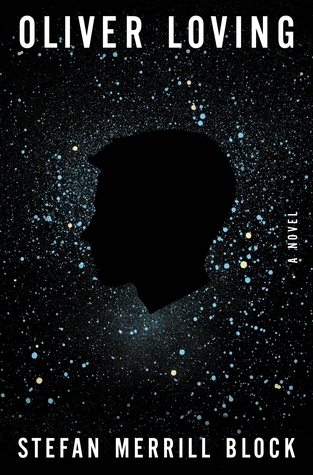
 About the Book
One warm, West Texas November night, a shy boy named Oliver Loving joins his classmates at Bliss County Day School’s annual dance, hoping for a glimpse of the object of his unrequited affections, an enigmatic Junior named Rebekkah Sterling. But as the music plays, a troubled young man sneaks in through the school’s back door. The dire choices this man makes that evening – and the unspoken story he carries – will tear the town of Bliss, Texas apart.
Nearly ten years later, Oliver Loving still lies wordless and paralyzed at Crockett State Assisted Care Facility, the fate of his mind unclear. Orbiting the still point of Oliver’s hospital bed is a family transformed: Oliver’s mother, Eve, who keeps desperate vigil; Oliver’s brother, Charlie, who has fled for New York City only to discover he cannot escape the gravity of his shattered family; Oliver’s father, Jed, who tries to erase his memories with bourbon. And then there is Rebekkah Sterling, Oliver’s teenage love, who left Texas long ago and still refuses to speak about her own part in that tragic night.
When a new medical test promises a key to unlock Oliver’s trapped mind, the town’s unanswered questions resurface with new urgency, as Oliver’s doctors and his family fight for a way for Oliver to finally communicate – and so also to tell the truth of what really happened that fateful night.
Format: Hardback (400 pp.) Publisher: Flatiron Books/Atlantic Books
Published: 16th January 2018 Genre: Literary Fiction
Purchase Links*
Amazon.co.uk ǀ Amazon.com
*links provided for convenience, not as part of any affiliate programme
Find Oliver Loving on Goodreads
My Review
‘Once upon a time there was a boy who fell through a crack in time but he didn’t fall all the way.’
Following the momentous events at his school’s annual dance, Oliver lies in a coma – neither here nor gone but ‘suspended’ somewhere in between. ‘By your twentieth birthday, you had become a dimming hive of neurological data, a mute oracle, an obsession, a regret, a prayer, a vegetative patient in Bed Four at Crockett State Care Facility; the last hope your mother lived inside.’
In a way, the people around Oliver are suspended too, unable to move on from the fateful evening of the Bliss County Day School’s annual dance. More than anything, they are obsessed by the question: Why? Why was Rebekkah unharmed? Why was Oliver at the dance? What motivated a troubled young man, Hector Espina, to do what he did? They cling to the belief that Oliver will someday, somehow, be able to answer those questions; that he is the only one who can provide the answers. But is that actually the case?
The reader benefits from the gradual recounting of Oliver’s memories leading up to the evening of the dance, during which Oliver is always addressed in the second person. Interspersed are sections told from the point of view of Oliver’s mother (Eve), his father (Jed), his brother (Charlie) and Rebekkah (the object of Oliver’s affection). It becomes clear that they also have secrets and are weighed down by guilt: about the things they did or didn’t do; the things they did or didn’t say. Maybe if they’d acted or spoken, things would have turned out differently.
All the characters are convincing, with human flaws, and not always likeable. In Eve, Oliver’s mother, the reader gets an overwhelming sense of someone who wants to believe in miracles so much that it blinds her to reason, interpreting signs that others don’t see as indications of Oliver’s lucidity. However, does her steadfastness just disguise an inability to face up to the truth and take the right decision? Jed, Oliver’s father, is a failed artist, a disappointed man and a drunk unable to face up to what his son has become. Oliver’s brother, Charlie, dreams of being a writer and of writing his family’s story – Oliver’s story – but is unable to start the book, to find a way into it. ‘Like unstable plutonium, he had thought he could take the annihilating power of it and transform it into an astonishing source of energy. But at last he knew better, that he was just like the rest of his family, still pounding at the walls of an instant, now many years past.’
Then there’s Rebekkah Sterling, a rather elusive figure for much of the book, always hovering off stage but seeming to exercise a sort of gravitational pull on other characters. Oliver is enchanted by her from the first time he sees her and Charlie becomes convinced she has the answers to what happened that night. And others who came into her orbit prove significant as well. Talking of orbits and gravitational pulls, the book frequently alludes to astronomy, wormholes and even parallel universes. Does Oliver merely inhabit some ‘impassable otherworld of your memory, that place where you were still the same wholly whole Oliver’.
The tragic events at the Bliss County Day School dance have wider repercussions than just for Oliver’s family. The tragedy and the racial background of the person involved are usurped for political capital (now why does that sound familiar?), exploiting existing tensions over immigration from Mexico, informal segregation between the Hispanic and white population of Bliss and concerns about drugs being brought across the border. ‘It wouldn’t matter that Hector Espina had been an American-born citizen or that an Ecuadorian named Ernesto Ruiz stopped the kid that night. The fact was that Hector was a Latino…He was a demon of white imaginings let loose.’
And it’s as if the town died the day of the tragedy as well. The author conjures up an evocative picture of a rundown West Texas town with its abandoned houses and closed down businesses. In fact there is wonderful descriptive writing and use of quirky metaphors throughout the book. As Charlie reflects on what the tragedy has done to his family: ‘Ma – the immutable icon, the implacable white colossus that had stood guard over his childhood – had been badly fissuring, and Charlie had known that only he could fill the gaps. After all, Pa had already crumbled.’
Oliver Loving is both an examination of the impact of a tragedy on a family and a community, and an exploration of the ‘locked in’ state. It’s also about needing answers and about clinging on to hope. It is also a fantastic read. I received an advance reader copy courtesy of NetGalley and publishers, Atlantic Books, in return for an honest and unbiased review.
In three words: Emotional, powerful, imaginative
Try something similar…Holding on to Hurt by Charlotte Roth (click here to read my review)
 About the Author
Stefan grew up in Plano, Texas. His first book, The Story of Forgetting, was an international bestseller and the winner of Best First Fiction at the Rome International Festival of Literature, The Ovid Prize from the Romanian Writer’s Union, the 2008 Merck Serono Literature Prize and the 2009 Fiction Award from The Writers’ League of Texas. The Story of Forgetting was also a finalist for the debut fiction awards from IndieBound, Salon du Livre and The Center for Fiction. Following the publication of his second novel, The Storm at the Door, Stefan was awarded The University of Texas Dobie-Paisano Fellowship, as well as residencies at The Santa Maddalena Foundation and Castello Malaspina di Fosdinovo in Italy. Stefan’s novels have been translated into ten languages, and his stories and essays have appeared in The New York Times, The New Yorker Page-Turner, The Guardian, NPR’s Radiolab, GRANTA, The Los Angeles Times, and many other publications. Stefan’s third novel, Oliver Loving, is forthcoming from Macmillan/Flatiron Books. He lives in Brooklyn.
Connect with Stefan
Website ǀ Facebook ǀ Goodreads

 About the Book
 About the Author



 What Cathy Read Next...