Throwback Thursday: Lillian Boxfish Takes A Walk by Kathleen Rooney

ThrowbackThursday

Throwback Thursday is a weekly meme hosted by Renee at It’s Book Talk.  It’s designed as an opportunity to share old favourites as well as books that we’ve finally got around to reading that were published over a year ago.  If you decide to take part, please link back to It’s Book Talk.

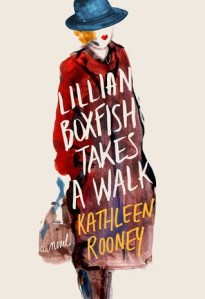
Today I’m revisiting a book that I reviewed in the early days of my blog: the engaging and witty, Lillian Boxfish Takes A Walk by Kathleen Rooney, published in January 2017.  It will be available in paperback in April 2018.

Lillian Boxfish Takes A WalkAbout the Book

It’s the last day of 1984, and 85-year-old Lillian Boxfish is about to take a walk.

As she traverses a grittier Manhattan, a city anxious after an attack by a still-at-large subway vigilante, she encounters bartenders, bodega clerks, chauffeurs, security guards, bohemians, criminals, children, parents, and parents-to-be—in surprising moments of generosity and grace. While she strolls, Lillian recalls a long and eventful life that included a brief reign as the highest-paid advertising woman in America—a career cut short by marriage, motherhood, divorce, and a breakdown.

A love letter to city life – however shiny or sleazy – Lillian Boxfish Takes a Walk paints a portrait of a remarkable woman across the canvas of a changing America: from the Jazz Age to the onset of the AIDS epidemic; the Great Depression to the birth of hip-hop.

Format: Hardcover, ebook (297 pp.)   Publisher: St Martin’s Press
Published: 17th January 2017               Genre: Literary Fiction

Purchase Links*
Amazon.co.uk ǀ  Amazon.com
*links provided for convenience, not as part of any affiliate programme


Find Lillian Boxfish Takes A Walk on Goodreads


My Review

Lillian is stylish, witty (even waspish at times), single-minded, successful, generous but also a woman whose life has not followed an untroubled path.  During her walk on New Year’s Eve, we learn about her pioneering career in advertising, her relationships and get hints of darker times that are only fully revealed towards the end of the book.  Lillian takes pride in her ability to use words as tools (whether to craft advertising copy or poetry) but also, on occasions, as weapons. Some of my favourites “Lillianisms” include:

“My mother resented Sadie like a stepsister resenting Cinderella, but she was polite. She did her no social violence.”

“This time of year is depressing. New Year’s Eve is a bigger thug than any mugger, the way it makes people feel.”

(About her colleague and bête noire, Olive): “I marvelled at her mother’s prescience in having named her daughter after a green – with envy – cocktail garnish: hollow and bitter.” Ouch!

(About her other bête noire, Julia): “She had a beautiful smile, if you like people who have thousands of teeth and no evident capacity ever to be sad.” Double ouch!

As well as the story of Lillian’s life, the book is a love letter to New York (“Any day you walk down a street and find nothing new but nothing missing counts as a good day in a city you love. People are forever tearing something down, replacing something irreplaceable”) and a celebration of walking and the art of flanerie (“Typically neither closeness nor distance matter much to me on my walks. Neither convenience nor difficulty is my objective”).

Another theme seems to be how bigotry and prejudice can cause people to miss out on potentially fulfilling relationships. I really enjoyed the book but, for me, not all of Lillian’s encounters during her walk were as successful or as meaningful as others. I was interested to learn that Lillian is inspired by a real person – Margaret Fishback, who, like her fictional counterpart, was a poet and the highest-paid female advertising copywriter in the world in the 1930s.  You can find out more about Margaret Fishback here.

I received an advance review copy courtesy of NetGalley and St. Martin’s Press

Follow my blog with Bloglovin

In three words: Stylish, witty, engaging


Kathleen RooneyAbout the Author

Kathleen Rooney is a founding editor of Rose Metal Press and a founding member of Poems While You Wait, a team of poets and their typewriters who compose commissioned poetry on demand. She teaches English and Creative Writing at DePaul University and is the author of eight books of poetry, nonfiction, and fiction. A winner of a Ruth Lilly Fellowship from Poetry magazine, her reviews and criticism has appeared in the New York Times Book Review, The Chicago Tribune, The New York Times Magazine and elsewhere. She lives in Chicago with her spouse, the writer Martin Seay. Lillian Boxfish Takes A Walk is her second novel.

Connect with Kathleen

Website ǀ  Twitter  ǀ  Goodreads


Q&A: Getting Home by Wolfe Butler

When an author contacts you about reviewing their book and the description sounds intriguing, it’s frustrating to know it’s going to be several months before you’ll be able to  read and review their book.  Such is the case when Wolfe Butler contacted me about his novel, Getting Home.    However, although it’s going to be a while until I get to read it, that doesn’t mean I should hide it away from followers of my blog who may not have such large review piles as me.

I’m pleased to say, Wolfe has agreed to answer some questions about Getting Home, including the inspiration for the book and his own very personal writing journey.  If it sparks your interest in the book, you can find purchase links below.

Follow my blog with Bloglovin


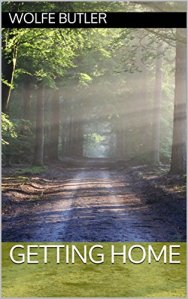
Getting HomeAbout the Book

Dealing with a past he cannot remember, a future he is not sure he wants and questioning everything from his sanity to his sexuality, Tom Jacobs feels ever more certain that the only solution is to end it all. A high level career, a perfect marriage, a power family – from the outside Tom seems to have everything he could want. Yet, try as he will, he cannot seem to escape a constant need to run. Plagued with nightmares and an ever increasing need to control his life with alcohol, Tom is spinning out of control. What begins as a mission to end it all becomes a twenty year journey to the life he was meant to live. With unexpected turns, heartbreaking revelations and unlikely allies Tom is finally on the road that leads to Getting Home.

Format: eBook, paperback (218 pp.)      Publisher:
Published: 9th November 2017                Genre: Literary Fiction

Purchase Links*
Amazon.co.uk ǀ  Amazon.com ǀ Author Website
*links provided for convenience, not as part of any affiliate programme

Find Getting Home on Goodreads


Interview with Wolfe Butler, author of Getting Home

Without giving too much away, can you tell me a bit about Getting Home?

Getting Home is the story of Tom Jacobs and his journey of self-discovery. When we first meet Tom, he is from an affluent family, has a perfect girlfriend he intends to marry and a career that men twice his age are still fighting for. Not everything is as it seems, though, and Tom is fighting internal monsters that are threatening to break out. The internal battle becomes so overwhelming that Tom decides his only option is to leave everything behind.

What was the inspiration for the book?

I have agonized over this question. I started Getting Home over fifteen years ago. I remember deciding that rainy August afternoon that I was going to start writing again. What become the Prologue for the book was really just stream-of-consciousness writing. After a few minutes, as happens so frequently with authors, a small voice started to speak in the back of my mind. Tom Jacobs was born and told me his story.

Getting Home is your first published novel.  Can you tell us a bit about your writing journey?

There is so much to be said here. While I have always loved writing, I never really felt that I would be willing to put anything out for others to judge. Getting Home became my therapy. I lost the love of my life during the journey. Tom and his battles became the way I learned to deal with all the painful emotions that were eating away at me. There was also a certain amount of liberation of being able to do anything with Tom’s world with no real-world consequences. It really helped me make a lot of important life choices.

What was the biggest challenge you encountered when writing the book?

Self-doubt was number one. I would sit down and write a few chapters and be so excited about the story. Then the doubt would set in. I would tell myself it was terrible, and no one would ever want to read it. Inevitably, I would shelve it until inspiration hit again a year or two later. [Cathy: I reckon many authors will identify with this.]

What advice would you offer to writers working on their own first novel?

Just. Keep. Writing. I could kick myself for not writing Tom’s whole journey when I first started the book. But then again, it would likely be a very different book because my life experience over the fifteen years is largely what shaped Tom’s story.

I read a quote recently from Stephen King, “Write a page a day, only 300 words, and in a year, you have written a novel.” Simple words but profound. I think especially as new writers we are overwhelmed by the scope of 80,000-100,000 words or more. Break it down and commit to 300 per day. Likely you will write more than 300 and be done in no time.

Your bio photo shows a figure with a suitcase.  Is travel an important element of your inspiration for writing?

First, I must admit, the picture is not me. Rather it is a stock image. I currently do not have any quality pictures of me. I do not like to be photographed, but I am working on it and hope to post some soon. I chose that picture for my profile because it fits the character of Tom Jacobs and his journey.

I do love to travel, though my greatest inspirations always seem to come from everyday life. The overly well-dressed man at the coffee shop. The tired mom in the grocery store with four small children. The obnoxious loud mouth at the end of the bar. There are characters everywhere. People inspire me more than anything.

On your blog you’ve recently started to publish book reviews.  How do you view the prospect of being on the receiving end of reviews of your own book?

Honestly, it terrifies me, but with an odd excited terror, like riding a roller coaster or going through a haunted house. I know not everyone will love Getting Home the way I do. I do not think it is perfect, but I finally pushed myself into publishing so I would stop working on it and move forward. My only hope is that the bad reviews will come with some clear direction as to why the reviewer hated the book. I want this to be a growing experience. Just saying, “It stinks!” or worse does not help anyone.

Do you think the story of Tom Jacobs, the protagonist of your novel, would have been different if he’d followed the advice of one of your own ‘Life Lessons’, namely to fill one’s life with positive people?

I believe sometimes in our lives we choose our journeys and sometimes our journeys choose us. Tom was destined to ultimately live the life he ended up with. There was someone waiting for him that needed him. Readers will understand when they read the book. No, I think no matter what pithy advice Tom may have been given, even if he tried to apply it, he still would have done the same things.

Which other writers do you admire or enjoy reading?

Wow, this could be a long answer. Michael Crichton is probably my favourite, if I had to choose just one. He was one of the greats that we lost much too soon. His book, Sphere, has been a favourite for decades. I also have great admiration for Dan Brown and Nicholas Sparks. Dan Brown really knows how to build anticipation and play out action in a way that keeps you turning pages. Nicholas Sparks knows how to make you feel emotions and fall in love. Jane Austen, though that may be a little cliché, is my other favourite. Pride and Prejudice is a masterpiece and the only book I have read many times. Of course, it also helps that it was the favourite of my wife.

What are you working on next?

I have six works going right now. The two I am most excited about are quite different. The first is a science fiction tale of a man who wakes up in a professed paradise but with no memories leading up to that day. He starts to have vivid dreams that make him doubt which is reality, the daily life or the dreams.  The other is more of a romance but also dealing with memory loss. This time it is a woman who wakes up in a large estate house, badly injured and with no memories. I am not far along with this one, but I already know that nothing is as it seems. I do, however, have the draft opening chapter for this one posted on my blog.


About the AuthorWolfe Butler

Wolfe writes: ‘My name is Wolfe Butler. I have been an avid reader and writer most of my life. Like so many other writers, I did not believe in myself enough to think that I could make a living as a writer, so I pursued a professional career in financial services. Twenty years later and I am not as young as I once was, but I am taking the time to pursue my passion and really give writing a chance.’

Connect with Wolfe

Website ǀ  Facebook  ǀ  Twitter ǀ  Goodreads