I’m so grateful to Pankaj Giri for sending me a review copy of his book, The Fragile Thread of Hope, which I’m looking forward to reading soon. You can read an extract from the book here. I’m delighted that Pankaj has spared time from his writing and blogging – not to mention reading enthusiastic reviews of his book – to answer some questions about the inspiration for The Fragile Thread of Hope and his very personal writing journey.
Follow my blog with Bloglovin
 About the Book
In the autumn of 2012, destiny wreaks havoc on two unsuspecting people – Soham and Fiona. Although his devastating past involving his brother still haunted him, Soham had established a promising career for himself in Bangalore. After a difficult childhood, Fiona’s fortunes had finally taken a turn for the better. She had married her beloved, and her life was as perfect as she had ever imagined it to be. But when tragedy strikes them yet again, their fundamentally fragile lives threaten to fall apart. Can Fiona and Soham overcome their grief? Will the overwhelming pain destroy their lives?
Praise for The Fragile Thread of Hope
“Pankaj’s characters certainly evoke sympathy and throw light on important social issues. A good read.” (Chitra Divakaruni, award-winning bestselling author of The Palace of Illusions)
“An epic tale of love, loss, hope and faith that will remain with you long after the final page. With its lovely characters and beautiful prose, it ranks right up there with my favourites.” (Renita D’Silva, award-nominated bestselling author of The Forgotten Daughter)
“A literary masterpiece!” (Keshav Aneel, bestselling author of Promise Me A Million Times)
Format: eBook (408 pp.) Publisher:
Published: 29th October 2017 Genre: Contemporary Fiction
Purchase Links*
Amazon.co.uk ǀ Amazon.com
*links provided for convenience, not as part of any affiliate programme
Find The Fragile Thread of Hope on Goodreads
Interview with Pankaj Giri, author of The Fragile Thread of Hope
Without giving too much away, can you tell me a bit about The Fragile Thread of Hope?
The Fragile Thread of Hope is an emotional, inspirational fiction about love, loss, family, and finding hope in the darkest of times. Seasoned with the flavours of exotic Nepalese traditions and set in the picturesque Indian hill station, Gangtok, it explores the themes of spirituality, faith, alcoholism, love, and guilt while navigating the complex maze of family relationships. Inspirational and heart-wrenchingly intimate, it urges you to wonder – does hope stand a chance in this travesty called life?
What was the inspiration for the book?
After my father’s sudden death, an avalanche of feelings passed through me. I realized how shocking death could be and how life can snatch people from you when you believe that they will always be with you. I realized that you shouldn’t take anyone for granted. Then, as I read other books like The Kite Runner and The Lowland, a plot began forming in my mind. I felt like weaving a story based on love, loss, and family relationships. Gradually, the characters developed in my mind, and scenes began taking shape and haunting me. After a few weeks, the characters began putting pressure on me, as if prodding me to bring them to life on the canvas of my novel. Then, as I finally obliged, The Fragile Thread of Hope was born.
You’ve previously co-authored a book (Friendship Love and Killer Escapades, with Apoorv Wanikar). What was the most useful thing you learnt from that experience?
With Friendship Love and Killer Escapades, I stepped into the challenging yet intriguing world of literature. At that time, I had not read many books and, frankly speaking, I didn’t even know how to write a book. I was in a hurry to publish, and in that process, I ended up making a lot of mistakes. And then when the brutally honest reviews started pouring in, the harsh realization kicked in – I needed to make a lot more effort to actually write a decent book. Thereafter, I worked very hard on my language and writing skills and read many critically acclaimed books. Slowly, in time, I began understanding the properties that a good book should possess. I used that knowledge and experience while writing The Fragile Thread of Hope, and I feel that I have managed to write a decent book this time.
What was the biggest challenge you encountered when writing The Fragile Thread of Hope?
One of the biggest challenges that I felt while writing The Fragile Thread of Hope is to make sure that I managed to bring out the right emotions in the reader at the right places. That is because I have read scenes in many books where the author wants the reader to feel a certain emotion, and I felt a contradictory emotion. I wanted to avoid that as much as possible, and I felt extremely satisfied when recently one esteemed blogger specifically mentioned that she felt the right emotions at the right places.
The second biggest challenge I faced was to reduce the ‘cheesiness’ in romantic scenes. I needed to keep the romance intact and yet trim the corny factor. I had to edit and rewrite many dialogues and paragraphs several times to try achieving that. I can’t say that I have been 100% successful, but I have tried my best to do it.
The third biggest challenge was to maintain an acceptable balance while describing ambiance and emotions. You want readers to be able to feel as if they are sensually (via sights, sounds, smells) in the scene, but you don’t want to bore them with excessive description as well. You want the readers to feel the character’s emotions, but you don’t want it to be repetitive as well. My beta readers and editors helped me, but somewhere you need to draw a line and decide that a particular line(s) has to go. It is a tough task and thus one of the biggest challenges while writing a novel.
At what point did you decide on the structure of the book, with the stories of the two main characters running in parallel and only converging towards the end of the book?
I decided the structure at the very beginning itself.
Reviewers have praised the way the book brings alive the cultural traditions of Nepal. Was this something that was important to you?
 This was certainly important to me. I wanted my book not only to be a relatable tale of love, loss, family, and hope but also to showcase the exotic yet rich Nepali culture and traditions to readers all over the world.
I wanted them to get a glimpse of my native place Sikkim – a beautiful hilly state in Northeast India – as well.
On your blog you describe yourself as ‘an author by chance’. Why do you say that?
Thank you for noticing that :).
I am an author by chance because I never ever dreamt of being an author. I was a software engineer working in Bangalore, and I didn’t even use to read much, let alone writing. However, after my father passed away, I had to leave my promising job and relocate to my native place, Gangtok. I did manage to somehow find a decent government job and settle down there….but lost in the dark lanes of despair, I was facing difficulty in moving on. Then, one day my mother suggested to me – why don’t you start writing? She reminded me how I used to write articles for my school magazine during my childhood. The thought stuck with me, and I decided to try it out. Strangely, almost immediately, I fell in love with writing. The rest is history.
On your blog you also publish book reviews. What has it been like being on the receiving end of reviews of your own book?
It is exciting as well as scary. It is easy to express your honest views about other books, but when it comes to your own, you do get nervous. However, I don’t mind honest reviews, even if they are a bit critical at times. It’s not that I don’t feel bad after reading a harsh review, but after some time I go through it once again rationally and try my best to find out areas of improvement and work on them. Critical reviews are necessary for a writer who wants to improve, but I have seen some commercially successful writers who shy away from negative reviews. Due to that, they keep making the same mistakes and thus keep getting negative reviews, despite the commercial success of the book. That is something I like to avoid, so I take negative reviews in the right spirit.
Which other writers do you admire?
Khaled Hosseini for his simple yet lyrical voice and the way his stories can wrench your heart. Renita D’Silva for her humility and kindness despite being a fabulous, accomplished, and critically acclaimed author. A Daughter’s Courage, her latest novel, is the best book I have ever read. I cherish our friendship and adore her brilliant, descriptive writing. Chitra Banerjee Divakaruni for her mastery of poetic prose. She is also such a kind-hearted person, and I’m blessed to know her.
What are you working on next?
I have a couple of stories floating in my brain, but there is nothing concrete yet. I will take time, and unless I find a powerful story, I won’t even think of sitting down to write.
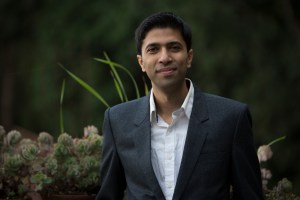 About the Author
Pankaj Giri was born and brought up in Gangtok, Sikkim – a picturesque hill station in India. He began his writing career in 2015 by co-authoring a book – Friendship Love and Killer Escapades (FLAKE). Learning from experience and the constructive criticism that he got for his first book, he has now written a new novel, The Fragile Thread of Hope, a mainstream literary fiction dealing with love, loss, and family relationships. He is currently working in the government sector in Sikkim. He likes to kill time by listening to progressive metal music and watching cricket.
Connect with Pankaj
Website ǀ Facebook ǀ Twitter ǀ Instagram ǀ Goodreads


 About the Book
 About the Author

 What Cathy Read Next...