Book Review – The Secret History by Donna Tartt

About the Book

Under the influence of their charismatic classics professor, a group of clever, eccentric misfits at an elite New England college discover a way of thinking and living that is a world away from the humdrum existence of their contemporaries. But when they go beyond the boundaries of normal morality their lives are changed profoundly and for ever.

Format: Audiobook (22h 4m) Publisher: Penguin
Publication date: 30th September 2010 [1992] Genre: Thriller

Find The Secret History on Goodreads

Purchase The Secret History from Bookshop.org [Disclosure: If you buy books linked to our site, we may earn a commission from Bookshop.org, whose fees support independent bookshops]


My Review

I first read this when it was published in paperback in 1993 but I was given an opportunity to reread it when it was picked by my book club as a change from the new releases we usually choose. Like me, many book club members came along clutching their own battered copies of the book. I decided to listen to the audiobook as it is narrated by the author. I have to say she does a brilliant job of bringing the characters she created to life.

The Secret History is a long book and it isn’t until about the half way point that the murder (which we know pretty much from the beginning will take place) occurs. But somehow the author manages to keep the tension going through those first three hundred pages as our narrator, Richard Papen, describes the events that lead up to the murder and then its aftermath.

Newly arrived at Hampden College in Vermont, Richard becomes part of a group of students studying Ancient Greek under the tutelage of classics professor Julian Morrow, who limits enrolment in his classes to a hand-picked coterie. Unlike Richard, the other five – Henry, Francis, Bunny and twins, Camilla and Charles – come from privileged backgrounds. Richard is dazzled by them but finds himself amongst people who, unlike him, don’t have to worry where the next dollar will come from. This results in him having to tell elaborate lies about his background and hide his penury, even if that means nearly freezing to death during a Vermont winter. Bunny, although his parents are rich, has been cast adrift as a kind of challenge to make his own way in the world, his response to which is to sponge off his well-off friends.

This is not a story where you find yourself rooting for any of the characters; they’re all pretty unlikeable, including the victim. If I had to pick the least unlikeable it would be Francis who does act most like a true friend to Richard. The group indulge in a hedonistic lifestyle of wild parties, drink and drugs. Not much study seems to go on. Their willingness to see themselves as outside normal moral boundaries results in a series of shocking events which finds them increasingly needing to lie and deceive others. Richard willingly goes along with them because of his desire to remain part of the group. The author shows us how their actions leave them, in different ways, irrevocably damaged by the act of having taken another’s life.

Immersive is an often overused word but it’s fully justifiable as a description of The Secret History, the book which effectively gave rise to the dark academia literary genre.

In three words: Dark, suspenseful, compelling
Try something similar: If We Were Villains by M. L. Rio


About the Author

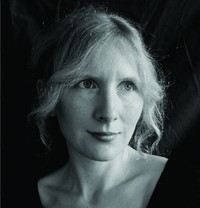
Author Donna Tartt

Donna Tartt is an American author who has achieved critical and public acclaim for her novels, which have been published in forty languages. In 2003 she received the WH Smith Literary Award for her novel, The Little Friend, which was also nominated for the Orange Prize for Fiction. She won the Pulitzer Prize and the Andrew Carnegie Medal for Fiction for her most recent novel, The Goldfinch. (Photo: Goodreads)

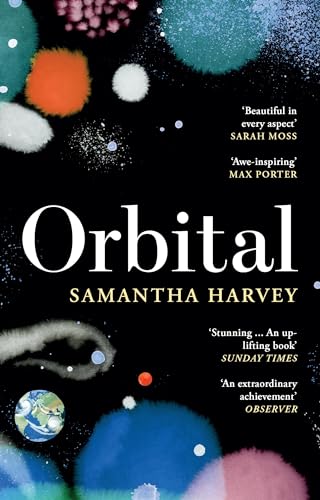
Book Review – Orbital by Samantha Harvey

About the Book

Six astronauts rotate in their spacecraft above the earth. They are there to collect meteorological data and conduct scientific experiments. But mostly they observe. Together they watch our silent blue planet: endless shows of spectacular beauty witnessed in a single day.

Yet although separated from the world they cannot escape its constant pull. News reaches them of the death of a mother, and with it comes thoughts of returning home. The fragility of human life fills their conversations, their fears, their dreams.

So far from earth, they have never felt more part – or protective – of it. They begin to ask, what is life without earth? What is earth without humanity?

Format: Paperback (135 pages) Publisher: Vintage
Publication date: 5th December 2023 Genre: Contemporary Fiction

Find Orbital on Goodreads

Purchase Orbital from Bookshop.org [Disclosure: If you buy books linked to our site, we may earn a commission from Bookshop.org, whose fees support independent bookshops]


My Review

‘A hand-span away beyond a skin of metal the universe unfolds in simple eternities.’

This is just one of the stunning sentences that feature in the small but perfectly formed Orbital. Viewed by the astronauts as they orbit the planet, Earth is ‘an unbounded place, a suspended jewel so shockingly bright’. In the course of one day they see daybreak and nightfall as they travel over continents. The fragility of the Earth is brought home as they track the progress of a huge typhoon, able only to measure its movement and observe – later – the damage it has wrought while they slept.

But their existence is fragile too, reliant on the protection of the spacecraft, the remote monitoring of their vital signs, and on each other.

I loved the frequent juxtapositions the author creates. For example, that the astronauts must be at peak fitness in order to undertake the mission yet they will return to Earth less healthy as a result of their time in space. ‘These hearts, so inflated with ecstasy at the spectacle of space, are at the same time withered by it.’ They look down on a living planet but from a place where they could not survive without the spacecraft, and only then if it remains intact. Seen from space the Earth has no visible borders yet they know below there is conflict over those very same borders. And although the astronauts come from a range of countries, the spacecraft is not quite a ‘nationless, borderless outpost’. As mandated by their government, the Russians use a separate toilet and shabbier sleeping quarters.

Thanks to the author’s in-depth research, there is fascinating detail about life aboard the space station, including the practical difficulties of moving around, eating and carrying out everyday activities. And the sort of chores you encounter on Earth still need to be carried out: emptying the rubbish, cleaning toilets.

If there is a weakness in the book, it’s character development. Of the six it was only Chie, the Japanese astronaut, I felt I got to know really well. She feels most keenly the vast distance between herself and Earth when she learns of the death of her mother, sad that she will be unable to carry out the traditional rituals. She calms herself by making lists of ‘anticipated things’, things she will be able to experience or do once back on Earth, such as slamming a door in anger. Tasked with carrying out scientific experiments on mice that require precision and a degree of detachment, she neverthless feels a tenderness towards them as they, like her, struggle to adapt to zero gravity.

There is one particularly striking chapter – ‘Orbit 13’ – that captures the infinitesimally small period of human existence in the ‘cosmic calendar of the universe of life’. Taking the starting point of the Big Bang as 1st January, humans – ‘the most opportunistic and crafty [life]form’ – don’t appear until mid-afternoon on 31st December. And it’s only in the closing second of the year that a vast array of things appear: inventions, scientific discoveries, artistic and philosphical concepts, the birth of famous individuals. The author delivers this in a wonderfully eclectic list that includes everything from teabags, the sprung mattress, W.B. Yeats and the split atom to crowdfunding.

The book has a strong ecological message about the damage being wrought on the Earth by human activity. And not just on the planet either because spacecraft must today navigate through the junkyard of debris that lies in low-Earth orbit. We litter wherever we go, seemingly.

Orbital is one of those books that leaves you with something to ponder on every page, every paragraph even. I can understand why the judges saw fit to award it the Booker Prize.

In three words: Lyrical, thought-provoking, immersive
Try something similar: In This Ravishing World by Nina Schuyler


About the Author

Author Samantha Harvey

Samantha Harvey is the author of five novels, The Wilderness, All Is Song, Dear Thief, The Western Wind and Orbital. She is also the author of a memoir, The Shapeless Unease. Her novels have been shortlisted for the Orange Prize for Fiction, the Guardian First Book Award, the Walter Scott Prize and the James Tait Black Prize, and longlisted for the Man Booker Prize, the Baileys Prize, the Jerwood Fiction Uncovered Prize and the HWA Gold Crown Award. The Western Wind won the 2019 Staunch Book Prize, and The Wilderness was the winner of the AMI Literature Award and the Betty Trask Prize.

Orbital, was published in November 2023 by Jonathan Cape (UK) and Grove Atlantic (US). It was shortlisted for the Orwell Prize for Political Fiction and the Ursula K. Le Guin Prize for Fiction 2024. It is currently on the long list for the Climate Fiction Prize. It is the winner of The InWords Literary Award 2024, the 2024 Hawthornden Prize for Literature and the 2024 Booker Prize.

Samantha lives in Bath, UK, and is a Reader in Creative Writing at Bath Spa University.(Photo: Goodreads author page)

Connect with Samantha
Website