Book Review: The Salt of the Earth by Jozéf Wittlin

The Salt of the EarthAbout the Book

At the beginning of the twentieth century the villagers of the Carpathian mountains lead a simple life, much as they have always done. The modern world has yet to reach the inhabitants of this isolated and remote region of the Habsburg Empire. Among them is Piotr, a bandy-legged peasant, who wants nothing more from life than an official railway cap, a cottage with a mouse-trap and cheese, and a bride with a dowry.

But then the First World War comes to the mountains, and Piotr is drafted into the army. All the weight of imperial authority is used to mould him into an unthinking fighting machine, so that the bewildered peasant can be forced to fight a war as he does not understand, for interests other than his own.

Format: Hardcover (352 pp.)    Publisher: Pushkin Press
Published: 29th November 2018[1935] Genre: Literary Fiction

Purchase Links*
Publisher | Amazon.co.uk  ǀ  Amazon.com  ǀ Hive.co.uk (supporting UK bookshops)
*links provided for convenience, not as part of any affiliate programme

Find The Salt of the Earth on Goodreads


My Review

The Salt of the Earth is described by the publishers as ‘a classic war novel, a powerful pacifist tale about the consequences of war on ordinary men’.  Although I had never heard of the book or the author prior to coming across it on NetGalley, I can say that it certainly lives up to that description.  If you care to look for equivalents these probably include modern classics such as All Quiet on the Western Front by Erich Maria Remarque, Memoirs of an Infantry Officer by Siegfried Sassoon and Goodbye to All That by Robert Graves.  However, because of its mordant humour, dark satire and ridiculing of those in positions of authority, it also made me think of the film Oh! What a Lovely War.

The book satirizes the absurdities of war and the pompousness, self-importance and (often) ineptitude of those in positions of authority.  These include: Emperor Franz Joseph, ruler of the Austro-Hungarian Empire, presented as a buffoon-like figure, full of puffed-up pride who shows no hesitation in consigning hundreds of thousands of his citizens to war and certain death; and Regimental Sergeant-Major Bachmatiuk, ‘the fanatical expert and high priest of Military Discipline’ who sets more store by precise adherence to military regulations than to the welfare of his soldiers.

The only sympathetic character is poor Piotr, something of an ‘Everyman’ figure.  An illiterate peasant unable to tell his left from his right, he is nonetheless, like many of his fellow Hutsul villagers, drafted into the army of the Emperor.  Piotr is determined to do his duty even though it becomes obvious his trust of those in authority is completely misplaced.  They don’t value him as a human being; he’s just another cog in the machine of war.

I mentioned previously the dark humour and satire in the book, exemplified by the following passage: ‘Newspapers throughout the monarchy were publishing enthusiastic reports from the “theatres of war”, which differ from other theatres in that the actors are also the audience and the audience are the actors.  Every day, images of their directors and prima donnas of the war looked out at you from the newsprint, profiles of old men in uniform, avidly seeking applause, flaunting their immortality gained at the expense of the deaths of other.’  

Because the book is the first in a planned trilogy which was never completed, the reader doesn’t get to learn the fate of poor Piotr, although it is probably correct to assume it wouldn’t have been a happy one (like so many millions of others).

The Salt of the Earth has a fable like quality at time, some imaginative descriptive writing and a dark undertone, all of which it seemed to me was rendered in an accomplished manner by the translator, Patrick Corness.

I received a review copy courtesy of publishers, Pushkin Press, and NetGalley.

Follow my blog with Bloglovin

In three words: Satirical, dark, tragic

Try something similar… less satirical but no less tragicThe Winter Soldier by Daniel Mason (read my review here)


Jozef WittlinAbout the Author

Wikipedia  ǀ  Goodreads

Book Review: Paris Echo by Sebastian Faulks

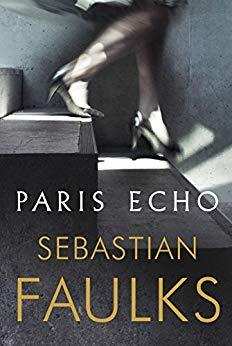
Paris EchoAbout the Book

Here is Paris as you have never seen it before – a city in which every building seems to hold the echo of an unacknowledged past, the shadows of Vichy and Algeria.

American postdoctoral researcher Hannah and runaway Moroccan teenager Tariq have little in common, yet both are susceptible to the daylight ghosts of Paris. Hannah listens to the extraordinary witness of women who were present under the German Occupation; in her desire to understand their lives and through them her own, she finds a city bursting with clues and connections. Out in the migrant suburbs, Tariq is searching for a mother he barely knew. For him, in his innocence, each boulevard, Métro station and street corner is a source of surprise.

Format: Hardcover, ebook (320 pp.)    Publisher: Hutchinson
Published: 6th September 2018     Genre: Literary Fiction

Purchase Links*
Amazon.co.uk  ǀ  Amazon.com  ǀ Hive.co.uk (supporting UK bookshops)
*links provided for convenience, not as part of any affiliate programme

Find Paris Echo on Goodreads


My Review

Paris Echo is one of those books where, whilst recognising the skill of the author and the quality of the writing, I found myself wondering if I was quite clever enough to understand everything the author was trying to communicate. It’s partly for that reason that I’m only now writing this review although I read the book some weeks ago…

The book explores a number of themes including abstruse (to me, at least) concepts such as ‘autoscopy’, the sense of being outside yourself and seeing yourself as if another person.  Tariq, one of the characters in the book, experiences this sensation on a couple of occasions.

The key theme, as suggested by the title, is how echoes of the past reverberate in the present.  For example, Hannah is returning to Paris where she studied previously to research the lives of women in Paris during the German occupation.  But she is also facing up to traumatic memories.  ‘Coming to the American Library when my real material lay elsewhere had been a frivolous thing to do; but I’d wanted to reconnect with my past before I pushed out into the unknown.’  The story told from Hannah’s point of view is interspersed with transcripts of recordings (fictionalised) that she listens to as part of her research.  I confess I did at times think this was merely a way for the author to insert chunks of historical detail into the book.

Tariq, on the other hand, is travelling to the place of his mother’s birth.  Hannah believes Tariq views Paris as ‘some sort of lost motherland’.  However, he never gets anywhere in finding out anything about his mother as far as I could see.

There were clever little touches that I liked such as the chapter headings being stations on the Paris Metro.  I also liked the sense of France’s past history being so present in a physical sense, with buildings, streets and stations named after historical, military and political figures.  ‘In Paris, where almost every street name was a nod to history…’  And the author doesn’t shy away from reminding the reader that France’s role in World War 2 encompassed collaboration as well as resistance.

However, there were many elements I struggled with.  For instance, Tariq encounters a girl named Sandrine on his journey to France.  Later, Hannah encounters Sandrine outside her building and Sandrine introduces Tariq to Hannah.  A nice neat circle, one thinks.  However, Sandrine then disappears completely from the story.

Tariq’s encounters with a woman he catches sight of one day and Hannah’s strange experience when visiting the site of a former concentration camp, left me frankly puzzled.  Were these experiences some sort of hallucination (drug-fuelled or otherwise) or intended to be manifestation of Hannah’s belief in ‘the impact of previous existences on every day I was alive…’?  I really don’t know but I’d love someone who’s read the book and thinks they know the answer to enlighten me!

I thought I would love Paris Echo but, sadly, I ended up merely confused.

Follow my blog with Bloglovin

In three words: Complex, thought-provoking, atmospheric

Try something similar…for a fictional treatment of SOE operations in World War 2, Night Flight to Paris by David Gilman or for firsthand testimony of life under German occupation,  A Countess in Limbo by Olga Hendrikoff and Sue Carscallen (click on titles to read my reviews)


MV 001About the Author

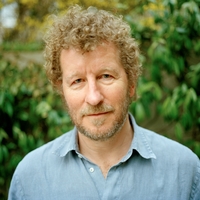
Sebastian Faulks was born in 1953, and grew up in Newbury, the son of a judge and a repertory actress. He attended Wellington College and studied at Emmanuel College, Cambridge, although he didn’t enjoy attending either institution. Cambridge in the 70s was still quite male-dominated, and he says that you had to cycle about 5 miles to meet a girl.

He was the first literary editor of The Independent, and then went on to become deputy editor of The Sunday Independent. Sebastian Faulks was awarded the CBE in 2002. He and his family live in London.

Connect with Sebastian

Website  ǀ  Twitter  ǀ  Goodreads