Book Review: A Devil Comes To Town by Paolo Maurensig (trans. by Anne Milano Appel)

A Devil Comes to townAbout the Book

A small village full of aspiring writers + The devil in the form of a hot-shot publisher = A refined and engaging literary fable on narcissism, vainglory and human weakness

Wild rabies runs rampant through the woods. The foxes are gaining ground, boldly making their way into the village. In Dichtersruhe, an insular yet charming haven stifled by the Swiss mountains, these omens go unnoticed by all but the new parish priest. The residents have other things on their mind: Literature. Everyone’s a writer—the nights are alive with reworked manuscripts. So when the devil turns up in a black car claiming to be a hot-shot publisher, unsatisfied authorial desires are unleashed and the village’s former harmony is shattered.

Format: Paperback (118 pp.)    Publisher: World Editions
Published: 9th May 2019    Genre: Literary Fiction

Purchase Links*
Amazon.co.uk  ǀ  Amazon.com
*links provided for convenience, not as part of any affiliate programme

Find A Devil Comes To Town on Goodreads


My Review

This is a curious little novel. A story within a story within a story, it’s a satire on literary pretensions, literary prizes and the ends to which people will go to gain recognition of their (supposed) literary talents. Literary society is a ‘place where vainglory, fuelled by envy, grows immoderately, where even the most banal thoughts – as long as they are printed in type – are accepted as absolute truth’.

The Swiss village to which Father Cornelius is sent is a strange place. It’s isolated and the inhabitants are not well-disposed to outsiders. A macabre note is introduced by the presence of foxes infected with rabies in the forests surrounding the village. This coincides with the arrival of a curious personage, Bernard Fuchs, purporting to be a publisher from Lucerne. In a village where everyone believes themselves an author awaiting discovery, he is initially greeted like a hero and fawned over at every turn. However, Father Cornelius is firmly convinced that Fuchs is the devil in human form, although he struggles to persuade other villagers of this.

There’s playful humour about the process of writing, editing and submission. Employed to sift through piles of manuscripts, Father Cornelius imagines the response he’d really like to give: ‘Tear up the pages of your manuscript one by one…rewrite it ten times, eliminate at least a dozen adjectives on each page, take your wasted paper and toss it in the fire’.

Things turn nasty when rejection letters start to be delivered and secrets from the past seem set to be revealed. Does Father Cornelius defeat the devil? You wouldn’t expect a book about storytelling to end with everything neatly tied up and in A Devil Comes To Town it certainly doesn’t.

I received a review copy courtesy of publishers, World Editions.

Follow my blog with Bloglovin

In three words: Quirky, playful, satire

Try something similar…The 7th Function of Language by Laurent Binet (read my review here)


Paolo MaurensigAbout the Author

Paolo Maurensig was born in Gorizo and lives in Udine, Italy.  Now a bestselling author, he debuted in 1993 with The Luneburg Variations, translated into twenty-five languages, and selling over 2 million copies in Italy. His novels include Canone Inverso, The Guardian of Dreams and The Archangel of Chess.  He plays the baroque flute, viola de gamba, and the cello. (Photo credit: Goodreads author page)

Connect with Paolo

Website  ǀ  Goodreads

Blog Tour/Book Review: Pilgrim by Louise Hall

Pilgrim Blog Tour Poster

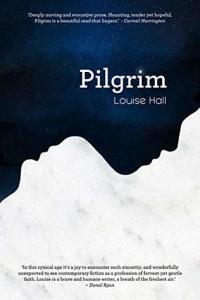
I’m delighted to be hosting today’s stop on the blog tour for Pilgrim by Louise Hall.  You can read my review below.  Thanks to Anne at Random Things Tours for inviting me to participate in the tour and to Mercier Press for my review copy.


PilgrimAbout the Book

In Dublin, fourteen-year-old Jen and her father, Charlie, are struggling to cope with the death of their mother/wife. Charlie, in particular, seems to have given up on life. When Jen’s aunt, Suzanne, convinces them to go on a pilgrimage to a strange village in Yugoslavia, there is hope that some solace or healing may be brought to their broken lives.

On their arrival, however, they find a village in upheaval. An influx of pilgrims have swarmed into the village, each looking for their own miracle. Then there are the local police, who aim to suppress this so-called `revolution’. Amid all this, Jen makes a friend, Iva – one of the children who claims to have seen the Virgin Mary.

Told with a deep humanity and grace, Pilgrim is a story about a man who feels he has nothing to live for, and a daughter who is determined to prove him wrong. A nuanced and moving exploration of grief and faith.

Format: Paperback (288 pp.)    Publisher: Mercier Press
Published: 14th September 2018   Genre: Literary Fiction

Purchase Links*
Amazon.co.uk  ǀ  Hive.co.uk (supporting UK bookshops)
*links provided for convenience, not as part of any affiliate programme

Find Pilgrim on Goodreads


My Review

Pilgrim takes the reader on an emotional as well as an actual journey to a small village in Yugoslavia where six children have experienced a vision of the Virgin Mary. It comes at a time (the early 1980s) of turbulence in that country. Alternating between the points of view of a few key characters, including Iva, one of the six children, and the Franciscan priest who tries to protect them, the book explores the experiences of the pilgrims who flock to the village. The political upheaval in Yugoslavia and its impact on the inhabitants also features but very much as background. Pilgrim is more a book about people than events.

I liked the device the author often used of allowing the reader to experience the events of the same day but from different points of view – Iva and Jen, Jen and Charlie, and so on. I also enjoyed some of the characters created by the author who populate the background of Dublin. For example, the ‘smelly butcher’ (as remembered by Charlie) or Boris the travel agent (as encountered by Louis).

There’s some great close observation of even those with mere walk-on parts such as a newspaper vendor at the seaside recalled by Sarah’s sister, Suzanne.  ‘Along this strip there was always a man with a white badger streak in the centre of his coal-black hair who sold newspapers. He placed stones on top of the newspapers to stop the pages fluttering in the light wind and he sat on a grey plastic crate with his nose stuck in a battered book.’ These reminiscences by the main characters, such as Jen’s adventures with her childhood friend Francis, provide interesting side roads for the reader to explore. Temporary detours, if you like, from the main storyline.

The author really captures an Irish lilt in the speech and thoughts of Charlie especially. Having said that, Charlie is the character I struggled most to empathize with. His predominant characteristics seemed to be self-pity and self-absorption. His lack of regard for his daughter, Jen – struggling with her own grief, after all – even for her basic safety and welfare was staggering at times. I often had to remind myself who was the adult and who the child! However, I guess the author was trying to show what grief and loss can do to a person. And I was forced to revise my view of him towards the end of the book. There’s often more to a story – and to a person – than you can know.

All the characters the reader encounters in the book have had tragedy in their lives, often the sudden and unexpected loss of a loved one. Although their response to these tragic events varies, for all of them it has been life-changing. One might expect a book in which the characters have experienced such sadness to be sad as well. Although it undoubtedly is in parts, the overwhelming message I took from the book is one of hope – for redemption, for forgiveness, for release from the burden of guilt and for the possibility of starting over again. Oh, and never take for granted those you love because everything can change in a heartbeat.

I received a review copy courtesy of publishers, Mercier Press, and Random Things Tours.

Follow my blog with Bloglovin

In three words: Emotional, spiritual, intense

Try something similar…The Things We Cannot Say by Kelly Rimmer (read my review here)


LouiseHallAbout the Author

Louise Hall is from Malahide, Co. Dublin. She has previously published two works of non-fiction, Medjugorje: What it Means to Me and Medjugorje and Me: A Collection of Stories from Across the World.

Her fiction has been published in The Irish Times and been shortlisted for numerous competitions, such as the RTÉ Guide/Penguin Short Story Award, the Colm Tóibín International Short Story Competition and the Jonathan Swift Creative Writing Awards. Pilgrim is her debut novel.

Connect with Louise

Website  ǀ  Twitter  ǀ  Instagram ǀ Goodreads