#BookReview Nick by Michael Farris Smith @noexitpress

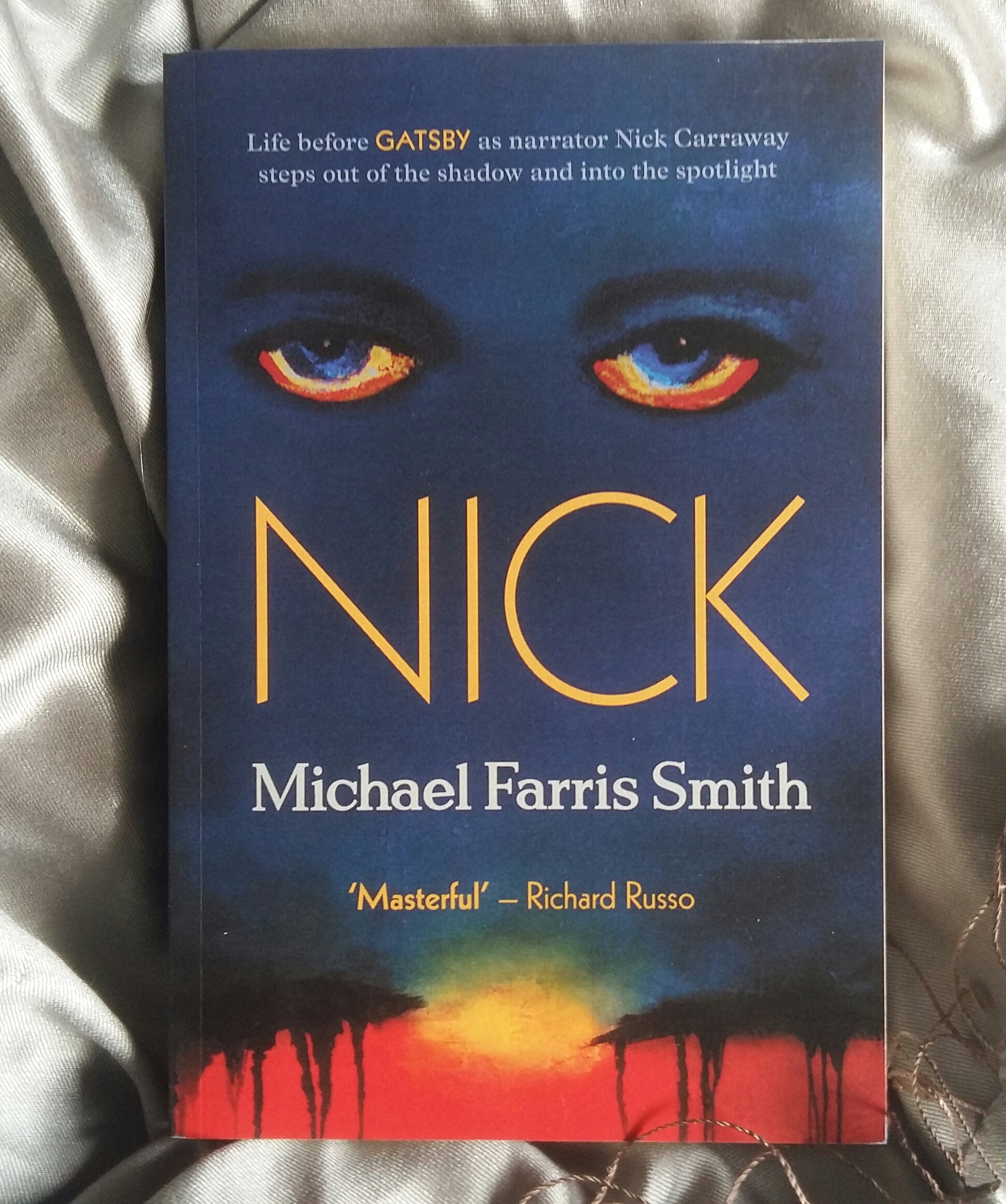
NickAbout the Book

Before Nick Carraway moved to West Egg and into Gatsby’s world, he was at the centre of a very different story – one taking place along the trenches and deep within the tunnels of World War I. Floundering in the wake of the destruction he witnessed first-hand, Nick embarks on a redemptive journey that takes him from a whirlwind Paris romance – doomed from the very beginning – to the dizzying frenzy of New Orleans, rife with its own flavour of debauchery and violence.

Charged with enough alcohol, heartbreak and yearning to transfix even the heartiest of golden age scribes, Nick reveals the man behind the narrator who has captivated readers for decades.

Format: Hardcover (320 pages)           Publisher: No Exit Press
Publication date: 25th February 2021 Genre: Literary Fiction, Historical Fiction

Find Nick on Goodreads

Purchase links
Bookshop.org
Disclosure: If you buy a book via the above link, I may earn a commission from Bookshop.org, whose fees support independent bookshops

Hive | Amazon UK
Links provided for convenience only, not as part of an affiliate programme


My Review

The year 2021 marks the 125th anniversary of F. Scott Fitzgerald’s birth and his most famous novel, The Great Gatsby, coming out of copyright in the USA. Nick is described by the publishers as Michael Farris Smith’s attempt to pull Nick Carraway, the narrator of The Great Gatsby, ‘out of the shadows and into the spotlight’.

In his foreword to Nick, Farris Smith notes that, in The Great Gatsby, Nick provides very little information about himself. Essentially, the reader knows only that he fought in the Great War, he was from the Midwest and that he was turning thirty years of age. Using this sparse information as a starting point, the author sets out to imagine the events that shaped the character of Nick Carraway the reader will meet in The Great Gatsby.

Of the three things mentioned above, the fact he fought in the Great War is the biggest focus of Nick. Indeed, the scenes in the trenches of the Western Front were the most compelling parts of the book for me. There is a particularly gripping episode in which Nick joins the rest of his troop on an advance over rain-soaked terrain in a forest held by German forces. Later, Nick volunteers to work in the tunnels being excavated under the enemy trenches, becoming a “listener” whose role is to detect the sound of German troops or tunnellers. In a nod to his future role as narrator of The Great Gatsby, he proves himself an exceptionally good listener.  Later in the book, whilst working for a brief time in the family hardware shop, the author has him become a good observer too, noticing the mannerisms of customers and able to predict their needs before they express them.

Although the sections set in the war were descriptively the most compelling parts of the book for me, of course there is no sense of jeopardy for Nick himself, only for others around him; we know Nick will survive to appear in The Great Gatsby. What the author can do is explore the experiences that may have shaped him. Farris Smith does so by imagining a love affair between Nick and a woman called Ella he meets while on leave in Paris, and by having Nick haunted in the years to come by traumatic wartime memories that manifest themselves in nightmares and panic attacks.

There is very little reference to Nick’s early life in the Midwest, except for some brief childhood memories of his father’s despair at Nick’s mother’s periods of depression. Rather than returning home after the war, there is a long section of the book in which Nick travels to New Orleans. The destination is chosen on a whim reflecting the restlessness at the heart of his character. There he becomes involved with Judah, a wounded veteran of the Great War. ‘And if there is one thing the lost are able to recognise it is the others who are just as wounded and wandering.’  Some of the melodramatic events that follow felt a little out of character with the rest of the book for me although the atmosphere of the period is vividly recreated.

Nick is not so much a prequel to The Great Gatsby as a homage to Fitzgerald’s novel. Indeed, it’s only in the very final pages that Nick arrives at the location of the opening scenes of that book. This means readers unfamiliar with The Great Gatsby will find themselves at no disadvantage and can base their judgment of Nick solely on how successfully they feel Farris Smith has created a story about a young man who just happens to be called Nick.  For readers like myself who have read Fitzgerald’s original, it has definitely made me curious to read The Great Gatsby again and pay more attention to its narrator.

My thanks to Lisa at No Exit Press for my proof copy of Nick. You can watch a replay of the online launch of Nick during which Michael Farris Smith talked about the book with Alison Flood of The Guardian by clicking on the following link:  https://www.crowdcast.io/e/book-launch-of-nick-by 

In three words: Dramatic, intriguing, assured

Try something similar: The Road To Grantchester by James Runcie

Follow this blog via Bloglovin


Michael Farris SmithAbout the Author

Michael Farris Smith is an award-winning writer whose novels have appeared on Best of the Year lists with EsquireSouthern LivingBook Riot, and numerous others, and have been named Indie Next List, Barnes & Noble Discover, and Amazon Best of the Month selections. He has been a finalist for the Southern Book Prize, the Gold Dagger Award in the UK, and the Grand Prix des Lectrices in France, and his essays have appeared in the New York Times, the Bitter Southerner, Garden & Gun, and more. He lives in Oxford, Mississippi, with his wife and daughters. (Photo credit: Publisher author page)

Connect with Michael
Website | Twitter | Facebook | Instagram

#BookReview Light Perpetual by Francis Spufford

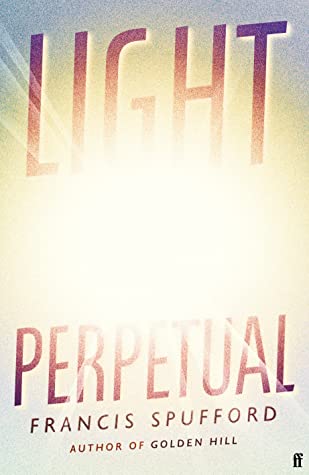
Light PerpetualAbout the Book

November 1944. A German rocket strikes London, and five young lives are atomised in an instant.

November 1944. That rocket never lands. A single second in time is altered, and five young lives go on – to experience all the unimaginable changes of the twentieth century.

Because maybe there are always other futures. Other chances. Light Perpetual is a story of the everyday, the miraculous and the everlasting. Ingenious and profound, full of warmth and beauty, it is a sweeping and intimate celebration of the gift of life.

Format: eARC (336 pages)                     Publisher: Faber & Faber
Publication date: 4th February 2021 Genre: Literary Fiction

Find Light Perpetual on Goodreads

Purchase links
Hive | Amazon UK
Links provided for convenience not as part of an affiliate programme


My Review

I loved Francis Spufford’s first book, Golden Hill and was intrigued by the premise of Light Perpetual. The opening chapter is certainly powerful – dare I say, explosive – describing the obliteration by a Nazi V2 rocket of a Woolworths store, and all the people in it, into fragments of atoms in a mere fragment of time. It was disappointing then, only a few chapters in, to realize the novel was becoming a bit of a slog. Not so much “light perpetual” as “book perpetual”, I found myself thinking.

I think one reason is the episodic nature of the book’s structure as the reader catches up with each character relatively briefly with longer and longer intervals between visits. Sometimes, the timing seemed more designed to coincide with some social change the author wanted to explore, such as the industrial unrest in Fleet Street at the end of the 1970s or the property boom of the 1990s. At one point I even considered not continuing with the book – not something I do very often – but in the end I did persevere.

I found myself questioning whether I actually cared much about the five characters whose lives the book follows. For example, I couldn’t find much in the way of sympathy for Vern who pursues a relentlessly selfish life, albeit showing the resilience to recover from a number of setbacks along the way. It seemed fitting when he is finally confronted by the victim of one of his business ‘opportunities’.

My favourite character was probably Jo, who seemed to come nearest achieving her potential in the life the author imagines for her. Even so that still means her musical talent goes unrecognised in an industry dominated by men.  Choosing to sacrifice the career she might have had because of family commitments, notably supporting her sister Val’s poor life choices, Jo observes, “This is an accident. There is no need for her life to have worked out like this at all. So many other possibilities.” 

I think it was this observation that helped me “get” what the author was trying to do.  Even more so when I read the acknowledgements at the end of the book in which he explains the story was inspired by a plaque commemorating those killed in a V2 attack on the New Cross Road branch of Woolworths in 1944. Effectively, Light Perpetual is the author’s memorial to the children who died that day and who, in his words, “lost their chance to experience the rest of the twentieth century”.

Although I may had issues with some elements of the book, I couldn’t fault the quality of the writing.  To borrow a musical metaphor, the book includes some virtuoso solos. For example, the episode in which bus conductor Ben struggles to gain control over his dark and tortured thoughts, or Jo’s whole class singing lesson which neatly echoes a scene from the beginning of the book. I also liked Alec’s observations about the mass of individuals he sees in a crowded Underground carriage.  ‘Every single one of these people homeward bound, like him, to different homes which are to each the one and only home, or else outward bound, to different destinations at which each will find themselves, as ever, the protagonist of the story. Every single one the centre of the world, around whom others revolve and events assemble.’

And I appreciated some of the subtle touches towards the end of the book, as the characters reach old age, that suggest the memory of the event that might have killed them but didn’t still persists in some form. For example, Ben’s feeling that, “Sometimes everything seems to be shaking to pieces, idea from idea, bone from bone, matter all flying apart into a broken heap, and then he thinks he can hear a huge sound, a rattling rolling crash he has somehow been living inside”. Or, glimpsing the former site of Woolworths from the bus, Jo’s sensation that the building is “flickering in and out of existence”.

The book is not the literary equivalent of the film It’s A Wonderful Life where you discover what would have been missing from the world had the children not been killed in the rocket attack. It’s more akin to the TV documentary series that started with 7Up showing how social and technological changes have affected the way people live. Overall, Light Perpetual is a book I admired rather than loved.

I received an advance review copy courtesy of Faber & Faber via NetGalley.

In three words: Thoughtful, imaginative, assured

Try something similar: Louis & Louise by Julie Cohen

Follow this blog via Bloglovin


About the Author

Francis Spufford’s debut novel, Golden Hill, won the Costa First Novel Award, the RSL Ondaatje Prize and the Desmond Elliott Prize, and was shortlisted for the Walter Scott Prize for Historical Fiction, the Rathbone Folio Prize, the Authors’ Club Best First Novel Award and the British Book Awards Debut Novel of the Year. Spufford is also the author of five highly praised works of nonfiction, most frequently described by reviewers as either ‘bizarre’ or ‘brilliant’, and usually as both. In 2007 he was elected a Fellow of the Royal Society of Literature. He teaches writing at Goldsmiths College, University of London, and lives near Cambridge.