
About the Book

1979. In the vast and often unforgiving city of London, two Irish outsiders seeking refuge find one another: Milly, a teenage runaway, and Pip, a young boxer full of anger and potential who is beginning to drink it all away.
Over the decades their lives follow different paths, interweaving from time to time, often in one another’s sight, always on one another’s mind, yet rarely together.
Forty years on, Milly is clinging onto the only home she’s ever really known while Pip, haunted by T.S. Eliot’s The Waste Land, traipses the streets of London and wrestles with the life of the recovering alcoholic. And between them, perhaps uncrossable, lies the unspoken span of their lives.
Format: Paperback (512 pages) Publisher: Atlantic Books
Publication date: 5th June 2025 Genre: Literary Fiction
Find Our London Lives on Goodreads
Purchase Our London Lives from Bookshop.org [Disclosure: If you buy books linked to our site, we may earn a commission from Bookshop.org, whose fees support independent bookshops]
My Review
Our London Lives is the story of Milly and Pip, who first meet in London in 1979 and whose lives will intersect over the next four decades.
It’s 1979 and young Milly arrives in London from Ireland, homeless, jobless and alone. During her search for work she experiences the prejudice against Irish people caused by the IRA bombing campaign. She eventually finds employment and accommodation in a pub in Clerkenwell run by Mrs. Oak. It feels like a safe haven but soon she has other challenges to face. There she meets Pip, a young boxer from a nearby club, who is already showing the signs of alcohol addiction. Although at first they barely exchange words, they’re somehow drawn to each other, perhaps because they recognise the inner pain and regrets they both harbour.
Over the years they encounter each other at various stages in their lives. They enter into a relationship but events, as well as their own weaknesses and insecurities, conspire to drive them apart. Although they each embark on other relationships, the connection between them never fades. Over the decades there are near misses, sometimes heartbreakingly close ones, and opportunities which might have brought them together again.
It’s from Milly’s point of view that we witness these events over the decades but alternating with that is Pip’s narrative set in 2017. He’s fresh out of rehab, with a set of ‘mea culpa’ letters addressed to everyone he’s ever let down – as yet unsent. Every day is a battle to remain sober and he’s lonely, very lonely. Eventually he’s forced to move in with his brother Dominic who’s always considered Pip a waster. It’s not a harmonious relationship. However, it’s a different story with Domonic’s son with whom Pip forms a bond, perhaps because he’s better able to empathise with the struggles of a young man. Woven into the story are events such as the 2017 terror attacks and the Grenfell Tower fire.
London is as much a character in the book as Milly and Pip. Through their eyes we see it change over the decades as areas fall into decay, change their character or are regenerated.
She walks through a mingle of fast-food odours: burgers and what she supposes to be Japanese curry – if she’s to believe the sign painted outside the cafe. […] The Japanese place is part of the old sewing factory – the front office, if she’s not mistaken. The building next door was the factory itself. Once it was all part of the same building, a plain brick facade with little windows upstairs that opened in warm weather, the buzz of sewing machines when you passed by, and the girls singing along to a radio. Now the walls are made of smoked glass. Creatives, is what they call the people who work in there, somebody told her.
Yet in later years it’s places in their earlier lives they feel drawn to, that give them a sense of security even though they are now rundown and abandoned. For Milly, it’s the pub owned by Mrs Oak. For Pip, it’s the boxing club. Without knowing it they are only footsteps away from each other.
Milly and Pip are both flawed characters who take wrong turns, make mistakes and poor decisions but somehow it only makes you root for them more. Milly’s story moved me intensely, particularly the betrayal she experiences and the regret she feels at decisions she made long ago. But it was Pip I really fell in love with. His character is so well drawn you feel you might recognise him if you passed him in the street.
Our London Lives is a love story spanning decades. It’s raw and gritty but full of emotional depth and tenderness. It’s about life in all its messiness. I thought the ending was perfect, leaving the reader with hope but not certainty. After all, whenever do we get that in life? I rarely reread books but this one might be the exception. It is definitely one of my books of the year.
I received a review copy courtesy of Atlantic Books via NetGalley.
In three words: Intimate, emotional, immersive
About the Author
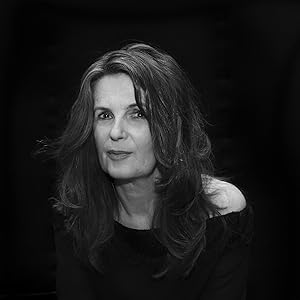
Christine Dwyer Hickey was born in Dublin and is a novelist and short story writer. Tatty, first published in 2004, was shortlisted for Irish Novel of The Year 2005 and nominated for The Orange Prize. It was listed as one of the 50 Irish Novels of the Decade. Last Train from Liguria (2009) was nominated for the Prix L’Européen de Littérature. The Cold Eye of Heaven (2011) won The Irish Novel of the Year 2012 and was nominated for the International IMPAC award.
Her novel The Narrow Land (2019) won two major prizes in 2020 – the Walter Scott Prize for Historical Fiction and the inaugural Dalkey Literary Award.
Her short stories have been published in anthologies and magazines worldwide and have won several awards including twice winner of The Listowel Writers’ Competition and The Observer/Penguin Competition. She was longlisted for The Sunday Times EFG competition 2017 and her story Back to Bones was the winner of the Short Story of the Year Award at the Irish Book Awards 2017. Her play Snow Angels premiered at the Project Arts Theatre in 2014.
She has delivered lectures on James Joyce, Edward Hopper and the influence of childhood on the work of writers and has taught creative writing through workshops and master classes in various locations around the world. She is a regular contributor to radio and television shows. Her work has been widely translated into European and Arabic languages. She is an elected member of Aosdana, the Irish academy of arts.
Our London Lives (2024) was shortlisted for the Irish Novel of the Year at the Irish Book Awards.
Connect with Christine
Website


 What Cathy Read Next...