#BookSpotlight #Extract Until September by Harker Jones @HarkerJones #UntilSeptember

I’m delighted to welcome author Harker Jones to What Cathy Read Next today. Harker’s novel Until September (described as ‘a gay coming-of-age love story’) was published in July 2019 and is available to purchase from Amazon UK in paperback and as an ebook. As every self-published author knows, promoting your book to potential readers is a task that never ends. That’s where book bloggers come in so I’m pleased to be able to bring you an extract from the book that will, I hope, whet your appetite to read it. But first, more details about the book which I have to say is giving me Call Me By Your Name vibes.


About the Book
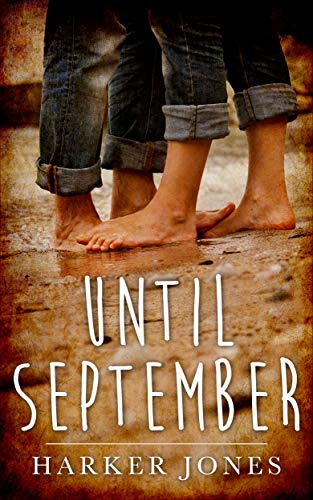
In the lull between the conservative ’50s and the turbulent ’60s, Kyle Ryan Quinn, an introspective, sentimental boy, leads a golden life. He’s rich, beautiful and smart, and he summers every year on the same island with the same group of friends. Haunted by the ghosts of a tragedy that took place in his youth, Kyle is more sensitive than his privileged peers. He understands loss, and secrets.

When he meets Jack Averill, a quiet, bookish boy, his fateful 18th summer on the island, Kyle attempts to integrate him into his tight-knit yet troubled circle while at the same time he’s pursued by another summer boy, and his best friend toys with the affections of an island girl. Amid mounting familial, sexual and peer pressures, all four young men make heartbreaking decisions that will steal their innocence, destroy lives and consume them forever.


Extract from Until September by Harker Jones

Prologue

I was so young when it all began that the blame hardly feels like mine. But no matter how minor a part I played, mine was the most pivotal. In the end, it was a decision I made.

So though there are many stories I tell, this is the one I’ve never shared. I can’t bear to think about it, except in my most submerged recesses, releasing it in the deep deep dark of night, when it will not be evaded.

How many years would you have to go back to change your destiny? That question plagues me. Because if I can think in terms of destiny, I can afford myself a slight reprieve, a misguided waft of air in a stagnant, decaying well. If I can think in terms of destiny, I can believe that I did what I did because I had no option. It had been predetermined and I’d only acted out my role.

But destiny is the weak man’s conception. To believe in destiny is to take no responsibility for your choices.

And I won’t allow myself the luxury.

I learned a little from Trent that summer, but not enough to open the eyes of a self-involved, spoiled, jealous 17-year-old. Then, later, years later, I ran into Dana. We had drinks, both of us smoking too much, talking too much, drinking too much, wondering if the other was glossing things over. I saw a subtle loneliness in her eyes that I recognized only because it was in mine, too. She knew. And she knew that I knew. It’s scary, that loneliness, because you want so much to have someone alleviate it, yet the only people who can are those who know it, too. And when you find one of those people you’re terrified that that person can see through your carefully wrought facade, and you realize you’re naked in front of a virtual stranger, so you just run.

Run.

I learned most of it from Kyle. The details. The things I couldn’t have known. Those things pursue me. Those and the things Dana told me happened after. After I passed out of the picture. I was able to spend some uncomfortable but pleasant time with her until she told me. That was when I had to flee. I had to escape. That was when the running became all.

I’m still running.

Just as Kyle is still chasing.

Neither of us will succeed — me in escaping or Kyle in capturing.

We know this.

We don’t stop.

Someone once told me that tears water the soul. I do not believe this. If it were true, my soul would be fertile and verdant. But it is stunted and gnarled and withered and cracked.

Which is something I could live with.

If Kyle’s had been spared.

Kyle would say this is Jack’s story. But, just as this is the only story I can never share, this is the only one Kyle will ever be able to tell.

So I think of this as Kyle’s story.


About the Author

Harker Jones is the author of the Amazon #1 best-selling love story Until September and nine screenplays, revealing truths through humor and horror. His short thrillers Cole & Colette and One-Hit Wonder have been accepted into more than 60 film festivals combined, garnering several awards.

He was managing editor of Out magazine for seven years, spent two in gay porn, and worked at Disney Publishing. A member of both the Los Angeles Drama Critics Circle and Mensa, he loves cats and carbs and would like to be a one-hit wonder but would settle for being killed in a slasher movie.

Connect with Harker
Twitter | Instagram | Facebook | Goodreads | BookBub

Q&A: The Artist and the Soldier by Angelle Petta

I’m delighted to welcome Angelle Petta to What Cathy Read Next today ahead of the publication of Angelle’s historical fiction novel, The Artist and The Soldier on 1st May.  I’m thrilled Angelle has spared time from the launch preparations to answer some questions about her book and its inspiration.

Follow my blog with Bloglovin


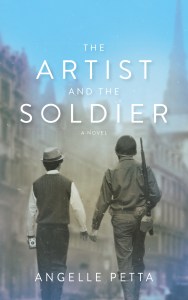
CoverUpdated.inddAbout the Book

It’s 1938. Bastian Fisher and Max Amsel meet at an American-Nazi camp, Siegfried. Neither have any idea what to do with their blooming, confusing feelings for one another. Before they can begin to understand, the pair is yanked apart and forced in opposite directions.

Five years later, during the heart of World War II, Bastian’s American army platoon lands in Salerno, Italy. Max is in Nazi-occupied Rome where he has negotiated a plan to hire Jews on as ‘extras’ in a movie – an elaborate ruse to escape the Nazis. Brought together by circumstance and war, Bastian and Max find one another again in Rome.

Praise for The Artist and the Soldier

“Navigating the complex terrain of the friendship, love and sexual awakening of two young men in the shadow of Nazi occupation, Petta summons tenderness, vulnerability and insight. The Artist and the Soldier reminds us what it means to be human in the face of fascism. A timely book!”  (Michaela Carter, author of Further Out Than You Thought)

“To keep company with Max, Bastian, and the characters in The Artist and the Soldier is to celebrate life and art and the extraordinary capacity of each to heal.” – Nicole Tong, author of How to Prove a Theory

“What an amazing true-life premise for a great story! It made for a compelling read. The narrative of Petta’s novel drew me into her historical fiction world, and held me through to the end. Petta has created an original, well written, and fascinating work that takes me back to one of the most important turning points in modern world history.” (Lauren Nalls, author in Of Words series)

Format: ebook, paperback (348 pp.)      Publisher: Warren Publishing
Published: 1st May 2018                           Genre: Historical Fiction

Pre-order/Purchase Links*
Publisher | Amazon.co.uk  ǀ  Amazon.com  ǀ Barnes and Noble ǀ IndieBound
*links provided for convenience, not as part of any affiliate programme

Find The Artist and the Soldier on Goodreads


Interview: Angelle Petta, author of The Artist and the Soldier

Angelle, welcome to What Cathy Read Next.  Without giving too much away, can you tell me a bit about The Artist and the Soldier?

The Artist and the Soldier tells the story of two young men who come of age and fall in love, set against the backdrop of true events during WWII.  The book explores the true stories of Camp Siegfried and the making of the film, La Porta del Cielo. It sheds light on largely untouched stories in American and Italian history.

Bastian and Max meet in Camp Siegfried. When did you first learn of Camp Siegfried and think about making it part of your book?

I first learned about the summer camps like Camp Siegfried from an NPR story.  I was actually in Rome at the time and it was one of those stories that sparked something in me.  After reading the article I did more research and learned about several camps spread throughout America.  I decided that Max and Bastian lived in NY, so Camp Siegfried fit the bill.

The film La Porta del Cielo (The Gates of Heaven) also features in the book.  What was it about this film that interested you?

I think what struck me the most about the story when I first heard it was that I’d never heard it before!  It was so fantastical, had all the makings of its own Hollywood movie.  It was a lost story that I wanted to investigate.

How did you approach your research for the book? Do you enjoy the process of research?

I knew that the first part of the book would take place in the States so I started my research with the summer camps, as well as general research about living in NYC in the late 1930’s and other events during that time.  Then I wrote the first part of the book before I started my research about the war, the occupation of Rome, and about the movie.  I wanted to be into my characters’ story so that Max and Bastian, along with the history of the time, could drive the story forward.  Most of the plot points in part two of the book are based on actual events that happened during that time.

I did really enjoy the research process.  Some of it, in terms of what I read, was difficult to consume because of so much sadness and heartache.  But for every story of hate, I found one that told of love. I knew when I started the book that I did not want to dive into the daily life of the concentration camps.  Many other writers have already written about that time and place with such stark realness and sorrow that I felt like I had nothing to add.  So the fact that I didn’t have to dive into the world of the concentration camps was helpful in that the research didn’t go there.

What was the most surprising fact you came across during your research?

I think it was the way Italy’s citizens tried to minimize the loss of lives of Italian Jews, often putting themselves at risk.  The number of Jewish lives lost in Italy was minimal compared to many of the other countries that were invaded; only around 8,000 went to concentration camps.  This is not to minimize the devastation of losing those 8,000.  However, 30,000 were able to go into hiding between 1938 and 1944 with the help of Italian citizens and the church, and 7,000 were able to flee.

What was the biggest challenge you faced when writing the book?

Staying true to both my characters and the history.  I wanted the book to be accurate, but I also wanted to listen to Max and Bastian and what they needed.  Also writing about the few people in the book who were really there, mainly the director of the movie, De Sica, and the general of Bastian’s army platoon, General Clark.  I did not want to put words into their mouths, so I learned as much about them as I could and tried to be as accurate as I could in portraying them.

I believe The Artist and the Soldier isn’t your first novel.  Can you tell us about your writing journey?

This is my fourth novel, but it’s my first published work. I began writing about 15 years ago writing through several genres.  Over the years I sharpened my craft by taking classes, joining critique groups, going to conferences, reading, and most importantly of all, writing.  The only way to become a better writer is to write through it. I hope to re-visit my third book someday as I think it has a lot of heart and potential.

Which other writers do you admire and why?

Oh so many! To name a few, Neil Gaiman for his world building and the utter beauty he is able to portray.  David Sedaris for his humour and ability to make me laugh out loud while reading. Barbara Kingsolver for the way she can turn everyday people and occurrences in poetry.  I will be forever grateful to J.D. Salinger for Franny and Zoey.  Elizabeth Gilbert’s The Signature of All Things is a masterpiece in my opinion, as is Sue Monk Kidd’s The Invention of WingsThe Book Thief tore my heart out in the best way possible and All The Light We Cannot See continues to inspire me.

[Angelle, I think you have been taking a sneaky peek at my own bookshelves!]

Do you have a special place to write or any writing rituals?

I like to move around a lot when I am writing.  So I will start at home, then go to a coffee shop, then go outside, etc.  When I go for a writer’s retreat, which I try to do at least once a year, I always stay at places with lots of location options.  Moving from one place to another tends to activate my thoughts. Before I start writing a new novel I also re-read On Writing by Stephen King.  It’s just such an insightful and motivating book to read before venturing into a new project.

What are you working on next? 

I am in the beginning phases of writing another historical fiction novel, which takes place in the early 1960’s.  It will be a story about mental illness, identity, and how far we go for the ones we love, even when they inexplicably hurt us.


Angelle PettaAbout the Author

Angelle Petta began writing novels 15 years ago and has written in several genres.

​She holds an MA from Emerson College, and a master’s equivalency in Drama Therapy through the NADTA.  Angelle is a registered drama therapist and a PhD student at Lesley University.  She works as a Drama Therapist at an Expressive Arts Center in Virginia called A Place To Be.

​She lives in Northern Virginia with her husband, two delightful dogs, and one fat cat.

Connect with Angelle

Website  ǀ  Facebook  ǀ  Twitter  ǀ  Instagram ǀ Goodreads