

Top Ten Tuesday is a weekly meme created by The Broke and the Bookish and now hosted by Jana at That Artsy Reader Girl.
The rules are simple:
- Each Tuesday, Jana assigns a new topic. Create your own Top Ten list that fits that topic – putting your unique spin on it if you want.
- Everyone is welcome to join but please link back to The Artsy Reader Girl in your own Top Ten Tuesday post.
- Add your name to the Linky widget on that day’s post so that everyone can check out other bloggers’ lists.
- Or if you don’t have a blog, just post your answers as a comment.
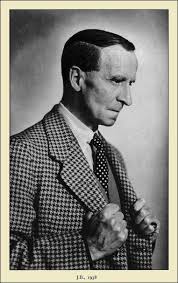 This week’s topic is Best Character Names. Regular followers of this blog will know I have a real passion for the works of John Buchan so I’ve chosen some of my favourite character names from his novels. As I was compiling the list, I started to notice a pattern which suggests a certain line of thinking (critics might say a rather lazy line of thinking) on John Buchan’s part when creating character names. If you have the time or inclination, try this quiz. All the characters below can be loosely categorised as either “goodies’ or ‘baddies’. Can you guess to which category they belong? (There are a few curve balls.) You can find the answers at the bottom of this post.
Clicking on the title will take you to the book’s description on Goodreads or to my review. Some characters appear in more than one John Buchan book, so I’ve just shown the book in which they first appear.
Marmaduke Jopley from The Thirty-Nine Steps
Moxon Ivery from Mr. Standfast
Sandy Arbuthnot (Lord Clanroyden) from Greenmantle
Hilda von Einem from Greenmantle
John Scantlebury Blenkiron from Greenmantle
Koré Arabin from The Dancing Floor
Dickson McCunn from Huntingtower
Dominick Medina from The Three Hostages
Jacques D’Ingraville from The Courts of the Morning
Launcelot Wake from Mr. Standfast


Answers to the quiz:
‘Goodies’: Marmaduke Jopley, Sandy Arbuthnot, Koré Arabin, John Scantlebury Blenkiron, Dickson McCunn, Launcelot Wake [the mostly solid British sounding names]
‘Baddies’: Moxon Ivery, Hilda von Einem, Jacques D’Ingraville, Dominick Medina [the foreign sounding names]
Next week’s topic: Bookish Worlds I’d Want To/Never Want To Live In

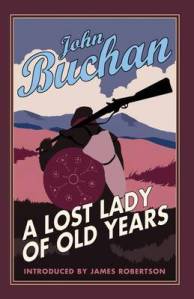 A Lost Lady of Old Years was published in September 1899 by publishers, John Lane. Buchan’s third novel, it is a historical romance set during the Jacobite rising of 1745 and written in a style reminiscent of two of Buchan’s great literary heroes, Sir Walter Scott and Robert Louis Stevenson. Unlike Buchan’s later adventure stories, A Lost Lady of Old Years did not appear first in serial form in the UK. The title is drawn from Robert Browning’s poem, Waring.
 What Cathy Read Next...