Buchan of the Month: Introducing The House of the Four Winds by John Buchan #ReadJB2019

buchan of the month 2019 poster

The House of the Four Winds is the tenth book in my John Buchan reading project, Buchan of the Month 2019.   You can find out more about the project and the books I read in 2018 here and view my reading list for 2019 with links to my reviews of the books I’ve read so far here.

20191015_134401_resizedWhat follows is a (spoiler-free) introduction to The House of the Four Winds.  It is also an excuse to show off my 1942 Nelson edition of the book with its striking dust-jacket.    I will be publishing my review of the book later this month.

The House of the Four Winds was published in the UK by Hodder & Stoughton on 23rd July 1935 and by Houghton Mifflin in the United States on 25th July 1935.  It is the third book to feature retired Glasgow grocer, Dickson McCunn, and continues his adventures that started in Huntingtower and later Castle Gay.

The setting for The House of the Four Winds is the fictional country of Evallonia.  Buchan’s first biographer, Janet Adam Smith, ruefully notes that ‘Buchan is not at his best in the Anthony Hope [author of The Prisoner of Zenda] terrain of imaginary European states with princes, pretenders and disguises’.  In fact, she goes on to describe the story as ‘on the feeble side’, regretting the absence of the ‘sharp little scenes and characters between the moments of melodrama’ that feature in other Buchan novels.

However, she does point out that 1934 was a year of intense industry for Buchan.  As well as completing The House of the Four Winds, he wrote two works of non-fiction – Gordon at Khartoum and Cromwell – began the last Richard Hannay novel, The Island of Sheep, and started work on his book about George V, The King’s Grace.  This at the same time as preparing for the move to Canada to take up the post of Governor-General. It was perhaps useful then, that he received a higher than usual advance for the book of £1,250.

Unfortunately, Janet Adam Smith is not the only critic to be less than impressed with The House of the Four Winds.  David Daniell concedes it is not Buchan at his best although he does feel there ‘are striking images and scenes’.  He notes that it features a parade of characters from previous books.  This is a point taken up by Kate MacDonald who describes the book’s ‘crossover tendencies between the separate Buchan worlds’. She gives as examples the Lamanchas (from the Leithen novels), Jaikie Gait and Alison Westwater (from the previous Dickson McCunn books) and the Roylances, Janet and Archie (from, amongst others, The Courts of the Morning).

MacDonald also contends that Buchan was trying to make a serious point in the book about the dangers of amateurs dabbling in foreign affairs.  [I believe we can all think of some contemporary examples of that.] She makes the case that, in extending the idea of the amateur hero of the thriller into the realities of 1930s politics, Buchan is ‘looking in the direction that Eric Ambler and Graham Greene would go’.

Whilst describing The House of the Four Winds as ‘probably JB’s worst novel’ and as ‘Ruritania without the charm’, Ursula Buchan, author of the recent biography Beyond the Thirty-Nine Steps: A Life of John Buchan (and also Buchan’s granddaughter), does acknowledge the book’s ‘masterly dissection of 1930s angst about the growing menace of authoritarian regimes’ in Italy and Germany.  She also provides the fascinating nugget of information that the book contains the first mention of ‘mole’, meaning an undercover agent, forty years before John Le Carré’s Tinker, Tailor, Soldier, Spy.  Go JB!

The House of the Four Winds Floor enjoyed reasonable but hardly outstanding commercial success.  Janet Adam Smith reports that combined sales up to 1960 for the Hodder & Stoughton edition and later Nelson edition totalled 101,000 copies.  The Penguin paperback edition contributed a further 84,000 sales up to June 1964.

To find out what I thought, look out for my review later this month.

Sources:

Ursula Buchan, Beyond the Thirty-Nine Steps: A Life of John Buchan (Bloomsbury, 2019)
David Daniell, The Interpreter’s House: A Critical Assessment of the Work of John Buchan (Nelson, 1975)
Kate Macdonald, John Buchan: A Companion to the Mystery Fiction (McFarland, 2009)
Janet Adam Smith, John Buchan: A Biography (OUP, 1985 [1965])
Kenneth Hillier and Michael Ross, The First Editions of John Buchan: A Collector’s Illustrated Biography (Avonworld, 2008)
buchan of the month 2019

#BookReview The Blanket of the Dark by John Buchan #ReadJB2019

buchan of the month 2019 poster

20190916_105622_resizedAbout the Book

The period is the Pilgrimage of Grace. In the country west of Oxford, nobles, clergy and laity await the success of the risings in Lincolnshire and Yorkshire to overthrow Henry VIII and Cromwell.

Peter Pentecost is the man they plan to put on the English throne. Although a monk by training, he is the legitimate child of the Duke of Buckingham and the last of the Bohuns. His bid to be crowned and his duel with Henry VIII make for an exciting adventure.

Format: Paperback (288 pp)     Publisher: Penguin
Publication date:  1961             Genre: Historical Fiction

Find The Blanket of the Dark on Goodreads


My Review

The Blanket of the Dark is the ninth book in my John Buchan reading project, Buchan of the Month 2019. Yes, that’s right, it was my Buchan of the Month for September but I’ve only now got around to posting my review. You can read my introduction to the book here.

When Peter Pentecost learns about his true heritage it opens up a world of possibilities far removed from the life he’d imagined as a lowly clerk. Soon he’s being tutored in swordmanship, archery and other pursuits applicable to his new station in life, although his true identity must remain secret. He also meets noblewoman, Sabine Beauforest.

In Sabine, Buchan creates a female character quite different from the rather colourless specimens that often inhabit his books. (The exception being the plucky Mary Lamington, first introduced in Mr. Standfast.) Although Sabine’s first appearance is as a ‘nymph-like’ creature, later descriptions emphasise her voluptuous figure and there are hints of real sexual attraction between her and Peter Pentecost. She also becomes a kind of talisman for him although it’s not long before he finds he has a rival for her affections.

Peter also encounters Solomon Darking who introduces him to the lore of the countryside and reveals to him a whole other side of society, invisible to those in positions of power, with its own system of communication and intelligence gathering.

The Blanket of the Dark showcases John Buchan’s knowledge of and appreciation for the Cotswold countryside. His beloved Elsfield, the manor house that became his country home, even gets a mention. ‘The opposite slope of the hill towards Elsfield was golden in the afternoon sunlight, and mottled with shadows of a few summer clouds.’

The book features imagined and real-life characters. The most memorable example of the latter is Peter’s first sighting of Henry VIII leading his hunting party through the Woodstock estate. ‘He was plainly dressed, with trunk hose of brown leather and a green doublet with a jewel at his throat… The face was vast and red as a new ham, a sheer mountain of a face, for it was as broad as it was long, and the small features seemed to give it a profile like an egg.’

There are some dramatic scenes, notably one during a violent snowstorm and another when a dam bursts, the latter resulting in a fateful encounter. In fact, the elements play a key role in the book with rain, snow or fine weather often determining the outcome of an enterprise. Weather lore, as possessed by Solomon Darking and his vagabond comrades, becomes a valuable weapon. However, in spite of best laid plans, Peter finds himself becoming the pursued rather than the pursuer as the book reaches its conclusion.

From the beginning, Peter fears ‘a destiny too big for him’ and that he is merely ‘a weapon to be used’. As time goes by, the things he sees and experiences cause him to doubt the rightfulness of the venture he is being asked to undertake and the motives of those behind it. ‘They claimed to stand for the elder England and its rights, and the old Church, but at their heart they stood only for themselves.’

I can now appreciate why The Blanket of the Dark is so highly regarded amongst Buchan’s works, including by his latest biographer, Ursula Buchan, who is also his granddaughter. (You can read my review of her biography of her grandfather, Beyond the Thirty-Nine Steps here.) The Blanket of the Dark is the book Ursula always recommends to readers who wish to venture beyond his spy novels. Far be it from me to disagree.

October’s Buchan of the Month is The House of the Four Winds. Look out for my introduction to the book and my review later this month (if I can get my act together).

In three words: Exciting, engaging, adventure

Try something similar: Midwinter by John Buchan (read my review here)

Follow my blog via Bloglovin


John BuchanAbout the Author

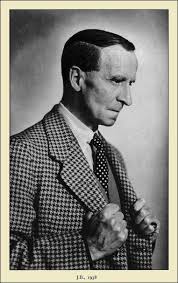
John Buchan (1875 – 1940) was an author, poet, lawyer, publisher, journalist, war correspondent, Member of Parliament, University Chancellor, keen angler and family man.  He was ennobled and, as Lord Tweedsmuir, became Governor-General of Canada.  In this role, he signed Canada’s entry into the Second World War.   Nowadays he is probably best known – maybe only known – as the author of The Thirty-Nine Steps.  However, in his lifetime he published over 100 books: fiction, poetry, short stories, biographies, memoirs and history.

You can find out more about John Buchan, his life and literary output by visiting The John Buchan Society website.

buchan of the month 2019