An interview with Ken Steele, author of The Promise of Unbroken Straw

I’m delighted to welcome author Ken Steele to What Cathy Read Next. Ken’s debut novel, The Promise of Unbroken Straw was published in March 2024 by Yorkshire Publishing. It’s described as ‘an epic and unforgettable tale of three generations of a family saturated with secrets, grief, and unrealized, stubborn love’. The Promise of Unbroken Straw is available to purchase in hardback or ebook from Amazon and other retailers.

The book has received some fantastic reviews from readers, with an overall rating of 4.5 on Goodreads. One praised it as ‘well-written with deep characters, realistic dialogue and character dynamics… It definitely gave me William Kent Krueger vibes’. Another commented, ‘This was one of those feel good stories that sucks you in and makes it difficult to put the book down. You root for the characters and cry with their hardships’.

Read on as I chat with Ken about the book and his writing journey.


About the Book
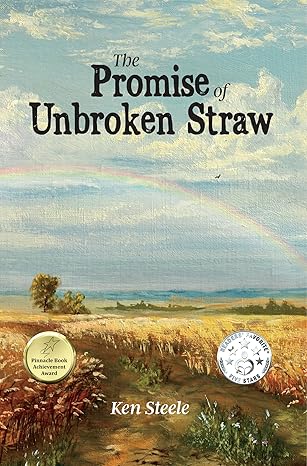
Front cover of The Promise of Unbroken Straw by Ken Steele

Paul’s teachers say he’s distracted, and they’re not wrong. With the demands of a struggling farm, Allied boots in Europe, and secrets surrounding his mother’s death, who can blame him? And the expectations of his unapproachable father are seemingly out of reach.

When a financial windfall sparks a rags-to-riches transformation, it also sets in motion events that will test young Paul to his core. This coming-of-age story connects Paul’s tumultuous adolescence to his unfulfilled adulthood. Across those decades, he searches for redemption and reconciliation with the ghosts of his past.

Find The Promise of Unbroken Straw on Goodreads


Q & A with Ken Steele, author of The Promise of Unbroken Straw

The Promise of Unbroken Straw is your debut novel. How did your writing journey begin and what was the inspiration for the book?

Writing had been on my mind for some time. It was even integral to my professional career, though, admittedly, that was much more technology-focused. This novel, in part, commemorates the land where my ancestors had settled. My father, and his father before him, lived on a wheat farm just prior to when this story takes place. Though they are long-gone, this endeavor let me retrace those roots.

The book’s main character, Paul, is thirteen years old. Why did you choose to make him that age?

As a coming-of-age story, I wanted to explore the things required for a young boy to transition into adulthood. That age is such a vulnerable time and offers a unique window into the many doubts and dreams of someone stepping into those waters for the first time. In this narrative, we also get to follow Paul much later in life and witness how certain outcomes were indelibly connected to his youth.

How important to the story is the book’s setting – Oklahoma in 1944?

I was born and raised in that state, albeit in the city, not on a farm. Without spoilers, there are a couple of love stories in this tale, one being between author and setting. And the time period was crucial. Following the depths of the Depression, Paul was raised during the Dust Bowl. When WWII arrives, those events shaped him in the same way that they altered the course of an entire generation.

How did you approach your research for the book? Did you discover anything that particularly surprised you?

I lived in every corner of the internet, and I can’t imagine writing something like historical fiction – particularly involving settings that were unfamiliar – without those resources. Surprises, hmm. Coming back to the war, I learned how far-reaching that conflict was even thousands of miles from the battlefields. From seismic shifts within industries and personal lifestyles, the overt effects of rationing, even changes in highway speed limits to conserve fuel and rubber.

Were there any scenes that were particularly challenging to write? If so, why?

Much of this narrative required a very nuanced interaction between Paul and his father. Their relationship was highly complex, and there were numerous times when I needed to walk right up to certain boundaries without obliterating them entirely. So staying entirely within character across an assortment of challenges that they were both asked to confront took time and patience, particularly in this debut effort.

What has been your favourite and least favourite part of the writing process?

Favourite parts: I spent my career exercising the left side of my brain. Writing fed the other half. I loved imagining a new world, one that I’d created out of whole cloth. And in this case, one that allowed me to reconnect with my adolescent self.

Less favourite parts: The patience required. For me, writing is a bit like sculpting. I needed to shave off the pieces one at a time before the underlying ideas fully emerged. And that took more time than I could have imagined.

What advice would you give to other debut authors?

Churchill got it right. “Never give in, never, never, never, never . . .” Over the course of my professional career, I’ve tackled some complex problems on the edge of a new technology. Writing was, by far, the hardest thing I’ve ever attempted. This project spanned well over ten years, and over that time period, there were numerous highs and lows, painfully close calls, soul-crushing rejections. But I kept at it. Hopefully, my personal journey can inspire others who have similar aspirations.

What are you working on next?

I have drafted a second novel, but much work is required before it can escape from my laptop. It’s a very different genre, a political thriller with a sweeping scope, but it also touches on subject matter that was central to my professional career. Time will tell how it progresses as it’s in direct competition with an assortment of activities that we dearly enjoy in the mountains of Colorado.


About the Author

Author Ken Steele

A native of Tulsa, Oklahoma, Ken Steele holds degrees in Civil Engineering from Oklahoma State University and MIT. The Promise of Unbroken Straw is Ken’s debut novel, a work of historical fiction. He resides in Colorado with his wife of 41 years where his days are filled with skiing, pickleball, golf, hiking, and all that the mountains can offer.

Connect with Ken
Website | Instagram | Facebook

An interview with Amanda K. Jaros, author of In My Boots: A Memoir of Five Million Steps Along the Appalachian Trail

My guest today on What Cathy Read Next is Amanda K. Jaros whose memoir, In My Boots, is published today by Black Rose Writing. In My Boots is available to purchase as an ebook or paperback from Amazon and other online retailers. Read on as I chat with Amanda about the book and the incredible journey it describes. I’m grateful to Amanda for sharing some photographs taken during her trek that you won’t find in the book.


About the Book

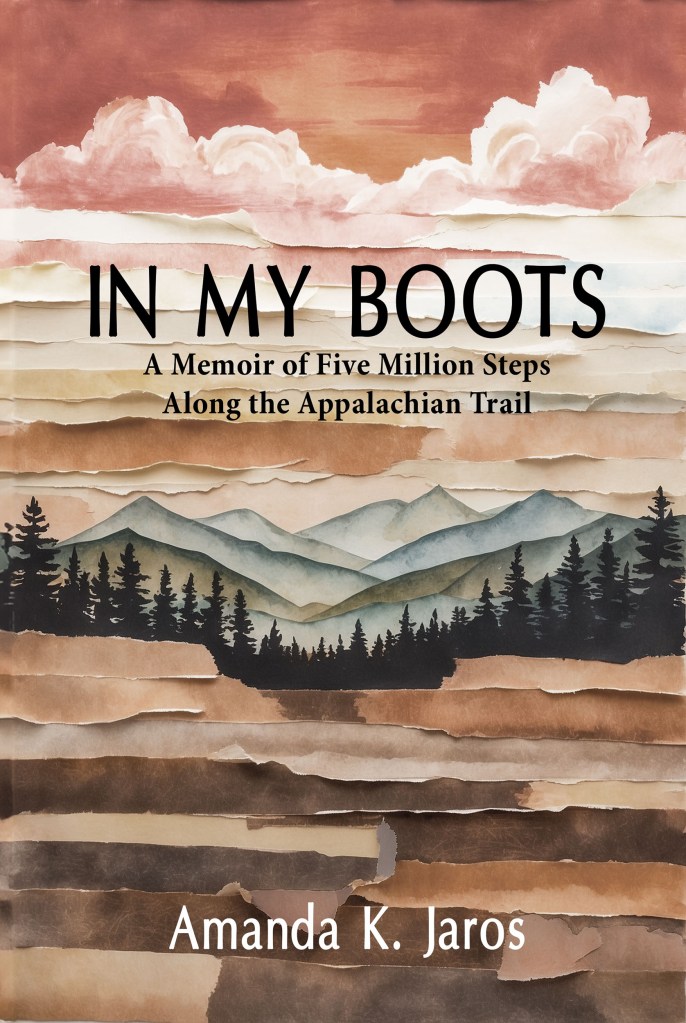
Front cover of In My Boots by Amanda K Jaros

When Amanda K. Jaros learns about the 2,160-mile Appalachian Trail after college, she walks away from a sheltered life dominated by an angry and volatile father and does something spends six months backpacking. Alone. She expects to pass the time in the solitary and peaceful wilderness, reflecting on her life’s direction. Instead, she finds herself part of a community ripe with stinky socks, buckets of ice cream, and trail magic. What matters on the trail is not a hiker’s past or parents, her fears or failures, but rather, what matters is the connections we make with each other.

In My Boots recounts a challenging physical journey following the trail over the windy balds of the South, through snowstorms in the Smoky Mountain National Park, and above the tree line to the alpine zones of the White Mountains of New Hampshire. The journey is also emotionally transformative as this twenty-three-year-old leaves behind the compliant and scared girl she once was. With each step away from her damaged childhood, each new friend, each stop in another rural trail town, she comes to understand that to succeed on the trail, and in life, it turns out, the path she walks must be her own.

Find In My Boots on Goodreads


Q & A with Amanda K. Jaros, author of In My Boots

What prompted you to embark on this challenge and why the Appalachian Trail?

When I was just out of college, I got a summer job as a naturalist intern working at Baxter State Park in Maine. There I learned about the Appalachian Trail when I met hikers arriving in the late summer to summit Katahdin, the northern terminus of the AT, within Baxter Park. I’d had a pretty sheltered childhood that was dominated by an angry and volatile father, and I lacked both confidence and direction after graduating college. I knew a 2,160-mile trek from Georgia to Maine would be difficult, but I also knew it was time for me to step out of my shell. The more I learned, the more I felt called to walk the trail.

How did you prepare for the journey?

I knew nothing about backpacking when I decided to hike the trail. I started planning in October for a March start in Georgia. This was back in 1998, when the Internet was just emerging, so I began with books; Jean Deeds’s There are Mountains to Climb was my first inspiration. I then visited a fledgling website called Trailplace, where hikers gathered to talk about the AT. Folks on that site, as well as at the local Eastern Mountain Sports store where I got a part-time job, were instrumental in teaching me outdoors basics. I also invested in a full set of trail maps from the Appalachian Trail Conservancy and a mileage data book so I could plan town stops and mail drops along the route. It was a lot to figure out, but luckily, I love research.

What were the most challenging things you encountered?

Walking up and down the mountains, day after day, in all kinds of weather, for several months, is a huge physical challenge, and there are a heck of a lot of uphill climbs. But eventually, your body adjusts and you get stronger. For me, the mental challenge was even harder. I knew I wanted to be hiking, but it takes a lot of resolve to get up every day and actually do it. There were many, many times I wanted to quit and go home, but the friends I met along the way, the beauty of the natural world I was walking in, and my goal to be a 2000-miler kept me going.

What made you decide to write a book about your experiences?

I thought about writing a book for many years, but life, family, and work responsibilities took precedence for a long time. It wasn’t until I was older and realized what the story was actually about that I decided to write the book. While a long-distance hike is an amazing thing, a memoir needs to tell a deeper story. The story of my hike was based on my childhood foundation with a verbally abusive father, a childhood that stunted me and precluded confidence and self-worth. Setting out on the Appalachian Trail, and succeeding in that endeavour, gave me strength and power I didn’t know I had. At the time, I’m not sure I could have written that story. I needed to grow up more and understand the greater impact the AT had on me before I could really explore it in writing.

What advice would you give to someone thinking about taking on a similar challenge?

Whether you are wanting to hike a long-distance trail or write a book, I would suggest taking some time to look at why you want to do such an activity. Both are big and amazing undertakings, and you’ll need perseverance to do either of them. After you know the why, do your research. Get to know other hikers or writers. Read books and articles. Get outside for some shake-down hikes or start a daily writing practice. Follow your heart, but be prepared.

What message would you like readers to take away from the book?

I hope that readers enjoy the story of a long hike and the magic of the people I met and the experiences I had along the way. But I also hope that the book inspires folks to reach for their own goals, to work to overcome whatever bad circumstances they may be facing and find ways to empower themselves. Not everyone wants to or is able to do something as enormous as hiking the Appalachian Trail, but everyone deserves to follow the path to their dreams and find success and self-love along the way. My wish is that readers close the back cover of the book, smile, and maybe feel a little more hopeful.


About the Author

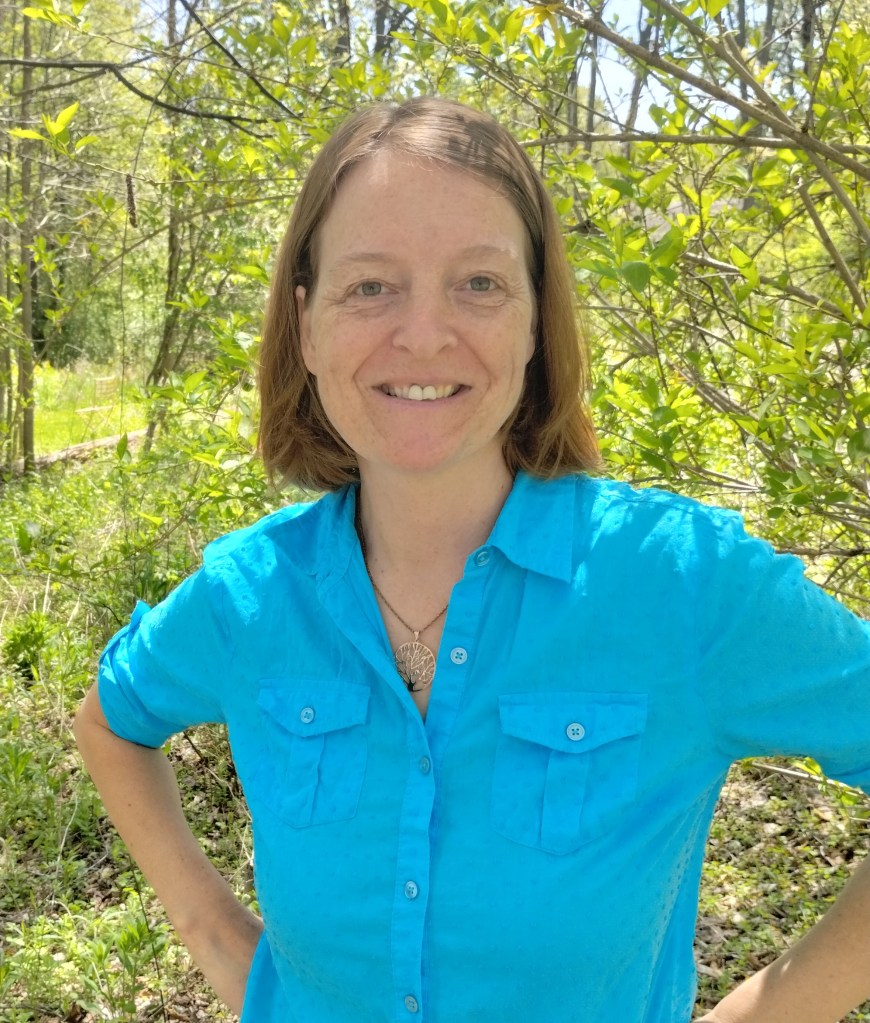
Author Amanda K Jaros

Amanda K. Jaros is the editor of Labor of Love: A Literary Mama Staff Anthology and author of 100 Things to Do in Ithaca Before You Die. Her essays on nature and family have appeared in Flyway, Appalachia, Terrain.org, Stone Canoe, and elsewhere. When not writing, she can be found on a trail somewhere, and has hiked the Inca Trail in Peru, several trails in Australia, and is currently working toward completing hikes of the 46 High Peaks in the Adirondacks. She lives in Ithaca, New York, with her husband and son, where she recently took up kayaking and serves her community as a county legislator.

Connect with Amanda
Newsletter | Instagram | Website