
Today’s guest on What Cathy Read Next is Megan Easley-Walsh, author of Flight Before Dawn. Megan has kindly agreed to answer some questions about the book, its inspiration and her approach to writing.
And…Megan is offering three lucky people the chance to win a digital copy of Flight Before Dawn. You can find the link to the giveaway below. The giveaway runs until 22nd April 2017.
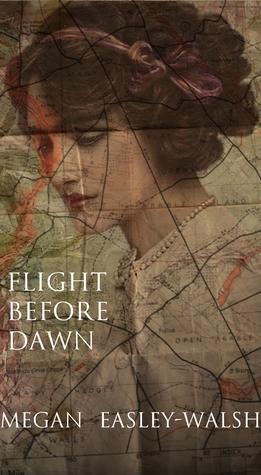 About the Book
Before there was D-Day… For over two years, she’s watched him. Now he’s on her doorstep. This is life in the Resistance. In Normandy in 1943, Victoire leads a band of the Resistance. When Leal, the man she’s had watched for over two years, arrives at her doorstep, she’ll have to face new challenges in war and in love. Robberies, a kidnapping and clandestine night adventures were not at all what Victoire planned for her life. And she most certainly never planned to be betrayed. But war — and love — are unpredictable. Joined by her friend Rainier who is mistrusted by Leal, the mysterious Voleta, and Father Pierre, Victoire and Leal must struggle for survival, the grounds of France, and the material of their souls. When Leal unearths a twenty-five-year-old secret, with Victoire at the center, her whole life is shaken. As the Allies approach, the past, present and future hang in the balance. Can anyone be trusted when the world spins upside down? Watch the trailer here
Purchase links
Amazon.co.uk
Amazon.com
Barnes & Noble
*links provided for convenience, not as part of any affiliate programme
Interview with Megan Easley-Walsh
Hi Cathy and readers! Thanks so much for having me on the blog today.
Without giving too much away, can you tell us a bit about Flight Before Dawn?
Flight Before Dawn is the story of a female French Resistance leader, Victoire, in WW2, in Normandy France. History remembers D-Day on June 6, 1944, but Flight Before Dawn begins in the autumn of 1943 when there is still a lot of uncertainty about what will happen. In the opening chapter, Leal arrives on her doorstep. For over two years, the Resistance has watched him, but he believes that Victoire is a stranger. Victoire and her friends must navigate what they are willing to do for freedom and whom they can trust. Victoire believes that the Resistance is the biggest secret of her life, but when Leal unearths a twenty-five-year-old secret, with Victoire at its center, her whole life is shaken.
What made you choose WW2 Occupied France as the setting for the book?
I grew up in an Air Force family and lived in Germany from the ages of 9-18. I have firsthand experience of walking the beaches of D-Day and visiting the museums. I also participated in a yearly service project that decorated the largest American cemetery from WWII in Europe: the Lorraine American cemetery in St.-Avold, France, each May for eight years and so I was present with the veterans and history became incredibly palpable. At its heart, my writing through all of my novels is about hope. If there can be hope in the midst of war, there can be hope anywhere.
How did you approach the research for the book? Do you enjoy the process of research?
Part of my research came from my firsthand experience. In addition, I read several books. I still have the little yellow sticky notes stuck into them. My educational background is history-focused International Relations and I enjoy researching and piecing together why things happen. It was definitely difficult to read some of the research for Flight Before Dawn, as war is truly horrible. That’s also why I write about war, though, to encourage peace.
What was the biggest challenge you encountered when writing the book?
Flight Before Dawn was my first novel and so everything was new. I had previously written short stories, but never a full length novel. Adding in enough layers to make a full novel was interesting to learn.
You have explored many different periods of history in your books. If you could travel back in time to one of them, which would you choose and why?
Wow, that’s a great question! It might be fun to spend a day with Francesco, the painter in Renaissance Venice, from What Edward Heard. I love Venice and art! If I were to time travel to the characters in Flight Before Dawn, I’d want to rescue them and bring them out of the war with me!
If Flight Before Dawn was made into a film, who would you love to see play Victoire?
Another great question! I hadn’t thought of this before, but when I read the question Audrey Tautou immediately came to mind. One, she’s French. Two, she’s wonderful in the film The Very Long Engagement, which is actually in WWI rather than WWII, but tells a compelling story of perseverance and love. I also think she looks a bit like Victoire on the cover of Flight Before Dawn.
What is your favourite and least favourite part of the writing process?
I really love all of the writing process. Beginnings are thrilling, because it’s the start of something new. Ends are exciting, because the book reaches completion. Finding the perfect way to weave together the middle is also really interesting. I don’t think I have a least favourite part. I’ll say that the part I find the most challenging is that when I’m in the middle of a manuscript, the characters need to have their stories told and I feel bad if I leave them in peril for too long, so I tend to write a lot at once. (Which isn’t a negative thing!)
What other writers do you admire?
I love reading. I really believe that the more you read, the better you write. I’m a Shakespeare fan and have read all of his works. Some of my novels (although not Flight Before Dawn) feature a Shakespeare allusion. I also like Sherlock Holmes. For more contemporary, I recently began reading Jacqueline Winspeare’s Maisie Dobbs series. I also read a lot of non-fiction, for research and just for personal interest. I really enjoyed reading Margaret MacMillan’s historical works, Paris 1919: Six Months that Changed the World and The War that Ended Peace: The Road to 1914. As mentioned previously, my degrees are in history-focused International Relations, so I love understanding why things that happened continue to impact the world today.
What’s your favourite way to engage with your readers?
I love hearing from readers. Emails at Megan@MeganEasleyWalsh.com are great. You can also connect with me on Twitter, Facebook, Pinterest, Youtube, Goodreads, my blog and my websites. Basically, I’m happy to hear from you! And if you’ve read something that I wrote and enjoyed it, I greatly appreciate if you write a review on a retail website, so other readers can find me.
What are you working on next? Will it be more historical fiction?
More historical fiction, yes, definitely! I have several books in the works that I’m looking forward to sharing with my readers. I also continue to be a writing consultant and editor at www.ExtraInkEdits.com.
My best to you all, Megan.
Thank you so much, Megan, for such fascinating answers. I’m really excited to start reading Flight Before Dawn.
 Now, enter the giveaway by clicking on this link….a Rafflecopter giveaway
 About the Author
Megan Easley-Walsh is an author of historical fiction, a researcher, and a writing consultant and editor at www.ExtraInkEdits.com. She is an award-winning writer and has taught college writing in the UNESCO literature city of Dublin, Ireland. Her degrees are in history-focused International Relations. She is American and lives in Ireland with her Irish husband.
Connect with Megan
Websites http://www.meganeasleywalsh.com/
http://www.newhistoricalfiction.com/
Pinterest https://uk.pinterest.com/easleywalsh/
Twitter https://twitter.com/MEasleyWalsh
Facebook https://www.facebook.com/MeganEasleyWalshAuthor
Sign up to Megan’s newsletter https://tinyletter.com/MeganEasleyWalsh
Goodreads https://www.goodreads.com/author/show/16004855.Megan_Easley_Walsh

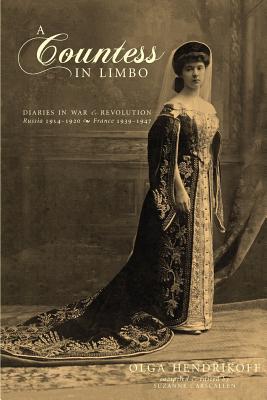 Today I am delighted to welcome to my blog Sue Carscallen, co-author of A Countess in Limbo: Diaries in War and Revolution. If you’re interested in history or personal memoirs, I’m sure you’ll find Sue’s answers to my questions absolutely fascinating and a tantalising glimpse into this wonderful book.
 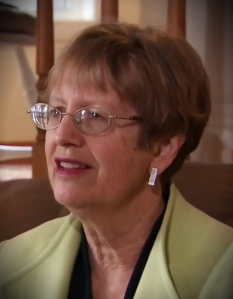 Sue Carscallen spent 20 years with Olga Hendrikoff, before her great aunt’s passing in 1987. Carscallen stumbled upon Hendrikoff’s diaries hidden in a trunk at her great aunt’s Calgary home. Over time she unraveled the mysteries hidden in the manuscripts, traveling to France and Russia to supplement her research into Hendrikoff’s life. Today, Carscallen resides in Calgary.
 What Cathy Read Next...