
 About the Book
To solve this case, only an outsider will do… Ingo Finch faces his biggest challenge yet.
New York, 1904. Over a thousand are dead after the sinking of the General Slocum, a pleasure steamer full of German immigrants out for a day on the East River. The community is devastated, broken, in uproar. With a populist senator preying on their grievances, a new political force is unleashed, pushing America to ally with Germany in any coming war.
Nine months later, Ingo Finch arrives in Manhattan, now an official British agent. Tasked with exposing this new movement, he is caught in a deadly game between Whitehall, Washington, Berlin… and the Mob.
Not everything in the Big Apple is as it seems. For Finch, completing the mission is one thing; surviving it quite another…
Format: ebook (255 pages) Publisher: Canelo
Publication date: 5th November 2020 Genre: Historical Fiction, Mystery, Thriller
Find Hell Gate on Goodreads
Purchase links*
Amazon UK
*link provided for convenience not as part of an affiliate programme

My Review
I’ve been a fan of Jeff Dawson’s Ingo Finch series since reading the first book, No Ordinary Killing, in 2017. And I absolutely loved the 2018 follow-up, The Cold North Sea. Although there are brief references to events in the previous two books, Hell Gate can definitely be enjoyed as a standalone. However I’m betting that, having read it, you’ll want to go back to where it all began and find out just why Ingo Finch finds himself at the beck and call of the British secret service.
I recall describing The Cold North Sea as “Buchanesque” and, as regular followers of this blog will know, there is no higher compliment as far as I’m concerned. I’ll happily award the same accolade to Hell Gate. Although there’s a terrific scene on a train that could come straight out of a James Bond movie, the episode in which Finch infiltrates an anarchist group reminded me of the exploits of John Buchan’s hero, Richard Hannay, in Mr. Standfast and a pursuit across open country recalled Hannay’s adventures in the The Thirty-Nine Steps.
Ingo Finch’s latest mission sees him sent to New York, a city that in 1904 is a “growing metropolis in all its living, steaming, cacophonous glory”. I enjoyed seeing him experiencing landmarks such as the Statue of Liberty and Brooklyn Bridge, and his exploits take him to many well-known parts of the city including Central Park, Broadway, the Meatpacking District and Little Italy. I also loved his wide-eyed reaction to American innovations such as traffic lights and toothpaste you squeeze from a tube. Finch also has his first taste of pizza and hot dogs.
Early on in the book, there are walk-on parts for some famous historical figures such as financier J.P. Morgan, chairman of the White Star Line Bruce Ismay, and Edward Smith, captain of the Baltic (the ocean liner on which Finch travels to America) later to become infamous as the captain of another ship. There’s even a mention of a Trump!
As in the earlier books, there are fascinating nuggets of historical fact around which the author has cleverly wrapped a gripping historical thriller. For instance, I hadn’t appreciated how much of the population of New York at the time was made up of people of German extraction and to what extent this influenced political and economic power within the city. As one character says, “German labour built this city. German labour built the Brooklyn Bridge and the Williamsburg…”.
As Finch reflects at one point, “The United States was a nation forged in blood” and it’s not long before he’s experiencing the reality of this in the melting pot that is New York with its rival gangs and political factions fighting for control. As one insider explain, “All I can tell you is that it’s getting worse – far worse. The Irish, the Italians, the Jews… We got Russian gangs, Chinese gangs, too… We got Black gangs, Hispanic gangs. And now…the Germans.”
In the dedication to The Thirty-Nine Steps, addressed to his friend Tommy Nelson, John Buchan recalls their mutual fondness for ‘that elementary type of tale…which we know as the “shocker” – the romance where the incidents defy the probabilities, and march just inside the borders of the possible’. It’s an apt description of Hell Gate in which Ingo Finch lurches from one narrow escape to another and is constantly trying to work out – as is the reader – who he can trust. The short answer is pretty much no-one.
The author keeps the pace moving and the tension building as Finch seeks to achieve his mission. As with any good action hero, he gets rather battered and bruised along the way. I’ll admit to having developed a slight crush on Finch making me think it might almost be worth being held captive by a mysterious cult in order to be rescued by him. However, I also suspect I might have some quite formidable rivals for his affections!
If you’re a fan of historical crime thrillers that feature an intrepid hero, are set in interesting locations, that exude the atmosphere of the period and have a plot that cleverly combines fact and fiction, then this is the series for you. I loved Hell Gate and I can’t wait for the next outing for Ingo Finch, not least because he has unfinished business…
I received an advance review copy courtesy of Canelo via NetGalley.
In three words: Fast-paced, gripping, action-packed
Try something similar: Hudson’s Kill by Paddy Hirsch
Follow this blog via Bloglovin
 About the Author
Jeff Dawson is a journalist and author. He has been a long-standing contributor to The Sunday Times Culture section, writing regular A-list interview-led arts features (interviewees including the likes of Robert De Niro, George Clooney, Dustin Hoffman, Hugh Grant, Angelina Jolie, Jerry Seinfeld and Nicole Kidman). He is also a former US Editor of Empire magazine.
Jeff is the author of three non-fiction books — Tarantino/Quentin Tarantino: The Cinema of Cool, Back Home: England And The 1970 World Cup, which The Times rated “Truly outstanding”, and Dead Reckoning: The Dunedin Star Disaster, nominated for the Mountbatten Maritime Prize.
Historical thriller, No Ordinary Killing (2017) – an Amazon/Kindle bestseller – was Jeff’s debut novel. His follow-up, The Cold North Sea (2018), continued the adventures of Captain Ingo Finch. The third book in the series, Hell Gate (2020), comes out on November 5th.
Connect with Jeff
Website | Twitter | Facebook


 About the Book
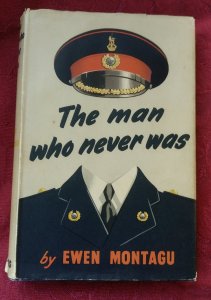 By the way, don’t be put off by the extensive character list at the beginning of the book; you won’t need to remember who everyone is. However, if you’re the sort of person who sits through the credits at the end of a film, you’ll find it interesting to see which of the characters who feature in the book (even only as passing references) existed in real life and which are invented. Personally, I was excited to come across a mention of ‘Major Martin’ as he features in one of my favourite war films, The Man Who Never Was, based on the book of the same name by Ewan Montagu.
 About the Author
 What Cathy Read Next...